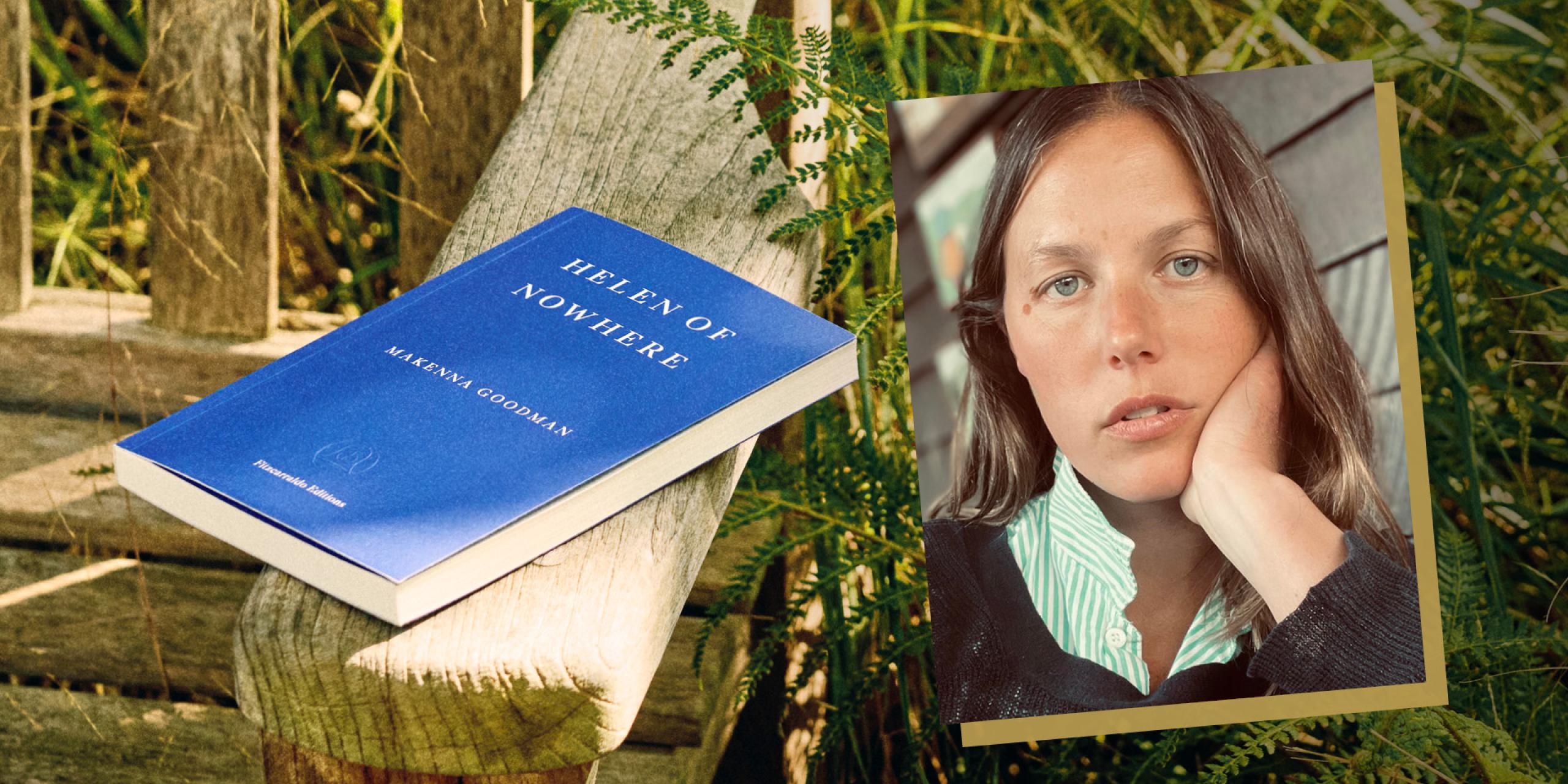
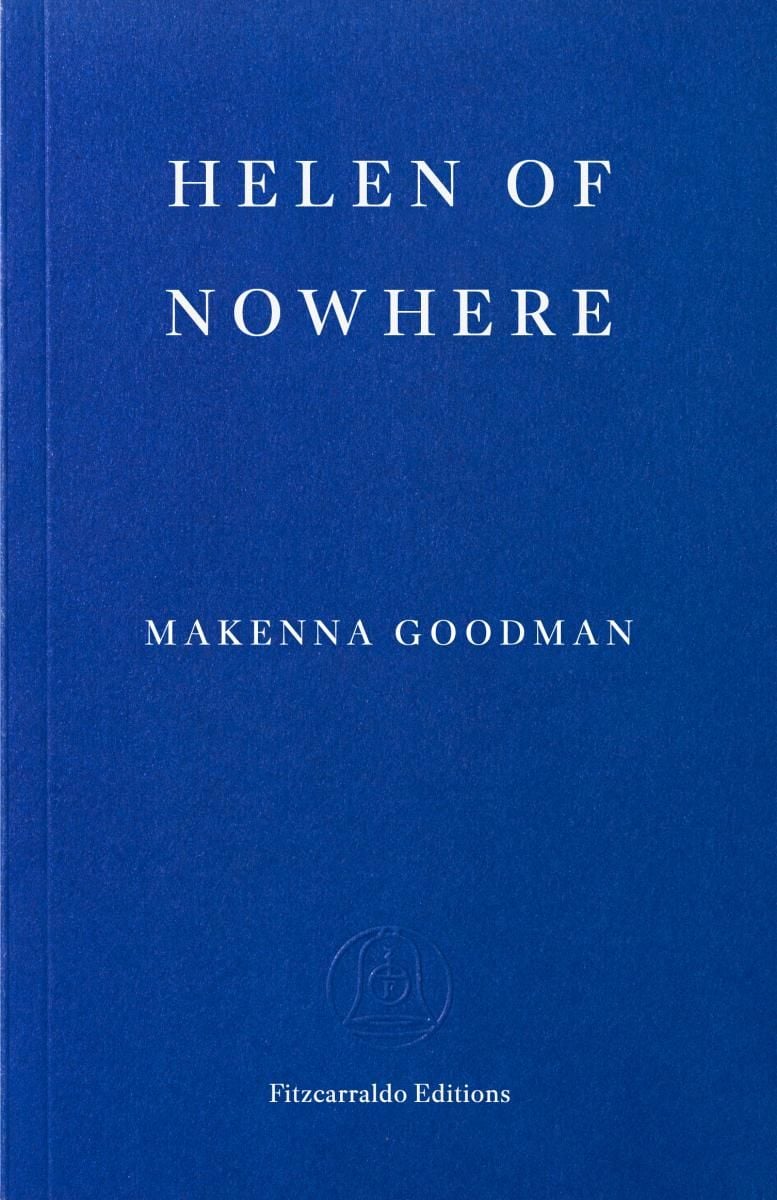

Philosophically and formally adventurous, at once intimate and cosmic in scope, Helen of Nowhere asks: what must we give up in exchange for true happiness?
- Published
The author of Helen of Nowhere, longlisted for the Booker Prize 2026, on the Helens that inspired her, writing by hand and her fantasy reading spot
Buy the book
The inspirations behind my Booker-longlisted book
I was inspired by two Helens. Helen Nearing, a violinist and former medium to Jiddu Krishnamurti, who co-wrote a book about leaving the city and living ‘the good life’ in Vermont with her husband Scott, a failed academic freshly cast out of the Socialist Party. And Helen of Troy, the daughter of Zeus who was famously blamed for the Trojan War, and whose story is constantly being debated and remade. I wanted to explore how we govern, punish, teach and love, through a warped Helen prism. A third Helen was required for the spell to work, so I wrote this book.
The book that made me fall in love with reading
My father, who died when I was quite young, used to read me D’Aulaires’ Books of Greek Myths at bedtime. He would say in this sing-song-y voice: ‘Aphrodite, the goddess of-a-looooooove.’ I often wondered if I was more like Aphrodite or Dionysis; it seemed she was more beautiful, but he had a lot more fun. These myths formed my early literary consciousness and were the stories that informed my childhood dreams. They have also been a place to continue a conversation with my father after his death.
The book that made me want to become a writer
Anything by Virginia Woolf when I was young and fancied myself writerly but didn’t really know what that meant, just that writing was a way someone could possibly get closer to understanding consciousness or madness, magic or hell.
The book I read again and again
The Summer Book by Tove Jansson, considered a Scandinavian classic, is a book I have read at least five times. It’s such a beautiful portrait of place and the inner lives of a child and her grandmother, set on the remote island in the Finnish archipelago where Jansson spent much of her life. I turn to it as an example of great nature writing. I love her descriptions of the tiny cabin pummelled by storms, the boat rocking on the waves, the personality of the sea, the cat roaming around, the tent sides flapping in the wind.
The book that changed the way I think about the world
I had a teacher in high school who dressed to the nines and was very intense. She had a white stripe in her hair, and I thought she was the most stylish woman I’d ever seen. We read Beloved by Toni Morrison in her class, and she would pace around the room in her high heels with the book in her outstretched hand like it was on fire, yelling and weeping, practically in prostration. It was the first time I understood that characters take up total residence in people’s hearts. It’s still one of the most powerful books I’ve read.
I write in bed, after everyone is asleep. In bed is the only time when my brain is shut off from work and life and I can enter a space of ideas
The book that changed the way I think about the novel
Autobiography of Red by Anne Carson. The excitement I felt when I saw how her lines break, how a novel can be anything it pleases.
How Should a Person Be? by Sheila Heti. I love her use of the raw, mundane material of ‘real’ life to articulate the vastness of the human condition; you can access deep philosophy while being naughty and spry.
Pedro Páramo by Juan Rulfo. It is otherworldly, hallucinatory, and impossible to describe. I’m still figuring out what that book is doing and how he did it.
The book I’m reading right now
I’m reading Fancy Work by Alice Hattrick, which brilliantly explores embroidery, gender politics, the author’s relationship with their mother, illness, textile arts as a means of resistance, and the domestic space. I heard Alice read last month and books kept falling off the shelf behind them, banging on the floor. They went, ‘oh, this always happens to me.’ Also, Holly Pester’s delightful poetry collection Cafés, which explores the café as a space for freedom and communalism. When Holly reads aloud, it feels like boisterous stand-up comedy. These writers are summoning ghosts and laughter, what more could one want.
Where I most like to read
I fall asleep reading in bed, every night – it’s pretty boring. But I guess if I could choose the ideal, it would be in a shaded hammock by a lake, punctuated by swims, snacks, and a light breeze.
Where and when I most like to write, and the tools I need
I write in bed, after everyone is asleep, by hand. I’m very specific about the notebooks I use, always the same one, no lines. In bed is the only time when my brain is shut off from work and life and I can enter a space of ideas. I like being in bed in the dark, in a nightgown with clean sheets, my husband asleep beside me, a big pillow between us blocking the light of my headlamp, which rests on my chest and provides a small glow. If I had limitless, unstructured time to write I would probably panic.
The Booker-nominated book everyone should read
Heaven by Mieko Kawakami, which was shortlisted for the International Booker Prize in 2022, about two brutally bullied teenagers who become friends at a high school in Japan. It’s so good.
Helen of Nowhere
- Published by
- Fitzcarraldo Editions
Philosophically and formally adventurous, at once intimate and cosmic in scope, Helen of Nowhere asks: what must we give up in exchange for true happiness?


Features


- Book recommendations
Back to school: 10 Booker Prize novels set in classrooms, colleges and campuses
- Book extract
An extract from Helen of Nowhere by Makenna Goodman
- Book recommendations