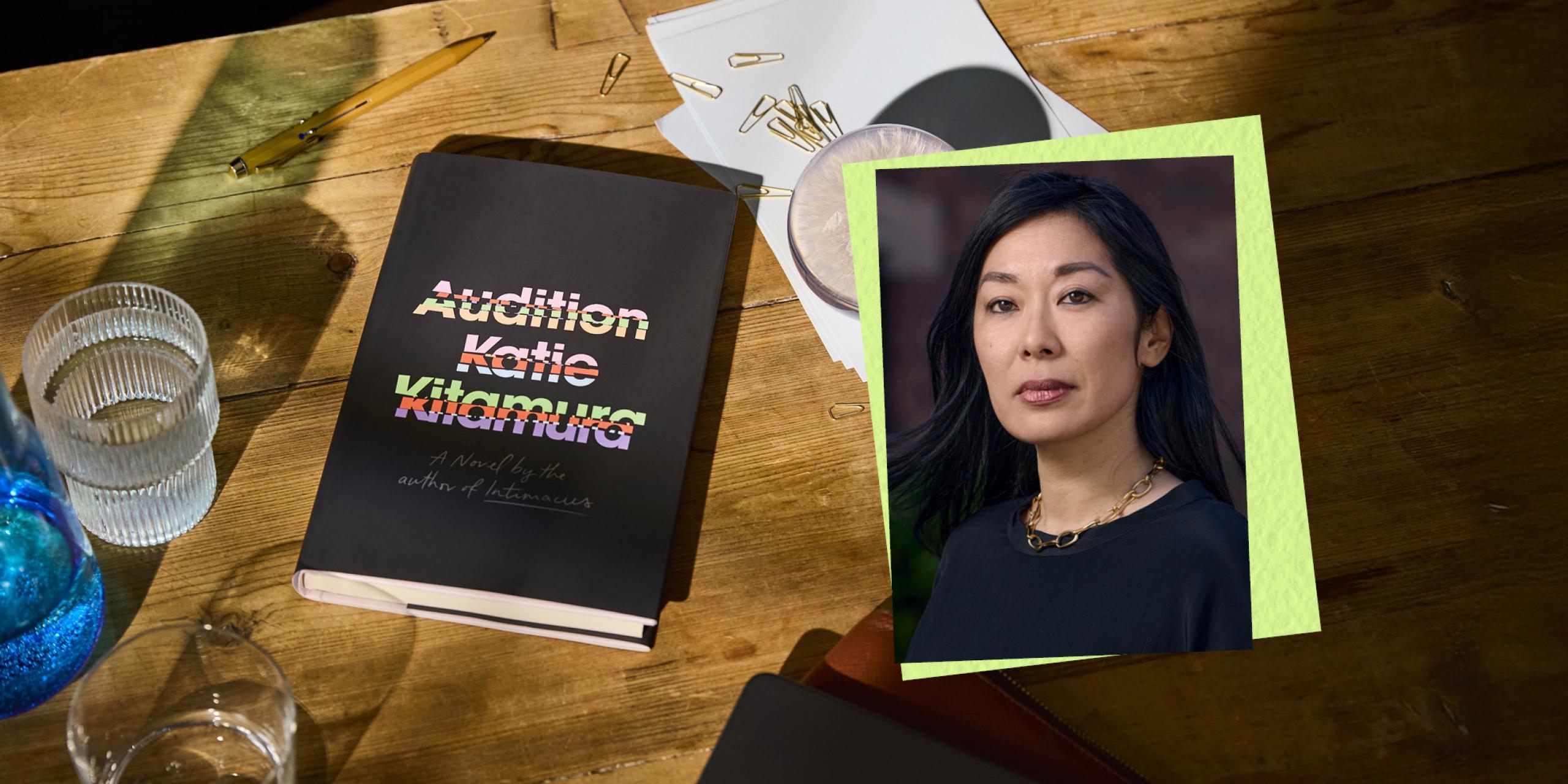

‘Something uncoiled in my stomach, slow and languorous, and I decided it would be better if I left now, and did not go in to him’
- Published
The author of Audition, shortlisted for the Booker Prize 2025, talks about her love of Steinbeck and Dreiser, and how almost every book changes the way she thinks about the world
Buy the book
The inspirations behind my Booker-longlisted book
The starting point for Audition was a desire to write about the long process through which children must necessarily grow up to become strangers to their own parents. I wanted to write about how certain universal experiences – of love, of motherhood – can sometimes feel like two mutually exclusive things at the same time. But rather than writing about that contradiction, I wanted to write it directly – to embed it in the structure of the novel. Reading the book requires holding two separate versions of events in your head at the same time. It’s either/or, and also and. As a culture, we’re becoming quite bad at holding a contradiction in our heads. And yet we live in a time of profound and increasing cognitive dissonance.
The book that made me fall in love with reading
As a teenager, I read a lot of Steinbeck and Dreiser. I read and reread The Grapes of Wrath and East of Eden and Sister Carrie until the spines split and the books had to be taped back together. Dreiser in particular is unfashionable now, at least in the United States, but he’s a writer who believes sincerely in the novel as a form of social critique. Novels in general are exceptionally good at telling a broader social story through the intimate lens of a handful of characters; Dreiser was probably the writer who first taught me that. I also liked the weightiness of these books. You could disappear inside of them for days at a time.
The book that made me want to become a writer
The books I really love are not the books that make me think, ‘I could do that’ – instead, they’re books where I think, where I know, I could never do that. To put it another way, the books that have influenced me are not the ones that invite comparison, but the ones that remind me of how capacious the novel is as a form, and make me alive to its possibilities, all over again.
The book I read again and again
I regularly reread The Portrait of a Lady and The Good Soldier. The Portrait of a Lady is one that changes almost every time I read it; it’s an infinitely renewable text, a book that reads the reader as much as the reader reads it. The Good Soldier is a book that at first glance might seem to have a somewhat loose or organic structure; its intricate structure becomes more and more impressive to me with each subsequent read.
Every time I read a book, I really do open my mind up to another person. It’s probably the most optimistic part of my personality
The book that changed the way I think about the world
Almost every book changes the way I think about the world. I’m an exceptionally malleable reader. Every time I read a book, I really do open my mind up to another person. It’s probably the most optimistic part of my personality.
The book that changed the way I think about the novel
Javier Marias’ Your Face Tomorrow. The scope of the novel (made up of three substantial volumes) and the way Marias manipulates time on the page transformed my understanding of what a novel could do. It’s also beautifully idiosyncratic, a book that couldn’t have been written by anyone else.
The book I’m reading right now
Marie NDiaye’s The Witch, which is a slim early novel that has been newly translated into English by Jordan Stump. It’s a little more direct than some of her later work, but no less mesmerising.
The Booker-nominated book everyone should read
There are so many, but I think Elizabeth Taylor’s Mrs Palfrey at the Claremont is a pretty perfect novel – brutal and compassionate, it’s also very funny.
Where and when I most like to write, and the tools I need
For a time, my desk was wedged between the foot of the bed and the baby’s crib. I was literally writing from the middle of my life, and it worked just fine. I still don’t require all that much in the way of setting, but I do love to write first thing in the morning, whenever I can. My ideal is to get up and stumble over to my desk, before too much of the world intervenes.
My dream book club, what we’d read, and where we’d meet
The members of my dream book club are all alive. Barbara Epler, Jill Schoolman and Sylvia Whitman – visionary publishers and booksellers who have, at one time or another, introduced me to writers and, more importantly, ways of writing, that I’d previously known nothing about. Maybe I would add some of my favourite translators for the same reason: Margaret Jull Costa, or Michael Hofmann. We’d meet upstairs at Shakespeare and Company, because no one creates an atmosphere conducive to the discussion of books better than Sylvia. As for what book we’d be discussing, I’d let the others decide.
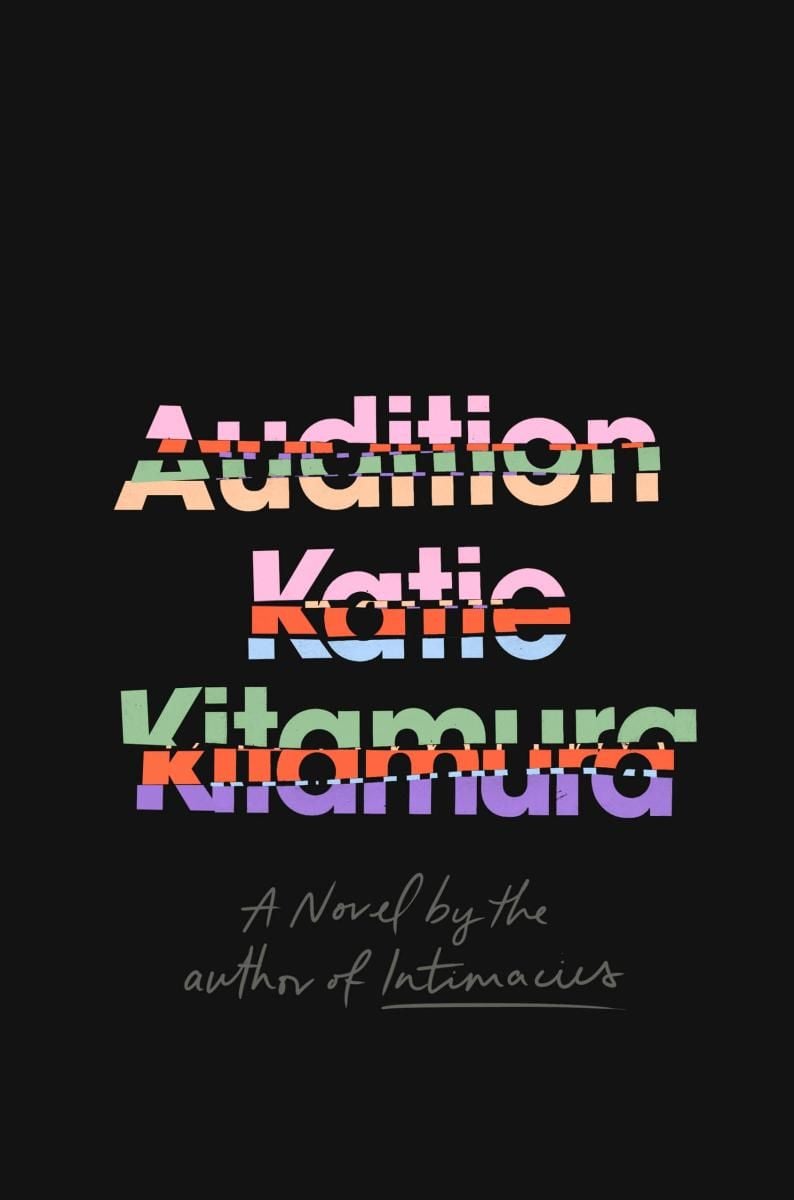
Audition
- Published by
- Fern Press
An exhilarating, destabilising novel that asks whether we ever really know the people we love


Features

- Book recommendations
The Booker Prize 2025 longlisted authors on the books they reread again and again

- Book recommendations
11 Booker-nominated books with the most memorable endings



- Book extract