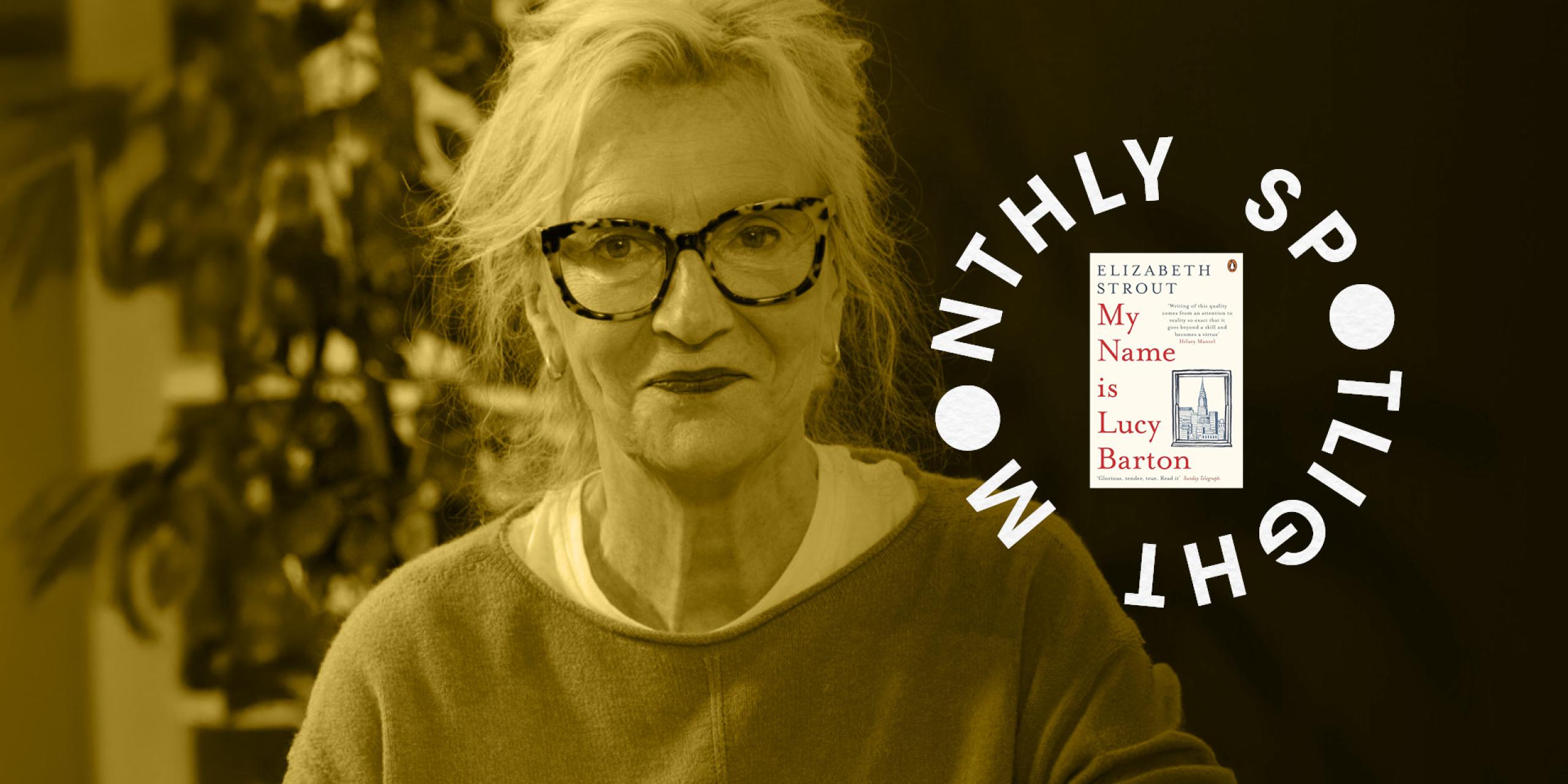

A mother and daughter attempt to reconcile their estranged relationship in Elizabeth Strout’s Booker Prize 2016 longlisted novel
- Published
The author of My Name is Lucy Barton reflects on where the character of Lucy came from, the importance of surprise, and why the novel is, in many ways, a mother-daughter love story
It’s 10 years since My Name is Lucy Barton was longlisted for the Booker Prize in 2016. How did being nominated feel back then, and what impact do you think it has had on your writing career?
It was wonderful to be longlisted for the Booker Prize with My Name is Lucy Barton, but I will tell you it was downright thrilling to be shortlisted later for Oh William! I have no personal way of knowing what impact this had on my career, but I had a sense – and I think I am right – that I was more respected because of it.
What most inspired you to write My Name is Lucy Barton? And how did you settle on the title?
In truth, my writing of My Name is Lucy Barton seemed to happen in a very strange state; I cannot recall it exactly except to remember a sense of almost mania, as I look back. But I have a memory of wanting to write about a girl who comes from the barest of poverty in America and crosses class lines. I have absolutely no memory of how the title came to me, only that it came to me clearly about halfway through the book, and I thought: That is it.
If you had to sum up the novel in a single sentence, what would it be?
It is a novel about a woman who came from a wretched background and has managed to cross the class lines of America, all the while keeping a deep and abiding love for her mother; in many ways, this is a love story.
Where did Lucy come from and how did you channel her interior life so successfully? Was she always going to be a writer or did you explore other careers for her?
I cannot tell you where Lucy came from. Her voice is what appeared to me first, which is why I had to write it in the first person. Her voice came to me like a fine gold thread from the ceiling and I thought, if I can capture that voice, I can do this.
But I have a memory of driving one night and seeing a young boy and his mother emerging from their car, this was on a bleak night on a bleak road; the child looked so unhappy. And there was a sign in front of their house that said: SEWING AND ALTERATIONS. And then I knew. I knew after the first part of the book that she would have to be a writer. I did not want to make her one, but I knew this was who she was because she stayed after school to be warm, and she read, and the books brought her everything.
How have your feelings about Lucy and her mother changed over the years since the book was published? What made you want to explore mother-daughter relationships?
My feelings about Lucy have not changed since I wrote the book. I write about mothers and daughters probably because I am a daughter and also a mother. But I have never written about my daughter or my mother.
Lucy’s illness and hospitalisation provide a unique and almost dream-like set of circumstances for reflection. How did you decide what would be said, what would be hinted at, and what would remain unsaid between mother and daughter, and, also, between Lucy and the reader?
I realised early on that putting Lucy in the hospital with her mother was what I needed; these two had not seen each other for a while, and the fact that her mother had never been on a plane really interested me, I thought that was a perfect example of her mother and what Lucy had come from. What I decided to put in and leave out was just my writer’s intuition at work.

Elizabeth Strout
© Leonard Cendamo
I had no idea how the book would end. I never do. If I am not surprised the reader will not be surprised
Elizabeth Strout
The differences between Lucy’s childhood and the life she’s built for herself as an adult are stark. She moves between poverty and wealth, the rural and the urban, the provincial and the sophisticated. What made you want to explore that juggle / struggle between a childhood and an adulthood that are so different?
I have told this story before. But I remember clearly in the town we lived in when I was a child there was a family like Lucy’s, so poor and strange they were completely ostracised from the community. The boy from this family never said a word in school, not one word did he ever say. And in third grade he sat in front of me, and the teacher stopped by him and said, ‘You have dirt behind your ears! No one is too poor to buy a bar of soap!’ I never forgot it. His head became so red, I could see the colour rising up his neck. I thought – many, many years later: I want those people to have a voice.
Did you always know how the book would end? And did you know that Lucy was a character you would revisit again and again?
I had no idea how the book would end. I never do. If I am not surprised the reader will not be surprised. And no, I never expected to write about Lucy again. I have never planned on writing about any of my characters again.
What kinds of responses have you had from readers to My Name is Lucy Barton? Have any reactions been especially pleasing or surprising?
I have had a number of readers say to me in a signing line (they lean their heads down and say it quietly), ‘My story is Lucy Barton’s’. This is a source of great joy for me, not that their lives were so difficult, but because I have written a book that has reached people. It is very meaningful to me. There are more Lucys out there than we know. Or that I knew.
What was it like to see actor Laura Linney play Lucy on stage in London and New York?
It was lovely to see Laura Linney play Lucy in London and then on Broadway. I thought she was wonderful. It oddly felt like I was not involved, but I was. And I was not. I thought she was fantastic.
You’ve written five books featuring Lucy Barton now. What aspects of Lucy’s life or character would you like to explore next?
I think I am done writing about Lucy. I say that, but I have said that before. But I really do think I am done with her. We will see. But it was a great run…
Where and when do you most like to write and what tools do you need?
All I need to write is to have no one talking to me. I have written on subways, in restaurants, in my studio (the best!). But all I need is paper and a pen, or my laptop and nobody needing me at that moment.
Do you have a favourite book in the Booker Library? What do you love about it?
One of my favourite Booker Prize winners was The Sense of an Ending by Julian Barnes – what a fantastic book, what a great voice it was written in.


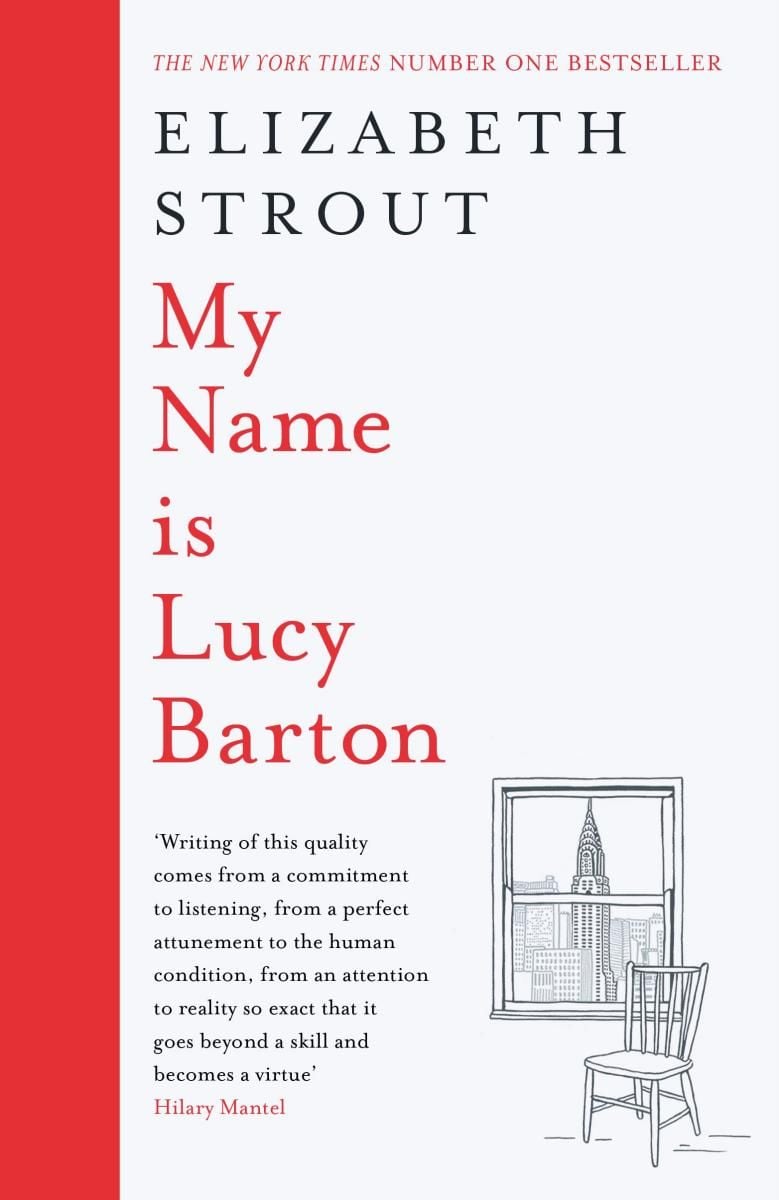
My Name Is Lucy Barton
- Published by
- Viking
Elizabeth Strout’s moving story shows how a simple hospital visit illuminates the tender relationship between an estranged mother and daughter
Features


- Reading guides
Reading guide: The Things We Never Say by Elizabeth Strout


- Book recommendations
The Booker Prize 2026 shortlist: what our judges said


- Book recommendations