
From witchcraft to warfare, trauma to transformation, resilience to cruelty, this year’s longlist shines a light on a vast range of experiences
An extract from Women Without Men by Shahrnush Parsipur, translated by Faridoun Farrokh
An extract from Women Without Men by Shahrnush Parsipur, translated by Faridoun Farrokh
- Published
Women Without Men is longlisted for the International Booker Prize 2026. Read an extract here
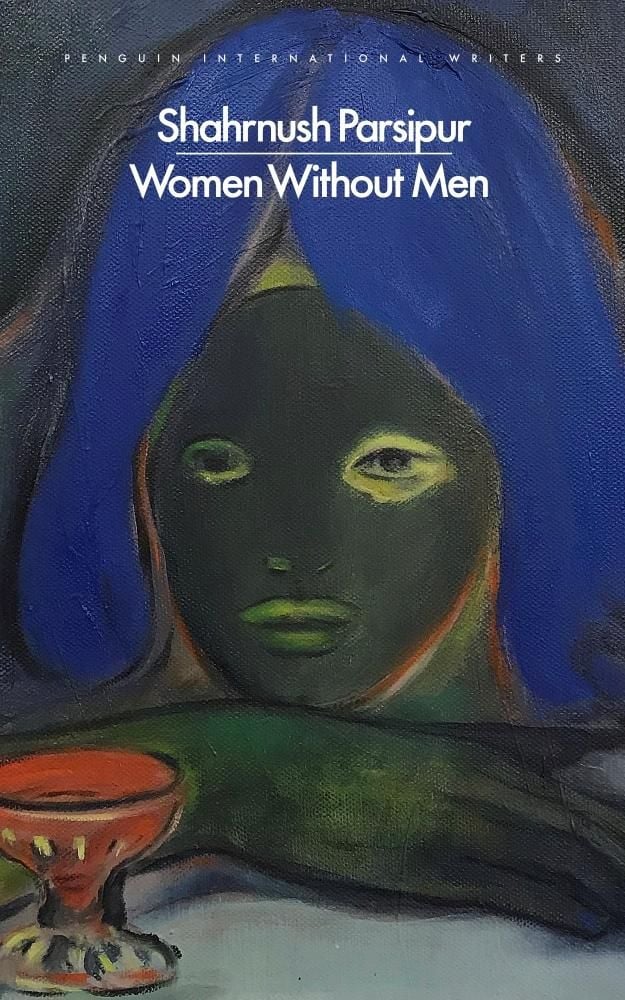
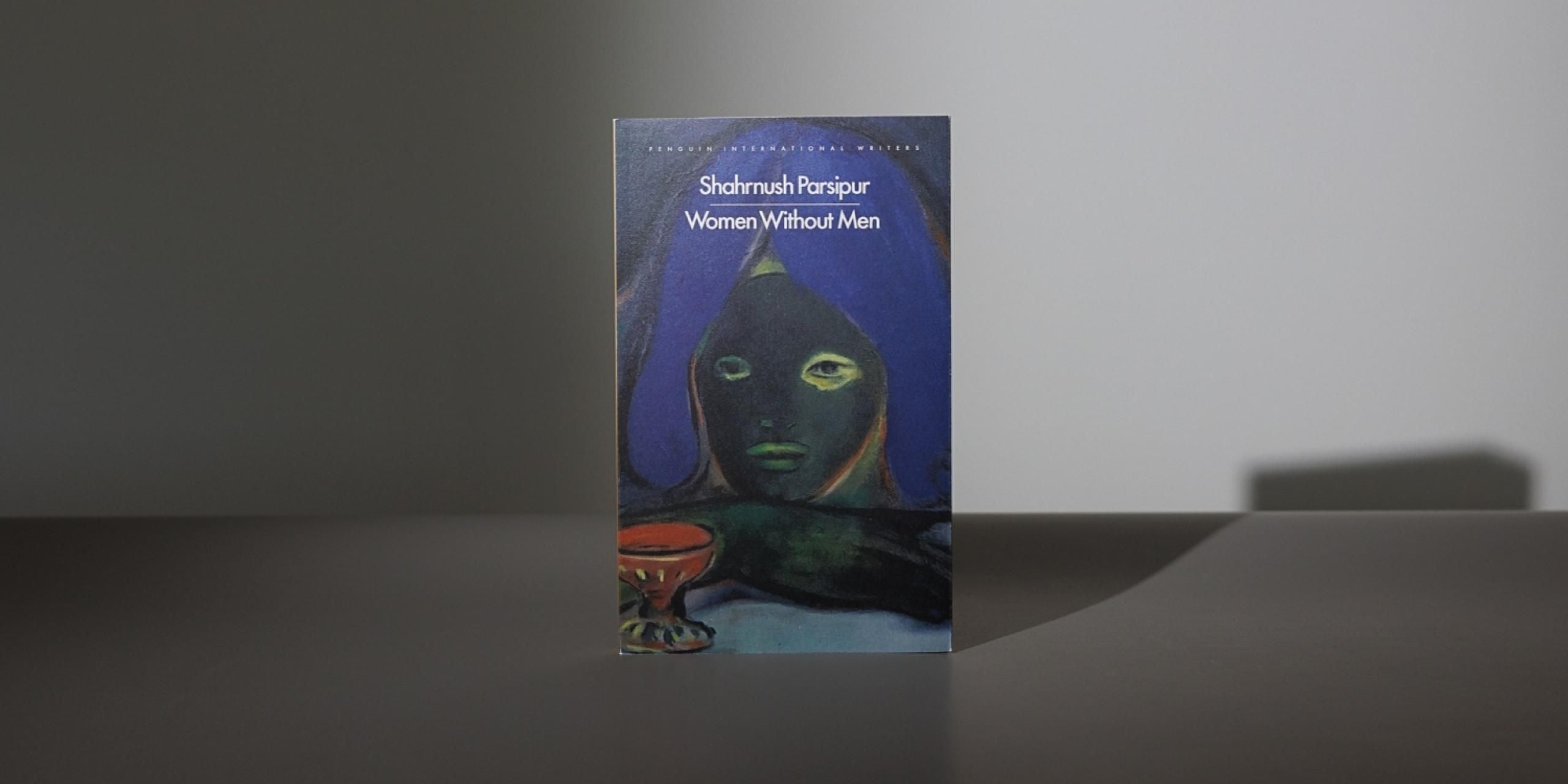
Women Without Men is a powerful and essential tale of female freedom.
The novel traces the interwoven destinies of five women – including a wealthy middle-aged housewife, a sex worker and a schoolteacher – as they arrive by different paths to live together in an abundant garden on the outskirts of Tehran.
Drawing on elements of Islamic mysticism and recent Iranian history, the novel depicts women escaping the narrow confines of family and society, and imagines their future living in a world without men.
Originally published in Persian in 1989 and banned in Iran ever since, Women Without Men is published in the UK by Penguin International Writers. This extract is taken from the book’s opening chapter.
Buy the book
The orchard, vibrantly green and with adobe walls, backed up against the village at one end and bordered the river at the other. It was an orchard mostly of sweet and sour cherries. The villa, a mixture of rustic and urban architecture, sat in the middle of it. It had three rooms that looked onto a small reflecting pool, now green with algae and occupied by frogs. A gravel path flanked by willow trees surrounded the pool. In the afternoon the light green of the trees noiselessly competed with the dark green of the pool, a struggle that disturbed Mahdokht who had no tolerance for conflict of any kind and simply wished for a universal harmony, even among all shades of green in the world.
‘It is a soothing color, but still …’
The bedstead was under one of the willows, two of its legs on the ledge of the pool. There was the possibility that they would slide off the slimy ledge, pulling the whole bedstead into the pool. In the afternoons Mahdokht would perch herself on this bed and contemplate not only the rivalry between the green of the trees and the pool water, but also the way the blue of the sky imposed itself, like the verdict of a divine judge, on the green of the orchard.
It was in the winter months that Mahdokht thought of engaging in knitting projects, or taking French lessons, or going on a guided world tour, because the winter air was pure and breathable. In the summer, on the other hand, the air was laden with smoke, dust, pollutants from cars and people, and a depressing feeling from large window panes unable to keep out the heat of the sun.
‘Goddamn, why don’t these people understand that those windows are no good in this climate?’
Such thoughts brought on a wave of sadness, making her prone to accepting the invitation from Houshang Khan, her elder brother, to join the family in the orchard where she had to tolerate the children who screamed all the time as they gorged themselves with cherries giving themselves diarrhea and eating yogurt at night as antidote.
‘The yogurt is from the village,’ her brother would say to indicate its high quality.
‘It’s outstanding,’ she would concur.
The children always felt cold to the touch and looked pale, although they ingested more food than appropriate for their age, and later ‘barfed’, as their mother said.
Earlier on, when she was a teacher, Mr Ehteshami would say, ‘Miss Parhami, please file this form there … Miss Parhami, ring the bell … Talk to this janitor, whose language I don’t understand.’ As principal, Mr Ehteshami seemed to enjoy having her as assistant principal. She did not mind the arrangement either. But then one day he turned to her and said, ‘Miss Parhami, would you like to go to the cinema with me tonight? There is a good movie playing.’
She went pale, not knowing how to deal with this forwardness. What did the little man think? Who did he think she was? What was his intention?
Now she understood why the female teachers suppressed their smiles and pursed their lips every time Mr Ehteshami talked to her. They must have sensed something. But they were wrong about her. Now she would show them who she really was.
She quit the job without notice. However, when she heard a year later that Mr Ehteshami had married Miss Atai, the history and geography teacher, she felt such a tightness in her chest as if her heart was about to burst out.
‘My problem is that Father has left too much money behind.’
That was the case. The next winter she knitted for the first two children of Houshang Khan. Ten years later she was knitting for five of them.
‘I wonder why people produce so many children.’
‘I can’t help it,’ returned Houshang Khan. ‘I love children.’
Really, what could he do? He can’t help it, she thought.
She had recently seen a movie with Julie Andrews in it. Julie’s character had become involved with an Austrian man, the martinet father of seven children whom he ordered around by blowing a whistle. Julie had first intended to join a convent but had thought better of it and married the Austrian since she was expecting his eighth child, especially since the Nazis were marching on Austria and there were many uncertainties.
‘I am as tender-hearted as Julie in the movie.’
She was right. She wouldn’t hurt a fly. Besides, she had fed four hungry dogs in the street and had given her brand-new topcoat to the school janitor. When she was a teacher, in compliance with the Public Centers Program, she had visited the orphanage three times; on each occasion she had taken several pounds of pastries for the children.
‘What nice children!’
She wouldn’t mind if some of them were her own. They would always have clean clothes and no snot running down their faces. They would also use the proper term to refer to the bathroom.
‘I wonder what will become of them.’
This was a tough question, especially since the state radio and television had made statements on the need to do something about them. Both Mahdokht and the state were concerned about the orphans. What if she had a thousand hands and could knit five hundred sweaters a week?
‘Two hands per sweater,’ she figured, ‘so one thousand hands would equal five hundred sweaters.’
But a person cannot have a thousand hands, especially Mahdokht, who loved the winter and took daily afternoon walks during the season. It would take five hours or so to put one thousand gloves on one thousand hands.
‘No,’ she reasoned with herself, ‘with the first five hundred hands I would put gloves on the other five hundred hands and then repeat the process. Three minutes or less. That’s all.’
This is not the real problem. It is up to the government to set up a factory and produce sweaters as needed.
Mahdokht dipped her toes in the pool water.

Women Without Men
© India Hobson for Booker Prize Foundation
Women Without Men
- Translated by
- Faridoun Farrokh
- Published by
- Penguin International Writers
A powerful and essential tale of female freedom


