
In an exclusive interview, the 2002 Booker Prize winner talks about the process behind his best-known novel — and making the fantastic feel believable
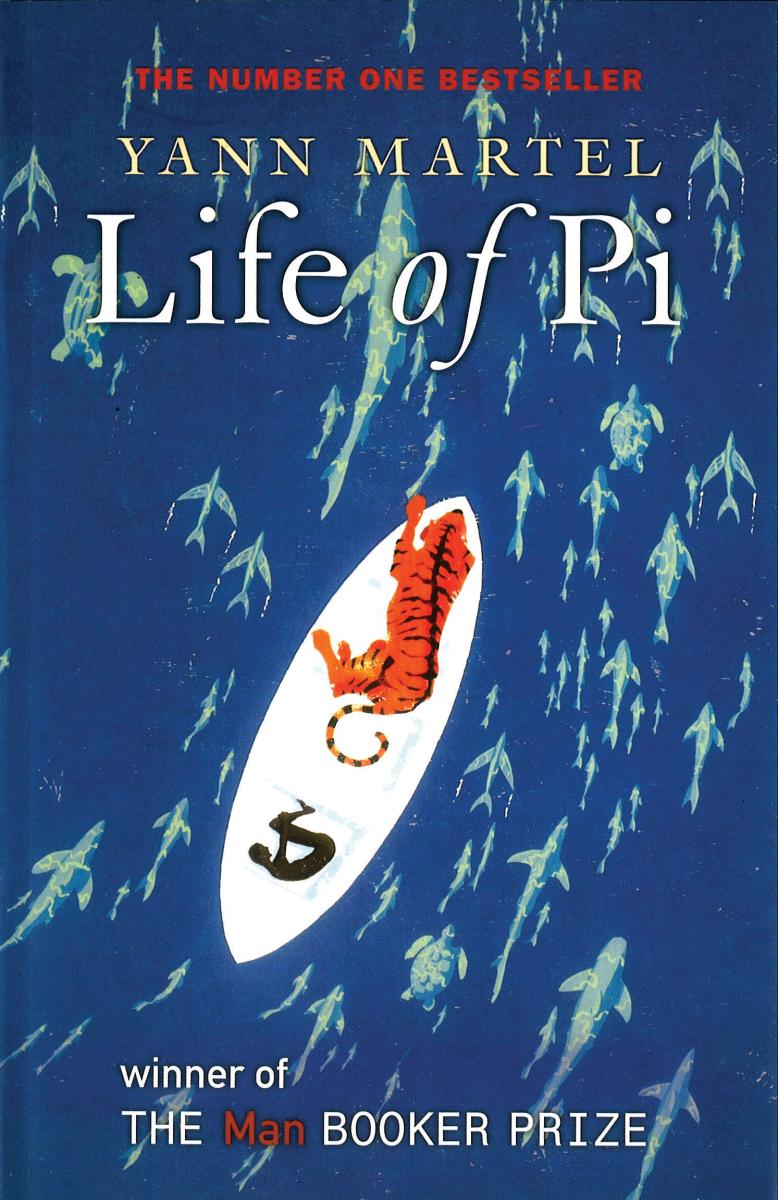
Life of Pi
Written by Yann Martel
- Winner
- The Man Booker Prize 2002
- Published by Canongate
Buy the book
Yann Martel’s warmly engaging philosophical novel is brimming with invention, ideas and playful conceits. A true modern classic
Yann Martel’s 2002 Booker Prize-winning Life of Pi is his third novel. It is narrated by Pi (Piscine) Molitor, who grows up as the son of a zoo manager in India. As a boy, Pi practices not only Hinduism but also the teachings of Christianity and Islam – in his eyes, all different yet equal ways of knowing God. In 1976, when The Emergency is announced, the Molitors’ zoo animals are sold, and Pi and his family embark on a Japanese freight ship to North America. It sinks a few days into its passage. Pi is left alone on a lifeboat with a hyena, a zebra, an orangutan, and a tiger named Richard Parker. He is rescued after 227 days afloat, barring one excursion to a surreally depicted carnivorous island.

Yann Martel
Yann Martel is best known for his Booker Prize 2002-winning novel Life of Pi, which was adapted for cinema by Ang Lee and won four Oscars and adapted for the stage by Lolita Chakrabarti and won 5 Olivier Awards
More about Yann Martel Yann Martel on writing Life of Pi
‘In part one I had to spoon-feed the reader notions about religion – because, to me, most urban Western readers are secular; possibly also anti- religious. I was trying to discuss a very difficult theme of religion, without wanting to be, in any way, evangelical. I wanted them to consider this alternate, other form of magical thinking, which has been blighted by a lot of extremism. I had to present it in a sympathetic light.
‘Part one is needed to open the reader up. But once I was in it, the writing very much felt spontaneous. Otherwise, it wouldn’t have been joyful. If it’s just a chore, writing up the sentences because they’re preordained, there’s no fun at all. And, in fact, the writing was an utterly joyful experience. It was such a good time writing that book.’
Read the full interview here.

Yann Martel
© Ulf Andersen/Getty
What the judges said
‘Pi, with its meandering, strange, plot-defying kind of structure was a breath of fresh air and I just felt, for my money, this was taking risks.’
What the critics said
Charlotte Innes, The Nation
‘Although its themes are serious and there are moments of awful graphic violence and bleak despair, it is above all a book about life’s absurdities that makes one laugh out loud on almost every page, with its quirky juxtapositions, comparisons, metaphors, Borgesian puzzles, postmodern games and a sense of fun that reflects the hero’s sensual enjoyment of the world.’
Gary Krist, The New York Times
‘Although Life of Pi works remarkably well on the pure adrenaline-and-testosterone level of a high-seas adventure tale, it’s apparent that Martel is not interested in simply retelling the classic lifeboat-survival story. Pi, after all, is a practitioner of three major religions who also happens to have a strong background in science; with such a broad résumé, his story inevitably takes on the quality of a parable.’
James Wood, The London Review of Books
‘Life of Pi is proud to be a delegate for magic realism, and wears a big badge so that we don’t forget it […] Martel proves, by skilful example, that realism is narrative’s great master, that it schools even its own truants. He reminds us in fact that realism is already magical, an artifice-in-waiting.’
John Kiefer, The San Francisco Chronicle
‘Life of Pi is full of fierce but friendly storytelling energy. It’s a real adventure: brutal, tender, expressive, dramatic and disarmingly funny […] As Pi somehow finds the resources to sustain his life, Martel finds the wherewithal to sustain the spirit and vitality of his narration. The sense that this is not a coincidence provides much of the book’s delight.’
‘A fabulous romp through an imagination by turns ecstatic, cunning, despairing and resilient, this novel is an impressive achievement—‘a story that will make you believe in God,’ as one character says […] Martel’s potentially unbelievable plot line soon demolishes the reader’s defenses, cleverly set up by events of young Pi’s life that almost naturally lead to his biggest ordeal.’
The winning moment
Yann Martel’s Life of Pi went on to become one of the biggest-selling novels in the prize’s history after it was announced as the winner of the 2002 Man Booker Prize.
The book was on a shortlist with Dirt Music by Tim Winton, Family Matters by Rohinton Mistry, Unless by Carol Shields, The Story of Lucy Gault by William Trevor and Fingersmith by Sarah Waters.
Life of Pi’s win came in the first year the prize was sponsored by the Man Group, taking on its new name of the Man Booker Prize.

Yann Martel on winning the Man Booker Prize for Life of Pi, October 2002.
© Nicolas Asfouri/AFP via Getty Images
Despite the extraordinary premise and literary playfulness, one reads Life of Pi not so much as an allegory or magical-realist fable, but as an edge-of-seat adventure
Life of Pi on screen
Yann Martel’s Life of Pi was adapted for the big screen in 2012, in a film directed and produced by Ang Lee.
The film starred Irrfan Khan as the adult Pi, Rafe Spall as The Writer, Tabu as Pi’s mother Gita Patel, and Adul Hussain as Pi’s father Santosh Patel.
It was nominated for three Golden Globe Awards, including Best Picture - Drama and Best Director, and won the Golden Globe Award for Best Original Score. It was nominated for 11 awards at the Oscars in 2013, and won four, including Best Director for Lee.

Scene from the 2012 film Life of Pi, directed and produced by Ang Lee
© Twentieth Century Fox via Alamy
Life of Pi on stage
Yann Martel’s Life of Pi was also adapted for the stage, another ten years after the successful film release.
The West End production won five categories at the Olivier Awards in 2022, including best new play, best actor for Hiran Abeysekera and best supporting actor for the seven performers portraying the show’s puppet tiger.
The creator of the stage adaptation, Lolita Chakrabarti, has said its success was a testament to the ‘absolute modern classic’ created by Martel.

Stage production of Life of Pi at The Wyndham’s Theatre, London
© Johan Persson/Delfont Mackintosh
Features

- Book recommendations
11 epics from the Booker Library for fans of The Odyssey

- Book recommendations
10 Booker Prize-nominated books with unique settings

- Book recommendations
12 Booker-nominated books that have been adapted for the stage

- Book recommendations
Booker Prize books that have been adapted for film and television

- Book recommendations
10 Booker Prize-nominated books that feature unlikely friendships


- Book recommendations
