

Oh William!
by Elizabeth Strout

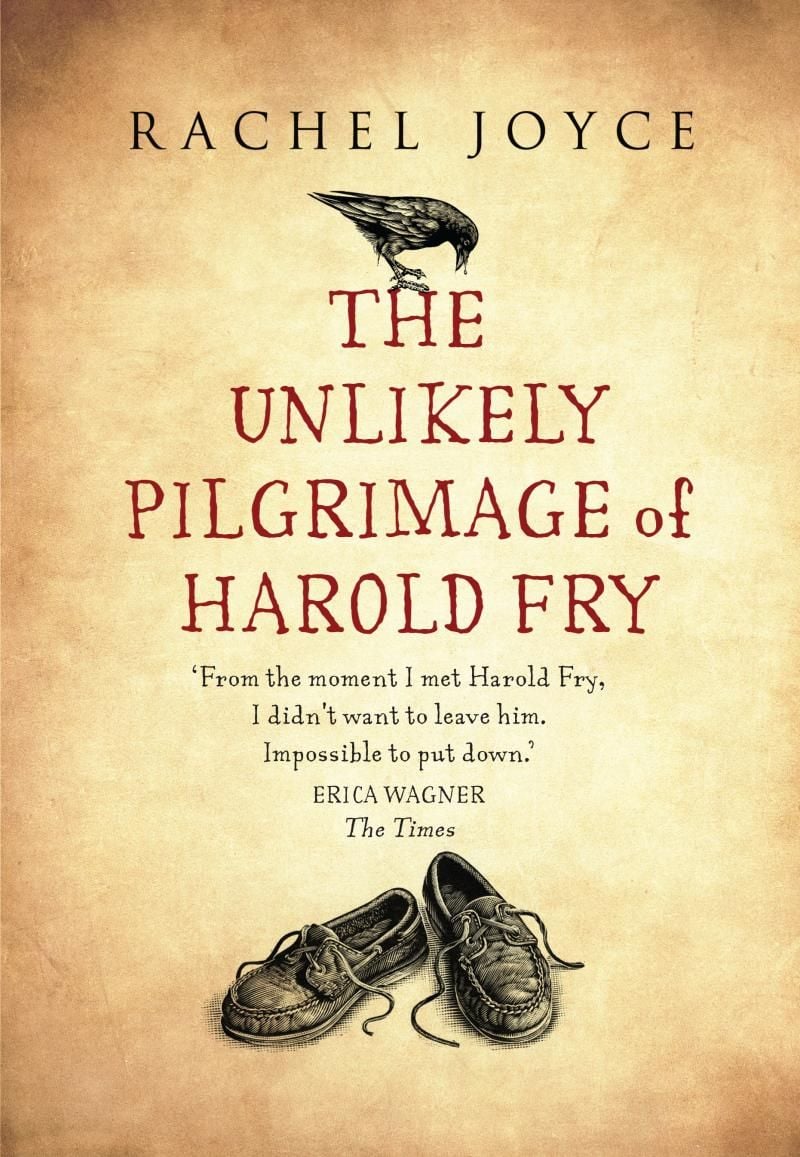
Harold Fry, the unassuming hero of Rachel Joyce’s life-affirming story, is a man on a mission – to walk more than 600 miles to save a friend
Whether you’re new to The Unlikely Pilgrimage of Harold Fry or have read it and would like to explore it more deeply, here is our comprehensive guide, featuring insights from critics and the book’s author, as well as discussion points and suggestions for further reading.
When Harold Fry goes out one morning to post a letter, leaving his wife vacuuming upstairs, he has no idea that he is about to walk from one end of the country to the other. He doesn’t have hiking boots or a map, let alone a compass, waterproof or mobile phone. All he knows is that he must keep walking. To save someone else’s life.
The Unlikely Pilgrimage of Harold Fry was longlisted for the Booker Prize in 2012.
Harold Fry
Recently retired Harold lives with his wife, Maureen, in the English town of Kingsbridge. After he receives a letter from an old coworker, Queenie Hennessy, Harold sets off on a pilgrimage across the country, walking 627 miles in 87 days.
Maureen Fry
Maureen is the wife of Harold and the mother of David. Maureen has become annoyed with Harold, who is frequently at home since retiring. She begins to miss Harold while he’s away, though, and starts to reassess the state of their marriage.
Queenie Hennessy
An old friend of Harold’s from 20 years ago, Queenie and Harold worked in a brewery together. She writes Harold a letter that says she has cancer and tells him goodbye.
David Fry
David is Harold and Maureen’s son; he studied at Cambridge but got mixed up with alcohol and drugs. He has a complicated relationship with his father and they’ve struggled to connect.
Mark Addy plays Harold Fry on stage at the Chichester Festival Theatre in The Unlikely Pilgrimage of Harold Fry
© Manuel Harlan Chichester Festival Theatre
Rachel Joyce’s route to fiction took in short stints as a nanny, a door-to-door salesperson (‘I lasted a morning’), an assistant in a souvenir shop, and a bartender in a London champagne bar where she refused to serve champagne, only beer, ‘for political reasons’. She then went to the Royal Academy of Dramatic Art (RADA) and spent 20 years as an actor before writing her first play for radio. Her debut novel, The Unlikely Pilgrimage of Harold Fry, was written when she was 50. She currently writes in a shepherd’s hut near the Gloucestershire valley where Laurie Lee was born.
Rachel Joyce
© Pal Hansen
Janet Maslin, New York Times
‘At first glance Harold Fry is a sad, lonely English milquetoast, the human equivalent of a potted geranium. “The Unlikely Pilgrimage of Harold Fry,” Rachel Joyce’s first novel, contrives a way to shake him out of his monotonous life and send him on a voyage of self-discovery. Harold will learn that there is more to life than mowing one’s lawn. Readers will learn that one man’s quiet timidity should not be taken at face value. Potted geraniums have feelings, too.’
Alfred Hickling, Guardian
‘Joyce’s novel is prone to sentimentality, while the overpoweringly good intentions of its hero can seem a little pious. But there’s no doubt that it’s an original, quietly courageous testament to the inhuman effort of being normal.’
‘The Unlikely Pilgrimage of Harold Fry is one of those books: That you want to whip through and savour at the same time. That you want to scribble on, take a pen to, and whose page corners you want to bend. One that you will remember. That makes an impact. That makes you think.’
Keith Staskiewicz, Entertainment Weekly
‘Joyce’s writing is lucid, and despite the plot’s episodic nature, it’s never plodding. Unfortunately, there are times when The Unlikely Pilgrimage of Harold Fry‘s main theme – that everyone, no matter how banal on the outside, is actually a complex mash of emotion and regret – gets neatly packaged into painfully obvious passages. But there are just as many instances where Joyce shows instead of tells, and those moments are splendid.’
Matthew Richardson, The Spectator
‘Joyce manages that rare balancing act of embedding homespun philosophy – ‘It was as much of a gift to receive as it was to give’; ‘everyone was the same, and unique…this was the dilemma of being human’ – without being twee. The emotional range is unique for what is essentially a comic work, and faultlessly navigated. It is a brilliant and charming novel: full of comic panache yet acute and poignant.’
‘The book took about a year to write – that was the first draft – because I am a terrible fiddler. (By which I mean that I keep twitching words and phrases and scenes and ideas, as opposed to playing fine music. I am especially guilty of this with the opening of a novel. I can’t stop fiddling.) After that, I spent about six months working on the editing process. That was much easier, though. For me, the first draft is by far the toughest. There is so much to discover and there are so many wrong turnings to take (and reject).’
Rachel Joyce first wrote The Unlikely Pilgrimage of Harold Fry as a radio play before later adapting it into a full-length novel. It was also made into a film in 2023, starring Jim Broadbent and Penelope Wilton.
A musical based on the book, and adapted by Rachel Joyce, with music and lyrics by Passenger, premiered at Chichester Festival Theatre in 2025. It was a sell-out success and has now transferred to London, opening at the Theatre Royal Haymarket at the end of January 2026.
Joyce trained at RADA and worked as a theatre actor for 20 years. In an interview with London Theatre, she said, ‘I’ve realised there is a theatricality to my fiction – it must be because theatre is in my bones. Not to mention the book is quite episodic, with Harold stopping to meet new people, so it really lends itself to the musical format, where each person can open up their heart through song…
‘Fundamentally the story is about ordinary people being capable of beautiful things. I still hold onto that, even when things are tough, and the show just encapsulates it so perfectly. It’s such a generous piece of theatre that you feel like you’ve been hugged.’
Jim Broadbent as Harold Fry and Penelope Wilton as Maureen Fry in the film adaptation of The Unlikely Pilgrimage of Harold Fry
© MoviestillsDB
Harold Fry walks an impressive 627 miles in 87 days, starting from his hometown of Kingsbridge and travelling to Berwick-upon-Tweed where his dying friend Queenie lives. He thinks that as long as he walks, Queenie will live. Why do you think Harold feels this way even though it’s illogical?
Harold and his wife, Maureen, have been married for 47 years, with Maureen becoming more irritated with Harold’s behaviour due to his retirement and always being at home. But once he takes off on his journey, she misses him and starts to reflect on the state of her marriage. Why do you think Harold’s pilgrimage caused Maureen to have these feelings and question her relationship?
Rachel Joyce first wrote The Unlikely Pilgrimage of Harold Fry as a short radio play and later adapted it into a full-length novel. In an interview with the Guardian, she said that writing radio plays has influenced the way she writes fiction. ‘Radio writing is such a discipline. Because it is so easy for people to switch it off, you have to really think about how your play is moving, and, indeed, keep it moving. I think there’s a place in radio for the poetry of the ordinary and that is something I try to find in my fiction too…’ What do you think Joyce means by the ‘poetry of the ordinary’? Do you recognise it in the way she has written The Unlikely Pilgrimage of Harold Fry?
Harold’s own childhood was fraught with instability and distress, with his absent mother walking out on him when he was a child and his alcoholic father kicking him out when he was 16. What effect do you think this had on Harold’s relationship with his son David?
Harold remembers how, when he was 12, his mother walked out, and he’s aware that he’s repeating her action by walking out of the house and starting his pilgrimage. Even though the circumstances are different, why do you think Harold still thinks he is following in his mother’s footsteps?
While on his pilgrimage, Harold gives away his guidebook and posts his debit card back home, while also refusing to buy proper supplies for walking. Why do you think he chooses to do this?
As his walk progresses, Harold receives increasing public attention for his pilgrimage, and people begin to join him on his journey. How do you think the extra attention affects Harold and shapes his trip?
When Harold is around a quarter of the way through his journey, he starts to reflect on his interactions with the strangers he’s met on his way. There’s a quote in the book that says, ‘Harold could no longer pass a stranger without acknowledging the truth that everyone was the same, and also unique; and that this was the dilemma of being human’ (p183). What do you think he means by the ‘dilemma of being human?’
How do you think hearing other people’s stories, such as Martina’s and Wilf’s, impacts Harold and the way he feels about his own life?
At the end of the book, Harold and Maureen reconcile, hoping to start a new chapter in their lives with a strengthened relationship. Why do you think Harold’s pilgrimage was the catalyst for this change?
Jim Broadbent as Harold Fry in the film adaptation of The Unlikely Pilgrimage of Harold Fry
© MoviestillsDB
by Elizabeth Strout
by Elizabeth Strout
by Anne Tyler
by Julian Barnes (prize winner)
by Anne Tyler