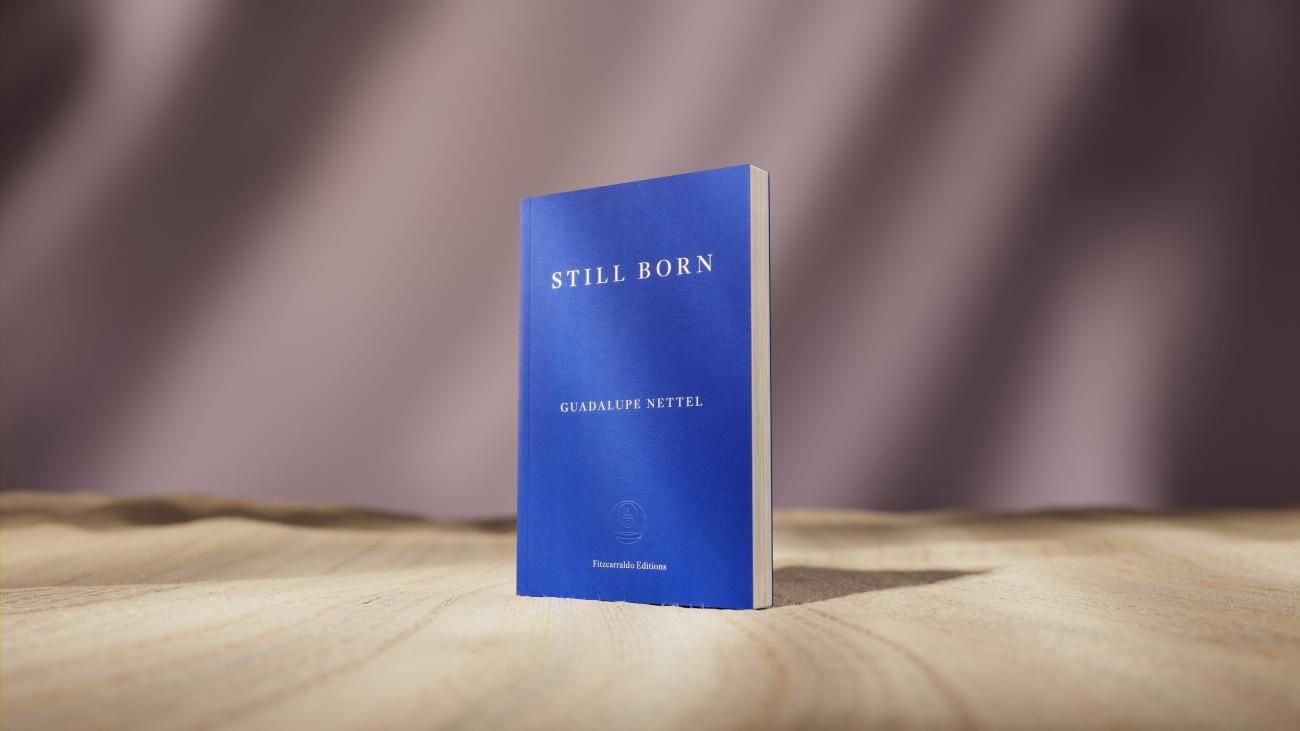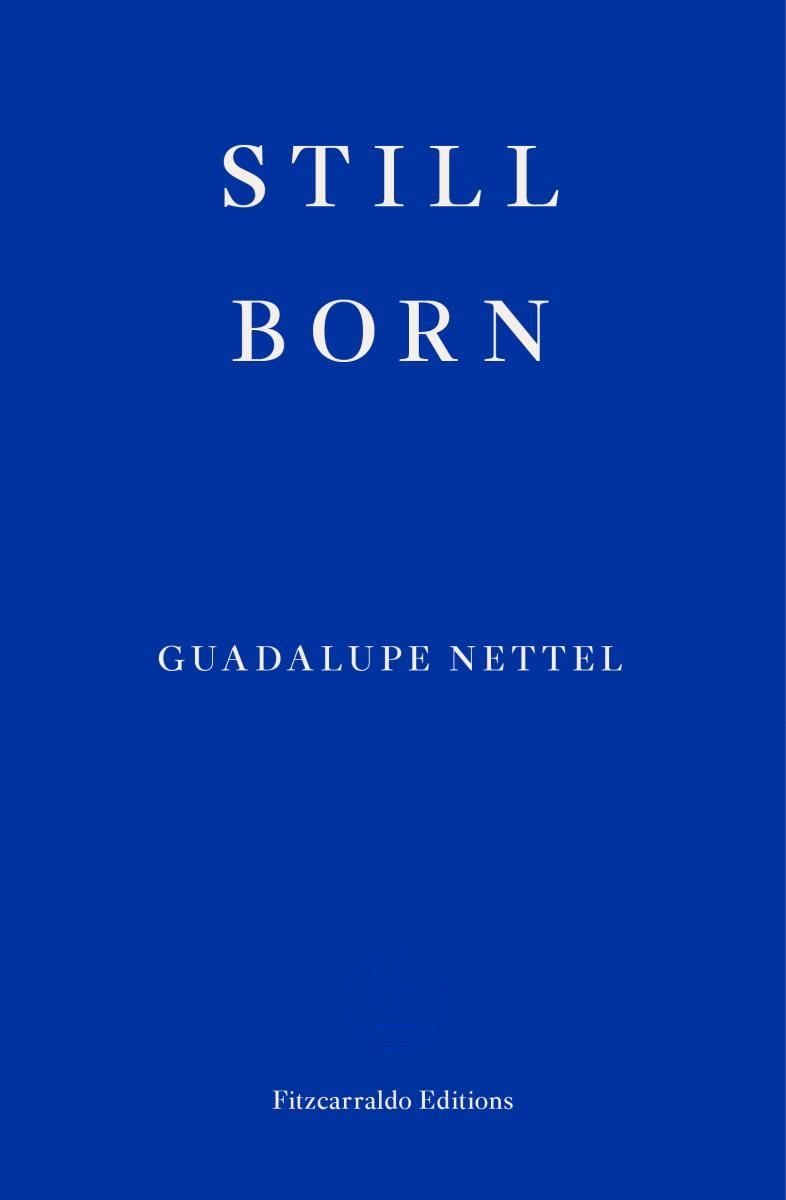

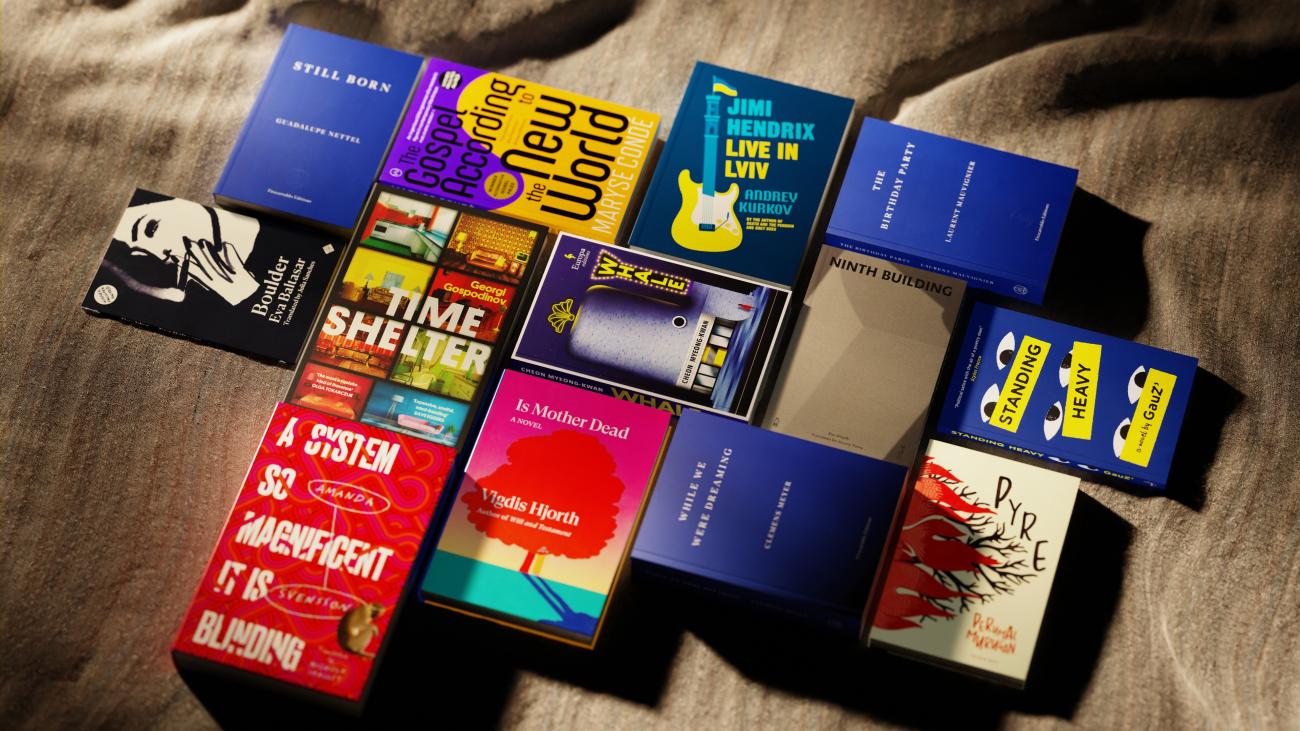
As the International Booker Prize 2023 shortlist is announced, discover the most interesting facts and trends that have emerged in this year’s selection
Reading guide: Still Born by Guadalupe Nettel, translated by Rosalind Harvey
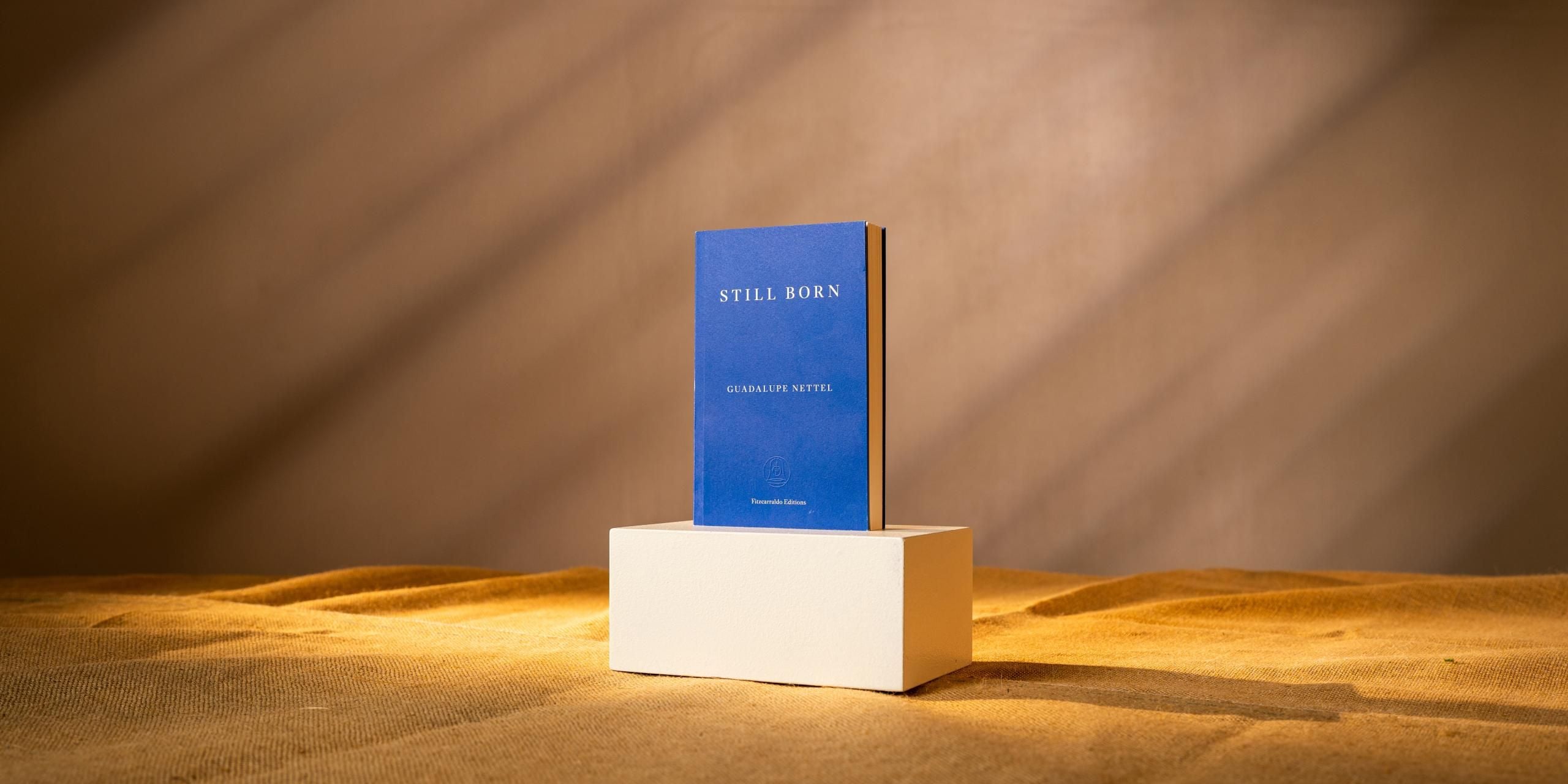
Reading guide: Still Born by Guadalupe Nettel, translated by Rosalind Harvey
You are viewing: Contents
- Published
Shortlisted for the International Booker Prize 2023, Guadalupe Nettel’s gripping and insightful fourth novel explores one of life’s most consequential decisions – whether or not to have children
Whether you’re new to the book or have read it and would like to explore it more deeply, here is our comprehensive guide, featuring insights from critics, our judges and the book’s author and translator, as well as discussion points and suggestions for further reading.
Synopsis
Alina and Laura are independent and career-driven women in their mid-thirties - and neither has built their future around the prospect of a family. Laura has taken the drastic decision to be sterilised, but as time goes by Alina becomes drawn to the idea of becoming a mother.
When complications arise in Alina’s pregnancy and Laura becomes attached to her neighbour’s son, both women are forced to reckon with the complexity of their emotions, in Guadalupe Nettel’s sensitive and surgically precise exploration of maternal ambivalence.

Guadalupe Nettel
The main characters
Laura
Still Born is told through the eyes of Laura, the novel’s narrator. Laura is a woman in her mid-thirties who lives in Mexico City, and is childless by choice. Laura is so dedicated to this decision that she takes the unusual step to be sterilised at a young age. After her long-term relationship breaks down and she moves into a new apartment, she becomes drawn to and attached to her neighbour’s son - which forces her to reckon with her own ideologies.
Alina
Alina is Laura’s best friend. The two women bond over their shared feelings and ambivalence towards motherhood and children, but Alina’s feelings unexpectedly soften over time. When she takes steps to get pregnant with her partner, she is dealt a life-changing blow as her pregnancy brings complex and unexpected complications when she is told her child carries a genetic disorder and will not survive childbirth.

Still Born by Guadalupe Nettel, translated by Rosalind Harvey
About the author and translator
Guadalupe Nettel was born in Mexico and grew up ‘between Mexico and France’.
She is the author of the international award-winning novels The Body Where I Was Born (2011), After the Winter (2014, Herralde Novel Prize) and Still Born (2020). She has also written three collections of short stories, all published by Anagrama. Nettel’s work has been translated into more than 15 languages and has appeared in publications such as Granta, the White Review, El País, the New York Times, La Repubblica and La Stampa. She currently lives in Mexico City and is the director of the magazine Revista de la Universidad de México.
Rosalind Harvey is a literary translator and educator from Bristol, now based in Coventry in the West Midlands, UK.
Harvey has translated writers such as Juan Pablo Villalobos, Elvira Navarro, Alberto Barrera Tyszka, and Enrique Vila-Matas, and their work has been shortlisted for the Guardian First Book Award and the Oxford–Weidenfeld Translation Prize, amongst others. She is a Fellow of the Royal Society of Literature, an Arts Foundation Fellow, a committee member of the Translators Association, and a founding member of the Emerging Translators Network.

Rosalind Harvey
What the International Booker Prize judges said
‘Two best friends share an aversion to “the human shackles” of motherhood, only to discover that life has other plans. With a twisty, enveloping plot, the novel poses some of the knottiest questions about freedom, disability, and dependence - all in language so blunt it burns.
‘This novel – taking on the knottiest questions about agency, motherhood, the precariousness of the body – exerts a magnetic force; the choices and fates of its characters feel as real as life.
‘It is written very close to the bone, for which we have Rosalind Harvey’s superb translation to thank. There is rare propulsion to the plot (for literary fiction) that arises not from any strained special effect but from our investment in the characters and its evocation of the ordinary yet life-altering choices they –and we – must make. One is pinned to the page.
‘Nettel has created rich, flawed, searching characters and allows such access to them – their minds, desires, and contradictions. In part, her book is about the very closeness and intimacy it enacts.
‘The friendship at heart of the novel – between Alina and Laura – will resonate deeply. Nettel renders their bond in all its richness and complexity.
‘The book is written in such a direct, unornamented style and the characters and their predicaments feel so universal that one could, in fact, be forgiven for forgetting this book was fiction. Its concerns are very timely: what does it mean to have true agency over one’s body or life; what does caretaking entail; where do we draw the borders of our bodies and our families?’

International Booker Prize judges 2023: Parul Sehgal, Frederick Studemann, Uilleam Blacker, Leïla Slimani and Tan Twan Eng
© Hugo Glendinning
What the critics said
London Review of Books:
‘A different version of the novel might have cast Alina as the narrator. Instead, Laura serves as witness and interpreter, establishing a buffer between the reader and the book’s harrowing events. The prose, which appears in an elegant translation by Rosalind Harvey, retains a matter-of-factness, and in some places a synoptic quality … that is rarely freighted with sadness or despair. One result is that the tumult of a doomed pregnancy and the insufficiencies of women’s healthcare recede. It’s friendship, not crisis, that emerges as the novel’s focal point.’
Buzz:
‘Still Born is a moving, nuanced exploration of motherhood and the complexity of the maternal instinct… What follows is a complicated journey from pregnancy to new life, during which both Alina and Laura’s views on parenthood are put to the test as life throws complications at them that they could never have envisaged. All sides of the argument are handled with delicacy and insight, and aside from a recurring pigeon metaphor that feels a little too on-the nose, the writing is subtle, sharp, and beautifully rendered thanks to Rosalind Harvey’s smooth translation.’
The Economist:
‘Rosalind Harvey skilfully translates the original Spanish into precise and plain, but deeply moving, prose. Without resorting to sentimentality, the novel charts its characters’ halting efforts to understand and comfort one another. It is a piercing reflection on the ways acts of care bind people together.’
TLS:
‘This highly original novel, in an excellent translation by Rosalind Harvey, pursues a range of ideas connected to children, who should have them and who should take care of them…There’s a dark undertow to Still Born that reminded me of Elena Ferrante’s novels.’
World Literature Today:
‘As in her novel, in these stories Nettel pares back the narrative frame to the basics, letting her focus more closely on the emotions, demoralization, and confusion that her women experience as they seek to gain an understanding of their situation, and ultimately a degree of agency over it.’
The Face:
‘Nettel approaches mothering with originality and oceans of empathy. Some of her deftest insights arrive trojan horse-like with her light touch, stealthy and startling.’
The prose, which appears in an elegant translation by Rosalind Harvey, retains a matter-of-factness, and in some places a synoptic quality … that is rarely freighted with sadness or despair
Questions and discussion points
Upon selecting Still Born as one of its best books of 2022, The Economist called the novel ‘unsentimental’. To what extent do you agree with this? Discuss how this can be true when dealing with such emotionally-charged subject matter?
The title, Still Born, is of more significance than is initially read. As the author writes in the novel, ‘…We have the children that we have, not the ones we imagined we’d have, or the ones we’d have liked, and they’re the ones we end up having to contend with.’ (Pg. 189). Discuss this quote in relation to the title and the author’s intent behind both.
Much of the language used by the lead character, Laura, is purposefully clinical and devoid of emotion. ‘This is why, whenever things started to get serious with a man, I would explain to him that with me he could never reproduce’. (Pg. 20). Did this strike you upon reading? What effect did it have on you and how does it contribute to the overall tone of the story?
Nettel is known for her psychologically complex characters. Discuss the protagonist’s emotional journey and the ways in which she navigates her internal struggles in the novel.
Maternal ambivalence is a key theme of Still Born and Nettel explores a range of nuanced perspectives and evolving emotions through her portrayal of the two women. Does this feel unusual, or even timely? If so, it begs the question - why has Still Born been written now?
Throughout the novel, a pair of pigeons nest outside Laura’s balcony and she observes them through her window. Soon, it becomes clear they are raising a cuckoo who has infiltrated their nest. ‘It looked nothing like its parents. Its feathers were not grey, blue, or white, but dark and patchy, especially at its neck. None of this seemed to bother the two adult birds. They took care of the chick as if it were their pride and joy. They cooed to it, kept it warm, and did their utmost to bring it insects to eat.’ What bearing does this subplot have on the author’s wider narrative?
‘They were teenagers!’ the first woman cried, putting her brush down on the floor. ‘The guy who killed them said that they were whores who deserved it and that if he was set free, he’d do it again.’ (Pg. 165) While Still Born is a novel about motherhood, the subtext often gives nods to the violence and high rates of femicide in Mexican society. To what extent is the novel a feminist commentary on contemporary womanhood in the region?
When interviewed by The Booker Prizes, Nettel detailed how Still Born was based on the story of a friend and her daughter: ‘Every day, children are born with neurological conditions that set them apart from others. Their families often take these situations as misfortunes that will end forever the life they had and turn it into hell. I wanted to show, through the story of this friend of mine, that it is possible to transform this painful experience into a meaningful one.’ Do you think the author succeeded here? Did you find beauty in Alina’s experience when her daughter Inés was born with micro lissencephaly? Did it feel true to life?
Laura and Alina’s friendship evolves dramatically throughout the novel. At one point, Laura questions their friendship when their shared point of view changes, when Alina changes her mind and decides she would like children. Why does this change initially drive a wedge between them? Why is this commonality of such importance to Laura?
When asked if there was one specific moment in the book that stood out and stuck in their minds, our judges said it was the final page: ‘There are some scraps of dialogue, and Alina utters a very ordinary phrase, a cliché. But, for the reader, having hurtled through the story and all its convolutions, having seen all that remains hidden in the private lives of these characters, that line lands with prismatic power. Simple and devastating. What an ending.’ Was that the moment that stood out for you? What did you make of the book’s final lines, especially in relation to the events of the book as a whole?

Still Born by Guadalupe Nettel, translated by Rosalind Harvey
Resources and further reading
Buy the book
AnOther Mag: Guadalupe Nettel’s Searing New Novel Asks: What Makes a Mother?
https://www.anothermag.com/design-living/14319/still-born-guadalupe-nettel-interview
The Oxonian Review: A Mother’s Place
https://oxonianreview.com/articles/a-mother-s-place
Leyendo Latam: In Conversation with Literary Translator Rosalind Harvey
https://leyendolatam.com/in-conversation-with-literary-translator-rosalind-harvey/
The Economist
https://www.economist.com/culture/2022/06/30/a-transfixing-tale-of-motherhood-and-friendship
If you enjoyed this book, why not try…
Boulder by Eva Baltasar, translated by Julia Sanches
The Lost Daughter by Elena Ferrante
A Life’s Work by Rachel Cusk
Motherhood by Sheila Heti
Love Me Tender by Constance Debré


Features


- Book recommendations
Nine Booker-nominated novels featuring strong female friendships
- Book recommendations
12 of the best Booker-nominated books by Latin American authors


- Information
- Competition