

How Late It Was, How Late
by James Kelman (prize winner)
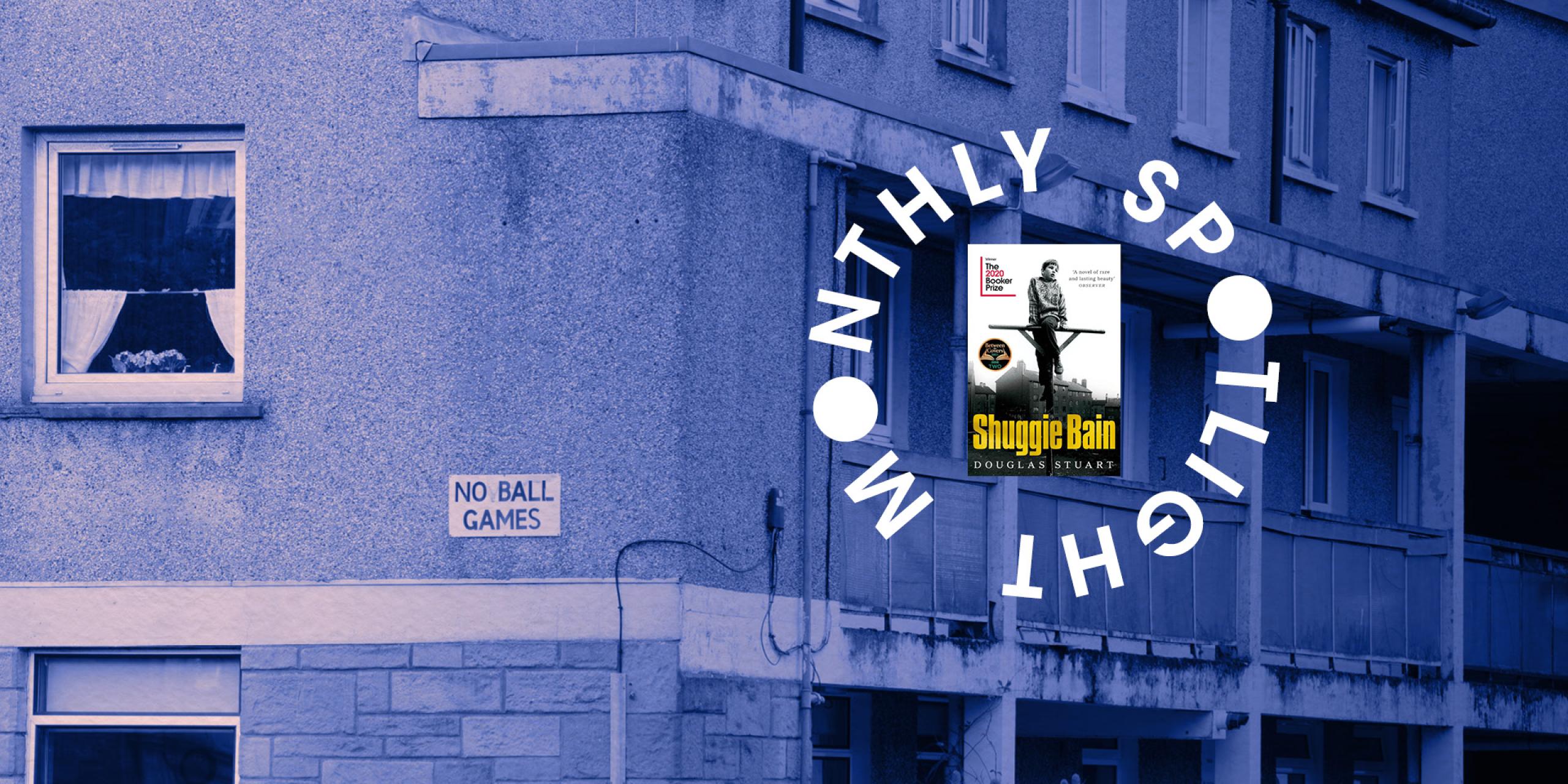
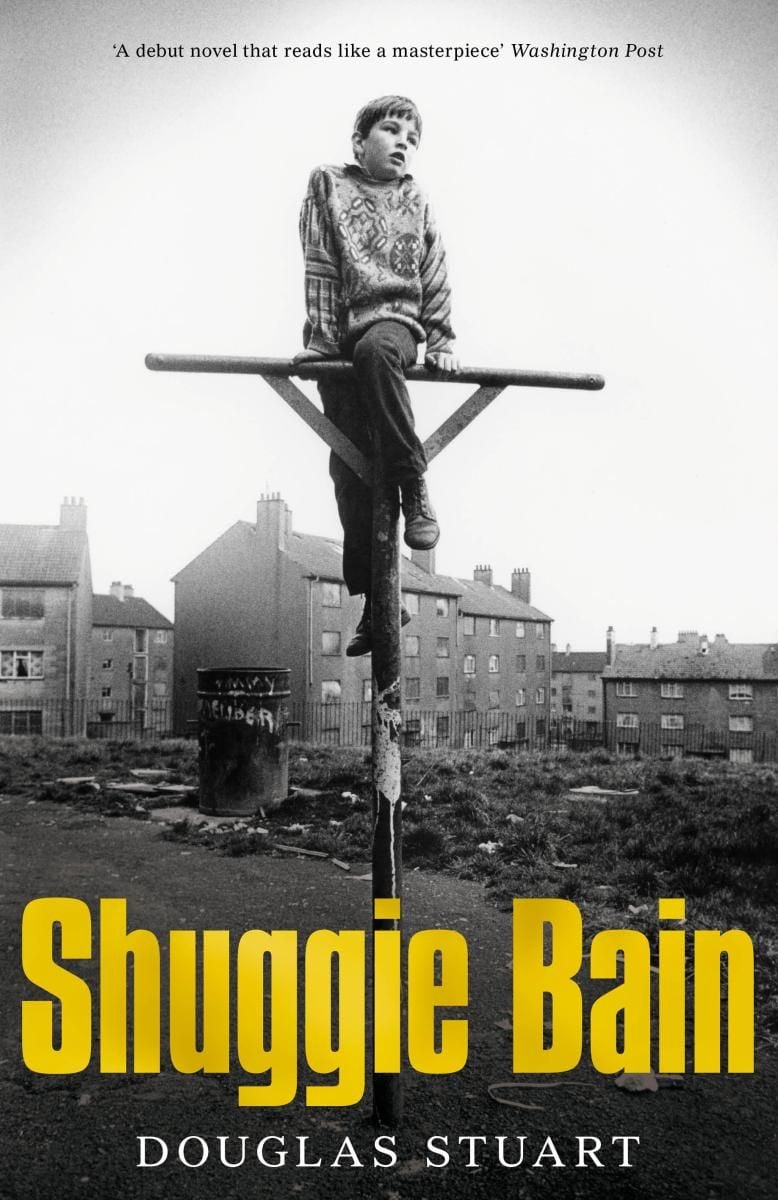
Douglas Stuart’s blistering and heartbreaking debut is an exploration of the unsinkable love that only children can have for their damaged parents
Whether you’re new to Shuggie Bain or have read it and would like to explore it more deeply, here is our comprehensive guide, featuring insights from critics, our judges and the book’s author, as well as discussion points and suggestions for further reading.
1981, Glasgow. The city is dying. Poverty is on the rise. When her philandering husband walks out, leaving her alone with three children, Agnes turns to alcohol for comfort. The children try their best to save her. Yet one by one they have to abandon her in order to save themselves. Shuggie still holds out hope. But Shuggie has problems of his own, despite all his efforts to pass as ‘normal’. Agnes wants to protect her son, but her addiction has the power to eclipse everything. And everyone.
Shuggie Bain won the Booker Prize in 2020.
Shuggie Bain
Hugh ‘Shuggie’ Bain is the protagonist of the story. As a young boy, he becomes his mother’s carer after his father abandons them. His two other siblings leave as well, driven out by their mother’s alcohol addiction. Shuggie struggles with his identity and finds it hard to make friends as he comes to terms with his sexuality and where he fits in.
Agnes Bain
Agnes is the mother of three children, Catherine, Leek and Shuggie. She sinks into alcoholism after Shuggie’s father leaves her for another woman. Despite her despair, she always maintains her outward appearance and manners to a high standard.
Shug Bain
Shug is Shuggie’s father and Agnes’s second husband. He drives a cab and is known for having multiple affairs, abandoning Agnes to be with Joanie Micklewhite. He is selfish and abusive towards Agnes and doesn’t accept Shuggie for who he is, pressuring him to be more masculine.
Douglas Stuart was born and raised in Glasgow. Shuggie Bain is his widely acclaimed debut novel. After graduating from the Royal College of Art in London, Stuart moved to New York City, where he began a career in fashion design. His writing work has appeared in the New Yorker and on LitHub. His next novel, John of John, will be published in May 2026.
Douglas Stuart
© Martyn Pickersgill
Mike Maggio, The Washington Independent Review of Books
‘This is an instant classic. A novel that takes places during the Thatcher years and, in a way, defines it. A novel that explores the underbelly of Scottish society. A novel that digs through the grit and grime of 1980s Glasgow to reveal a story that is at once touching and gripping.’
Mari Carlson, BookPage
‘Stuart’s anxious novel is both a tragedy and a survival story. Shuggie is as neglected as Glasgow, but through his mother’s demise, he discovers his strength. Shuggie Bain celebrates taking charge of one’s own destiny.’
Annie Bostrom, Booklist
‘Perfect for getting lost in, Stuart’s richly wrought coming-of-age saga is a trenchant portrayal of poverty and addiction, true to life and steeped in its era, setting, and dialect.’
Sue De Groot, The Sunday Times (South Africa)
‘The words ‘powerful’, ‘compelling’ and ‘a universal story’ are used in many book reviews. Rarely are they as appropriate as when applied to Shuggie Bain. Douglas Stuart’s transcendent debut novel might be set in the bleakest reaches of Glasgow in the 1980s, but the characters that pop and crackle and snap in Scottish dialect from its pages are people we know: people with fatal flaws and lovable eccentricities; people trying by whatever means possible to crawl through to the end of each grinding day; people fed and fuelled by the illusion of a better tomorrow.’
Kirkus
‘The way Irvine Welsh’s Trainspotting carved a permanent place in our heads and hearts for the junkies of late-1980s Edinburgh, the language, imagery, and story of fashion designer Stuart’s debut novel apotheosizes the life of the Bain family of Glasgow … In indelible, patiently crafted vignettes covering the next 11 years of their lives, we watch what happens to Shuggie and his family. Stuart evokes the experience of each character with unbelievable compassion … You will never forget Shuggie Bain. Scene by scene, this book is a masterpiece.’
‘The characters in Shuggie Bain couldn’t exist anywhere else; Glasgow is as much in their blood as it is in mine. Childhood in Glasgow was tough, and distance certainly helped me to distil the story out of my experiences of the city. That distance brought clarity but it also allowed me to fall in love with the city again.’
‘The reception has been phenomenal. Though the book is set in a time and place, the things it touches on are universal. America has many places that have been deindustrialised. And addiction sweeps in when hope leaves.
‘I’ve spent months talking to people here about the history of Glasgow, its geography and the socio-economic outlook.
‘And I’ve had to explain a lot of Scottish vernacular. But I couldn’t imagine writing a book about Glasgow that didn’t show its language. It’s one of the most beautiful things about the city and one of the most creative things that we have as a people. We’re forever putting sentences together in really startling ways. I love that.
‘But feelings of inferiority plague working-class writers and that stops a lot of voices with a lot of things to say that never make it to the page. My advice is – bring your experience to the page any way you can.’
Shuggie Bain was inspired by the author’s childhood, growing up with a mother who struggled with addiction in 1980s working-class Glasgow. While it’s not a direct representation of Douglas Stuart’s life, it does contain real stories from his life combined with fictional ones. Does knowing it was inspired by Stuart’s own experiences affect how you feel about the book?
Shuggie’s mother Agnes, takes immense pride in her appearance, as well as the immaculate upkeep of her house. On the surface, she conveys the idea that everything is OK, even as she sinks into alcoholism and struggles to care for Shuggie. ‘Everyday with the make-up on and her hair done, she climbed out of her grave and held her head high. When she had disgraced herself with drink, she got up the next day, put on her best coat, and faced the world. When her belly was empty and her weans were hungry, she did her hair and let the world think otherwise’ (page 267-268). Why do you think Agnes acts like this, keeping up appearances while abandoning her other responsibilities, including as a mother?
Even after Agnes withdraws from the world and her other two children leave, Shuggie is still devoted to his mother. Their roles reverse, with Shuggie becoming a parent-like figure and Agnes becoming dependent on her son. Why do you think Shuggie stayed while his siblings left?
In the book, there is a distinct contrast between what society considers masculine and feminine. Shuggie rejects the stereotypically masculine, interested instead in things like hair and makeup, and playing with dolls. As he gets older, he is bullied for his feminine mannerisms, from the way he speaks to the way he dances. People within Shuggie’s life describe him as ‘no right’, but he’s unable to figure out why. Why do you think Shuggie doesn’t understand what people say about him?
Stuart uses authentic 1980s Glaswegian dialect in the novel. What did you think of the use of dialect? How did it affect your reading – and understanding – of the book?
Shuggie Bain is shaped by the political and social circumstances of the time, specifically the influence of Margaret Thatcher’s government and the rise of poverty and unemployment in Glasgow. Do you think Stuart’s depiction of 1980s Glasgow is an accurate one? How does it compare to other works of fiction, films or TV series that set in this era or location?
Shuggie always hopes his mother will triumph over her addiction and that he will finally fit in with his community. With the heart-breaking ending in mind, do you think Shuggie will remain optimistic or will he become jaded by the challenges he’s faced?
Agnes’s reliance on men and her need for their validation contributes to her downfall, and she descends into alcoholism after her husband, Shug, leaves her for another woman. What else do you think contributes to Agnes’ struggles with addiction?
Shuggie Bain was rejected over 40 times before it was finally published. Lucy Luck, Stuart’s UK agent, said it was because the book was ‘too long, it was bleak; there was a general sort of admiration, but not love, which is a classic response’. Knowing the amount of success the book has had since, why do you think publishers might have initially had a ‘general sort of admiration but not love’ for the novel?
The Guardian: Douglas Stuart on Shuggie Bain and his tough start: ‘Living with an alcoholic, there wasn’t much I didn’t see’
Soft Punk Mag: “The Need to Write” – Douglas Stuart
Vogue: The Beauty and Brutality of Douglas Stuart’s Shuggie Bain
NPR: ‘Shuggie Bain’ Will Lift You Up — And Tear You Up
Edbookfest: Douglas Stuart with Nicola Sturgeon | Welcome Home, Shuggie Bain | Edinburgh Book Festival
by James Kelman (prize winner)
by Roddy Doyle (prize winner)
by Hanya Yanagihara
by Paul Murray
by Brandon Taylor
by Arundhati Roy (prize winner)
Winner of The Booker Prize 2020