

Win one of five copies of our Monthly Spotlight title for August, plus a limited-edition Booker Prize tote bag
- Published
Five years after winning the Booker for Shuggie Bain, Douglas Stuart reflects on the pressures of being a prize winner, the queer canon, the politics of dialect, and how the arts have become less accessible for working-class people
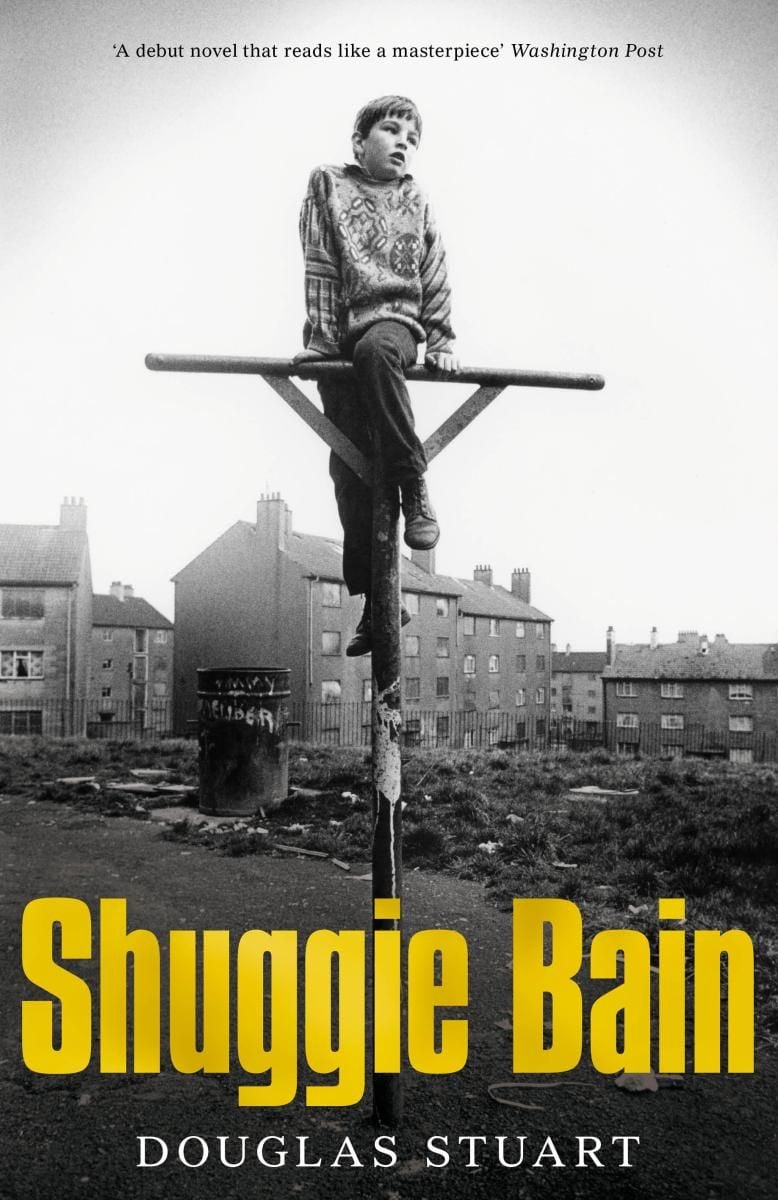
Shuggie Bain won the Booker Prize in 2020. It was your debut novel, and one that was famously rejected by 40 publishers before it found its way into print. How did it feel to win after such a journey, and what impact did the win have on your career, both immediately and in the five years that have followed?
After all that rejection, to win the Booker made me feel like I hadn’t been entirely delusional, and that I had been right to walk away from the security of my fashion career and trust my dreams. But it also taught me that you cannot control the response to your work, and so you must weather the criticism, the rejection, and even the praise, and just keep on with the writing.
It took me a long time to share my work with others because I assumed it would be rejected. I was 18 when James Kelman won the Booker and I remember the backlash to that win, all the imperialist nonsense that followed, the snobbery and sneering that came from London literary circles. It’s really a shameful moment in literary history but the message was loud and clear for the next generation.
It is a great honour to see my work in the Booker pantheon, but winning comes with a strange pressure. In hindsight, I loved being an outsider because it is a wonderfully freeing place to write from. All that matters is doing the work, and as a writer you have to protect that private space as much as you can and keep other people’s expectations out.
The Booker has brought so many blessings, but it comes with heavy expectations. I remember on the evening I won, I did my first interview about seven minutes after the announcement and the interviewer asked if I would suffer from ‘difficult second album syndrome’ and would my next novel be a failure? I mean, how British is that?
Shuggie Bain draws heavily from your own upbringing. What was the moment when you knew you wanted to turn personal experience into fiction? How difficult was it to revisit your childhood – and was any of it cathartic?
I left Glasgow as a young man and eventually moved to New York. I’ve now lived half my life in a self-imposed exile. I was really lucky to work in fashion, but it was so far from my own childhood that no one in New York understood where I was from or what it was like. Growing up poor, gay, and with addiction at home taught me to hide lots of things from the world. By the time I turned 32, I felt like no one really knew the whole me, so I began writing fiction as a process of making sense of myself, to myself.
I conjured all these Glaswegian characters because they made me feel less homesick. And I wanted to write a big social novel because that particular moment in Glasgow’s history truly belonged to the collective and not just to the individual.
All writers pull from personal experience, but it was too confrontational a project to ever feel cathartic. I often had to rush through a scene and then step away for weeks at a time. I found some answers I had been searching for because fiction asked me to consider other peoples’ pain. It wasn’t that the writing offered me any healing, but it forced me to deepen my understanding of why certain people were the way they were and through that came some acceptance.

Douglas Stuart speaks at The 2020 Booker Prize Awards Ceremony, broadcast in partnership with the BBC, at the Roundhouse in London
© David Parry/PA Wire
You must weather the criticism, the rejection, and even the praise, and just keep on with the writing
Buy the book
Throughout the novel, Shuggie is often described as ‘no right’. How did you approach writing about a young, queer boy growing up in a world that had no place – or vocabulary – for him?
I had to exercise some self-restraint when writing about the eighties, and I had to keep thinking about how I was writing of a time when even ‘good’ people felt right when expressing their bigotry. It’s easy to see that we should have known better, but people just didn’t. I write to try and understand that lack of understanding, and to examine cruelty without any judgement or self-reflection.
We had so little language, so little incentive to process what was really going on, and that’s not just true of homophobia, it was also true of addiction and all kinds of gender issues. It was truly dark times. I am struck when I get on a stage now and people want to ask me about trauma, or mental health, or catharsis, which are words I had never heard until I was in my thirties.
Part of the desire to write about homophobia is because Scotland has truly transformed into a modern nation and I don’t want us to forget our recent past in case we repeat it. Within the queer community we lost several generations to disease and so younger generations have also lost important accounts of what it was to grow up gay in the eighties.
If I’m really honest, I also feel the queer community is keen to rush towards a better future and in doing so they would rather not dwell on the hatred of the very recent past. That’s a very middle-class, liberal-minded impulse and dangerous because it obscures the reality that some of us still live with the daily threat of bigotry. I’m often asked: ‘but yes, when will you write a happy queer story?’ and my answer is, ‘when the world is a happy place for all queer people’.
Did you consciously set out to develop and expand on those themes further in your second novel, Young Mungo?
Shuggie and Mungo are linked in many ways. I didn’t allow Shuggie to express any desire because all his love is for his mother, Agnes, and I wanted a real intensity to that filial love. But before I had even finished Shuggie, I knew I wanted to write about the jeopardy of first romantic love. Mungo was like an overlooked second child patiently waiting for me to be done raising my first born. I think of both books as part of an eventual triptych, a loose tapestry of Scottish masculinity, if you like.
I wanted to write about two young men falling in love in working-class Glasgow, which was taboo enough, but I also wanted them to fall in love across sectarian lines, because the divide is very real and dangerous in many housing schemes in the East End.
I never had a first love of my own. I was so closeted and determined to conceal my sexuality, that I never had that innocent romantic awakening that all of my straight friends did. I wanted to conjure one through fiction.
Also, frankly, when we talk about the queer canon, it is almost entirely focussed on middle-class lives, and the consequences for being gay and working class are so different and often harder. I used to laugh when a middle-class character would be discovered to be gay and would be banished to the Continent by his family. I mean, that’s not a punishment, that’s a holiday.
Growing up poor, gay, and with addiction at home taught me to hide lots of things from the world… I began writing fiction as a process of making sense of myself, to myself
Buy the book
You come from a lineage of Scottish writers who’ve written about life on the margins with a brutal honesty, often with dark humour (such as fellow Booker Prize winner James Kelman, and writers like Alan Warner and Irvine Welsh). How has that literary tradition shaped your writing, and do you now feel part of that cohort?
I was baptised by the explosion of Scottish writing that burst forth in the nineties. I remember the glory of seeing your own people on the page, how it made me feel worthy, and really, really powerful.
But I would add to your list countless others such as Agnes Owens, Liz Lochhead, Janice Galloway, and Alasdair Gray. They were like rock stars to me, they were just so cool because they were so very real. They understood writing was of and for the people. They created the most beautiful sentences with the plainest language and the least amount of pretension. I couldn’t write without the encouragement of their work.
Above all this, their writing also laid the foundation for a whole new generation because they challenged imperialist ideas of what ‘high literature’ could be. I’m keenly aware that the reason books like Shuggie can be embraced today is because Kelman, Welsh and the others already fought the hard fight.
The feedback loop of modern publishing is instant and so algorithmically commercial that it knows to please and rarely discomfort the reader. Now as a published author, I can really appreciate the bravery it took for these Scottish writers to be so unflinchingly true. Literature’s greatest power is in confrontation.
I don’t think we talk enough about How Late it Was, How Late, and appreciate what a work of authorial bravery it is. It’s an exceedingly rare quality in books. There are so many books that claim to tackle a dark subject but still pull their punches in the end, in order to let the reader have their happy ending. It’s not simply that these Scottish writers inspired me, but their unwillingness to sugar-coat should remind more authors that we have a powerful light to shine.
Working-class voices are so often flattened or erased in fiction. Was writing in a Glaswegian dialect a way of asserting the value of those voices in contemporary literature?
Yes. But I also did it because it was beautiful. Dialect is at my core, it’s the first stories I heard, it’s the people I love. Dialect is not only language, it tells us about communities, it gives us so much history and had I written the novel in standard English I would have betrayed my characters and the city that made me. The fact that I didn’t do that is one of the reasons the book was rejected so many times.
The use of dialect is absolutely political. It reveals something about each character. They should all speak broad Glaswegian, but because the Bain family reject it, it tells you they have an internalised shame and aspirations of ‘better’. Agnes Bain understands the way Britain looked down upon and limited people with strong regional accents. It was important to show their refusal to speak as their neighbours do because it shows how imperialism poisoned us all.
There was an article in The Times recently about the University of Edinburgh and the institutionalised snobbery that is rampant there. The headline quote was ‘Class and accent are the last acceptable forms of discrimination’. Anyone who has faced that snobbery knows how true that is. But what makes Britain so great is our dialects and regional perspectives.
I did an event in England a few years back, and when the interlocutor mentioned to the audience that my work had been translated into over 40 languages, a woman raised her hand and smiling, she asked, ‘…but when will it be translated into English?’ She meant to be funny, but she misread the room.
The use of dialect is absolutely political. It reveals something about each character
What more can the industry do to open the door to writers from similar backgrounds – and make space for more stories like Shuggie?
I am losing hope for a fairer Britain. I grew up in a time when the government told us if we suffered through the pain of change, if only they pawned the things we held in community, then the few would make so much money that they would share it with all of us. Now the few have made all the money, and they have absolutely no intention of investing in society.
I think the arts have become less accessible for the poor. With wages for writers falling and with higher education looking more and more like a luxury product, I don’t think working-class people can actually afford to write. I didn’t publish until I was 44 because I spent 20 years working and trying to save up enough money to step away from my day job and simply have time to think.
I wish Britain would look to Ireland and realise how important culture is to the economy and see how important the working class have always been to culture. It’s an act of political suppression when those who have the most to say are given the least opportunity to say it.
Publishers – and perhaps, equally importantly, the commissioning editors of literary criticism – should hire more working-class people in house to ensure a broader range of tastemakers. I’ve loved the conversations about diversity in publishing, but diversity rarely included or dealt with the intersection of class, and I have found that talking about class or poverty makes publishing people feel guilty and deeply defensive.
Since becoming a published author, I’ve met only a handful of people who work in publishing who come from a working-class background. I know it’s so few, because they race across the room and introduce themselves like spies working for the resistance.
But why am I still having to explain all this in 2025 when 30 per cent of British kids live on or around the poverty line? Shuggie Bain is not as much of an outlier as people would like to think. I feel like we don’t truly chronicle or understand our nation if we don’t hear from a decent cross-section of the working class (which, of course, includes all genders, sexualities and racial backgrounds).
I get into so many fights with friends over the subject of ‘Are books a middle-class pastime?’ People act as if they are, but they are not. The most loyal patrons of libraries and the most voracious, insightful readers I know are the women I grew up with. One of the things I am most proud of is how Shuggie Bain went to the top of the discount supermarket charts (above all the mass-market fiction) and stayed there for a good many months. If you can’t get the publishing industry to diversify for a moral imperative, then at least they should know there’s plenty money to be made from engaging us properly.
Growing up, I received the signal that books and literature were not for the likes of me. I think many people, especially young working-class men, are still made to feel like this and that feeling is harmful. A lot would change if the industry did more to reach out to male readers – not male writers, reports of our death have been greatly exaggerated! – but male readers.
I want to see a world where men and boys get excited about books in the way women and girls do. The responsibility to fix that lies solely with men. I wish we would learn from the great things women have achieved and start to build groups and spaces and influencers and all the smart things women have done to make reading so exciting and empowering.

Douglas Stuart
© Martyn Pickersgill
I get into so many fights with friends over the subject of “Are books a middle-class pastime?” People act as if they are, but they are not
Buy the book
Tell us about a book that made you fall in love with reading. In what ways did it shape you, or your worldview, perhaps as a teenager or young adult?
We didn’t have any books at home, so I came to reading quite late in life. When I was 16 my mother died and I had two wonderful English teachers, Mr Arthur and Mr Archibald, who, in trying to help me pick up the pieces and make something of my life, pressed Tess of the D’Urbervilles and Jude The Obscure by Thomas Hardy into my hands. Everything that Tess and Jude went through in the 1890s still felt relevant in 1980s, and the struggle of characters trying to triumph over their circumstances and better their situations has been central to my own work.
From there on I devoured everything I could. My reading life really blossomed when I discovered the ‘Young Angry’ writers of the last century: Osborne, Sillitoe, Greene, Delaney and, even at the periphery, the queer aesthetic of Joe Orton. I owe a great debt to A Kestrel for a Knave by Barry Hines. I love the language of that book and I think about the Casper brothers all the time.
Tell us about a book that made you want to become a writer. How did it inspire you to embark on your own creative journey, and how did it influence your writing style or aspirations as an author?
I wanted to be Tennessee Williams when I was a student. What cliché. The Glass Menagerie was another text pressed upon me by my teachers and I could really sympathise with the co-dependent claustrophobia of the Wingfields. I had a suffocating mother and so I totally sympathised with Laura, which is probably the gayest thing I’ve ever admitted. I love Williams, and strangely enough, there’s something very Glaswegian in all that over-the-top drama, all that glamour and faded glory. The play had a huge effect on 17-year-old me and I remember writing all these immature, pastiche-y things that were halfway between A Streetcar and The Steamie.
Later in life, I developed a real fondness for American writers who focus on the South. They write as if composing music and they make me want to have my own body of work that feels tied to place. I love Morrison and Faulkner and McCarthy. If ever I feel empty, I like to open one of their books and devour the sentences.
Which book you are currently reading, and what made you pick it up?
I love to read about real jobs. I was sent a copy of Seascraper by Benjamin Wood, about a Shanker, a shrimp farmer, who works the low tides in the north of England. It’s a quiet, unassuming book about honest work and modest dreams, about sons and their duty, and those brief, wonderful moments when we glimpse the possibility of living a different life. Benjamin Wood is a magnificent writer and I intend to read everything he has written.
What would you consider your all-time favourite book?
I don’t have just one all-time favourite. I’m a Gemini. But I do love Young Adam by Alexander Trocchi. Set in the 1950s, it’s the story of a lothario bargehand working the canal between Glasgow and Edinburgh. When he finds the body of a dead girl floating in the water, the story slowly unfolds and we see he is more involved than he lets on.
A real pleasure read is As Meat Loves Salt by Maria McCann. Set at the time of the English Civil War, it’s the story of a servant who runs away and is swept up into battle. He falls in love with a fellow foot soldier, but when he can’t possess the other man, madness overtakes him. It’s a meticulously researched historical novel – think Hilary Mantel, but sexier.
Is there a hidden gem in the Booker Library that you would recommend to others, and if so, why?
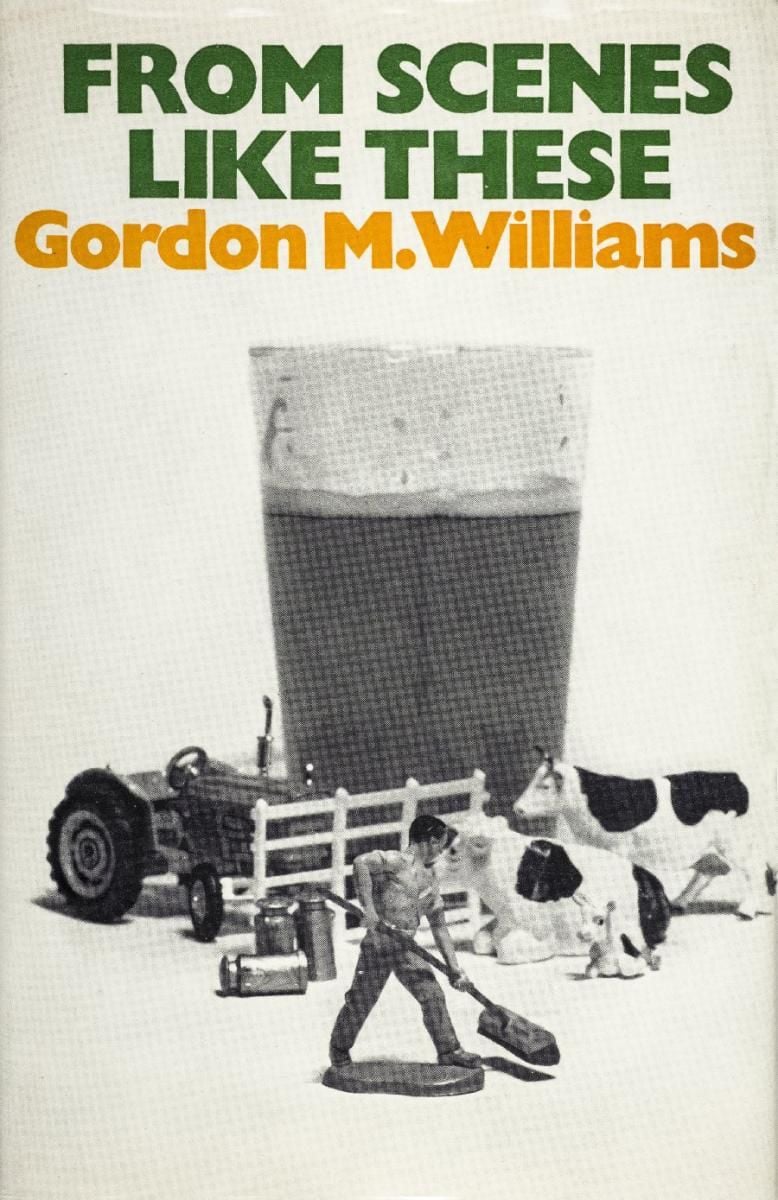
I read a lot of Scottish fiction, but From Scenes Like These by Gordon M. Williams is a book I didn’t know about until a few years ago. It was nominated for the inaugural Booker Prize and as soon as I read it, it just felt like a lost Scottish classic. It belongs in the firmament somewhere between Sunset Song and Gentlemen of the West.
It’s a brutal portrait of a young farmhand coming of age in a changing country. What I particularly loved is the collision of two Scotlands: the old dying ways of agrarian communities and the new post-war housing schemes that are encroaching upon farming land. The main character is a young man who has poor role models, and it is a powerful work that looks at the darker side of masculinity which still feels really relevant today.
Shuggie Bain
Winner of The Booker Prize 2020
- Published by
- Picador
Douglas Stuart’s blistering and heartbreaking debut is an exploration of the unsinkable love that only children can have for their damaged parents


Features


- Reading guides
Reading guide: John of John by Douglas Stuart


- Book recommendations
The Booker Prize 2026 shortlist: what our judges said

- Book recommendations
Fashion in fiction: how clothes shape the story in Booker Prize novels


- Book extract
An extract from John of John by Douglas Stuart

- Book recommendations