

- Book recommendations
From London’s Chinatown to Tiananmen Square, a Chinese-themed Booker Prizes reading list
From London’s Chinatown to Tiananmen Square, a Chinese-themed Booker Prizes reading list
- Written by
- Paul Davies
- Published
To celebrate the Booker Prizes’ collaboration with Poon’s London, we present a selection of the best Chinese-themed fiction that has been nominated for our prizes
Over the past few months, the judges for the International Booker Prize 2026, supported by Bukhman Philanthropies, have been busy searching for a longlist, shortlist and winning book from among the 128 submitted works.
As part of that intense selection process, the key judging meetings have been held at the flagship restaurant of Chinese heritage food lifestyle brand Poon’s London – which just happens to be downstairs from the Booker Prizes’ offices at Somerset House.
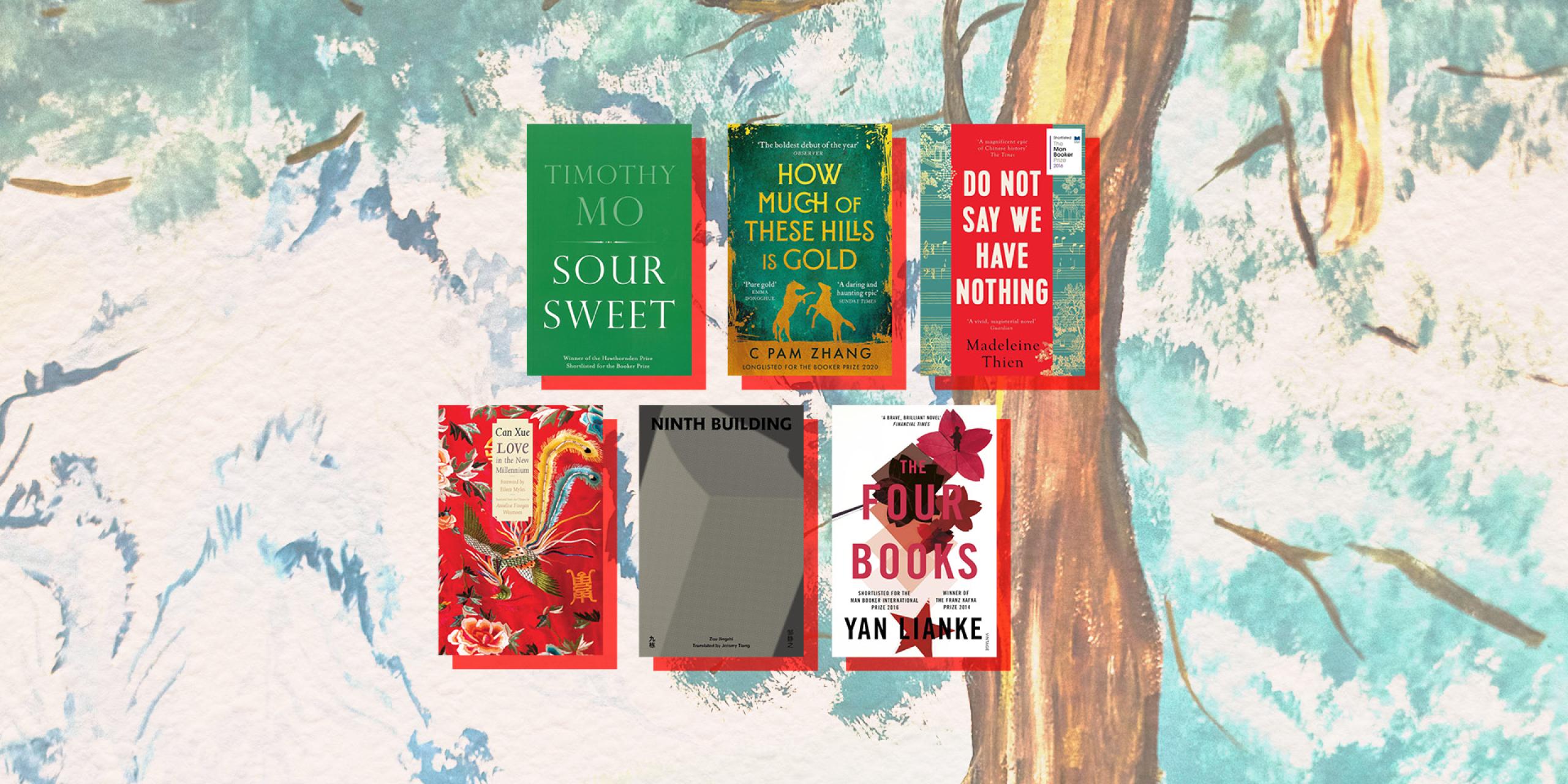
To celebrate our collaboration with Poon’s, we have selected six of the best Booker-nominated Chinese-themed works, spanning over four decades of our prizes.
If you’re visiting Poon’s in the coming weeks and months, look out for these books on the restaurant’s bookshelves!

The International Booker Prize 2026 judges – Sophie Hughes, Marcus du Sautoy, Natasha Brown, Troy Onyango and Nilanjana S. Roy – photographed at Poon’s London
© Sophie Davidson for Booker Prize Foundation
Buy the book
Sour Sweet by Timothy Mo, shortlisted for the Booker Prize 1982
Born in Hong Kong in 1950 to a Chinese father and a British mother, Timothy Mo came to Britain at the age of 10. After graduating from Oxford, he worked as a journalist, before turning to fiction in the 1980s. It was an extraordinarily successful move, and he was soon heralded as being part of a new wave of exciting young novelists, alongside Kazuo Ishiguro, Ian McEwan and Salman Rushdie.
Remarkably, three of Mo’s first four novels were shortlisted for the Booker Prize. The second of them, and best-known, Sour Sweet, follows a Hong Kong Chinese family, the Chens, as they struggle to make a new life for themselves in 1960 London. Mo paints a heartwarming, funny and tragic portrait of London’s Chinatown community as the Chens adapt to British life and watch their dreams of a successful future slowly diminish, while doing their best to keep out of reach of the powerful Triad gangs. A film version was released in 1988, directed by Mike Newell (Four Weddings and a Funeral), with a screenplay by Ian McEwan.
Critics praised Mo for what they assumed to be a highly accurate, first-hand account of Chinese immigrant life. The author rejected the claim: ‘I know nothing about Chinese culture,’ he said. ‘It is as hard for me to write about things Chinese as it must have been for Paul Scott or for J.G. Farrell to write about India. I’m a Brit.’
Despite his early successes, by the early 1990s Mo had dropped off the literary radar almost completely, and had moved to South East Asia. As Mark Lawson noted in the Guardian in 2012, Mo is, ‘among his generation of British writers, the one who got away’.
Buy the book
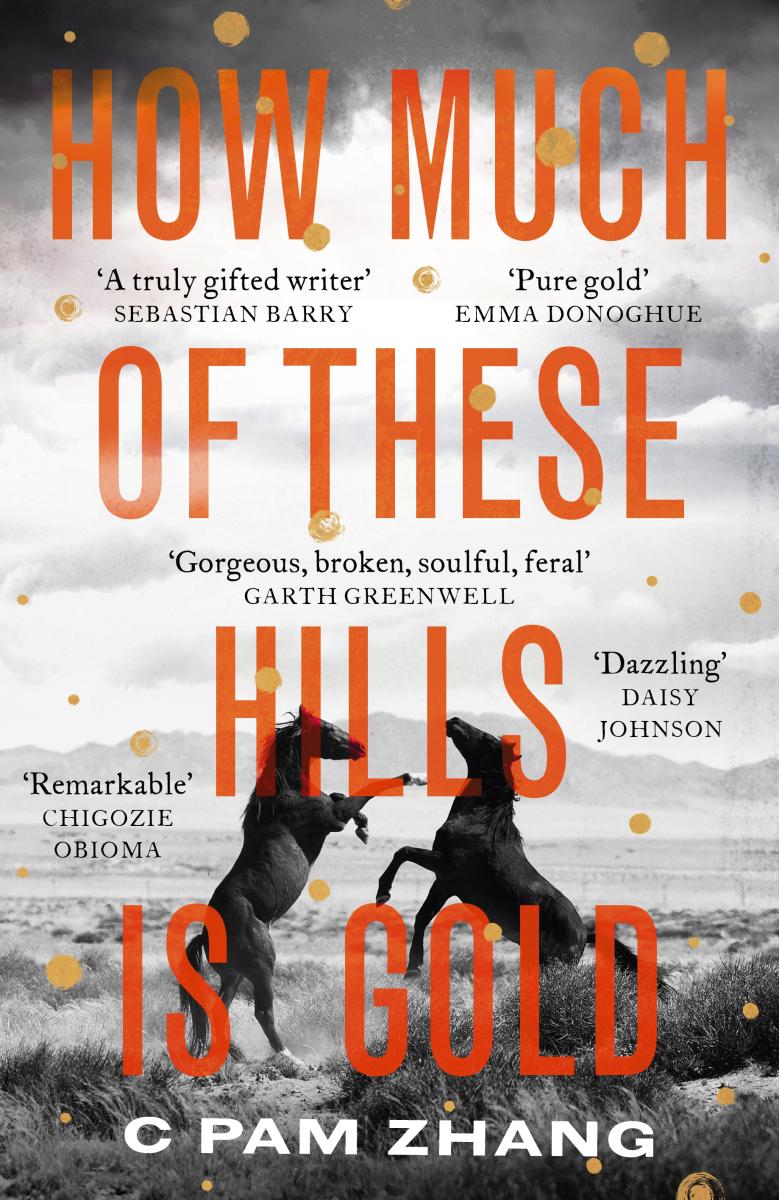
How Much of These Hills Is Gold by C. Pam Zhang, longlisted for the Booker Prize 2022
Beijing-born C. Pam Zhang’s impressive debut re-imagines the American West in an epic novel about family and the search for a home and a fortune. Chinese immigration to the US during the California Gold Rush is the backdrop to this gripping adventure, which centres on Lucy and Sam, two destitute children of Chinese descent, and newly orphaned siblings. With their father’s body on their backs, they roam an unforgiving landscape dotted with buffalo bones and tiger paw prints, searching for a place to give him a proper burial.
In the San Francisco Chronicle, Alexis Burling wrote: ‘On a basic level, How Much of These Hills Is Gold succeeds as a riveting account of one family’s struggle to make ends meet in the American West… But the novel is also a much-needed homage to the untold history of American immigrants, one in which Zhang discards the tired retelling of our white forefathers’ journey to discover and conquer great new lands, in favor of giving a voice to the “honest folks” of color who were enslaved, robbed, raped or murdered in the process.’
Zhang began writing the book after waking up one day with the opening sentence fully formed in her head: ‘When they first arrived there was still long yellow grass in this valley, and scrub oaks on the ridge, and poppies after rain.’ In an interview with The Margins, a digital magazine published by the Asian American Writers’ Workshop, she said: ‘My most unapologetic hope is that this book will find a place in the canon, and that in doing so it will reshape the American West as it exists in our cultural imagination. The myth of the West can be capacious enough to hold non-white people, queer people, immigrants, Native people, and many others.’
Buy the book
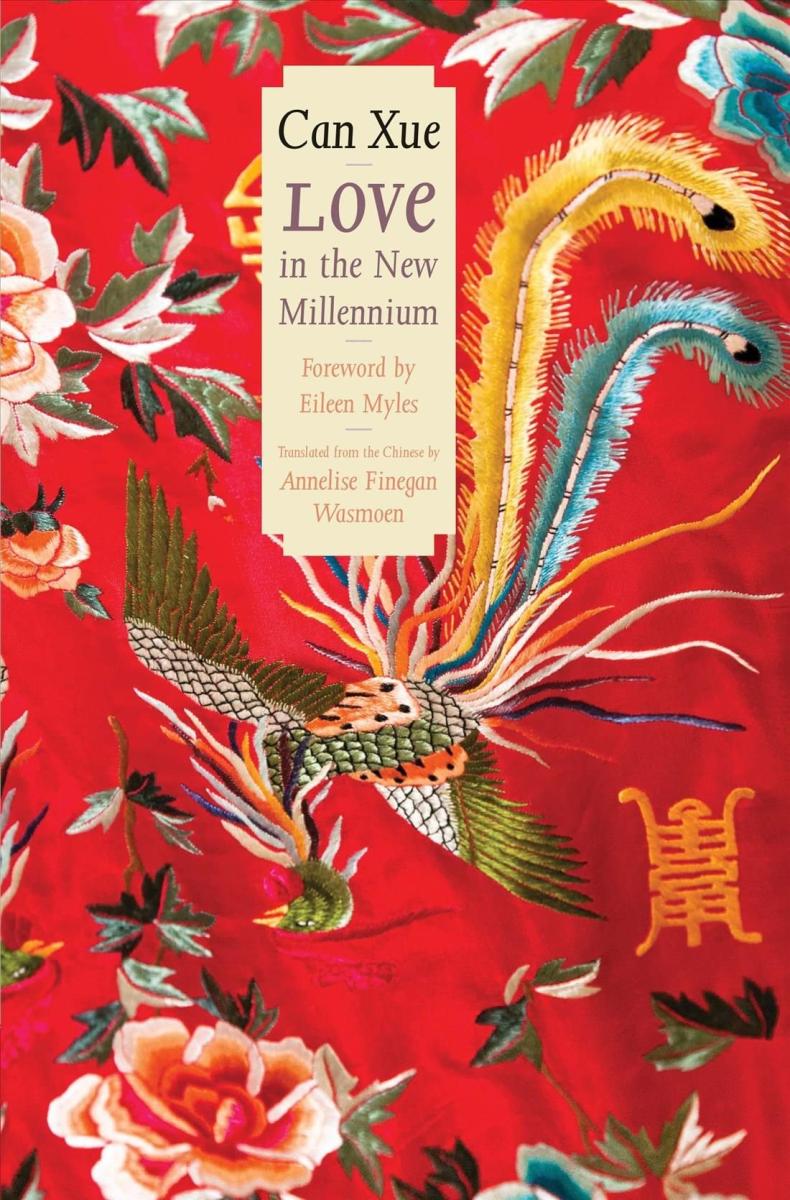
Love in the New Millennium by Can Xue, translated by Annelise Finegan Wasmoen, longlisted for the International Booker Prize 2019
Born in Hunan and the author of dozens of novels, novellas and works of non-fiction, Can Xue is regarded as one of China’s most prominent authors of philosophical, experimental and avant garde literature. The ambitious, dreamlike qualities of her writing are fully on show in this 2019 novel, which examines the nebulous, perplexing nature of love in China in the 21st century.
A group of women live in a paranoid, claustrophobic world of constant surveillance, where informants lurk in the shadows and conspiracies abound. Some try to flee – to a mysterious gambling bordello, or an ancestral home that can only be reached through muddy caves and tunnels. Others seek out the refuge of Nest County, where traditional herbal medicines can reshape or psychologically transport the self.
In the White Review, Jay Gao called the novel ‘a metaphysical inquiry into the networks of flawed communities. Through the stereoscopic tales of a group of women searching for enlightenment in an uncanny world of espionage and secrets, Can Xue stretches the dimensions of the novel, conjuring an irresistible fiction that is — like the reality in which one character finds himself — “an enormous enigma within an enigma”.’
In an interview with Yale University Press, Can explained that she saw the book as the fruit of a love between Eastern and Western cultures. ‘The keyword to Love in the New Millennium is communication,’ she added. ‘This communication in the novel is the communication of love between men and women, but it is actually also the communication of all of humankind. I feel that, in the new millennium, humanity’s communication has become a major issue of life-or-death importance.’
Buy the book
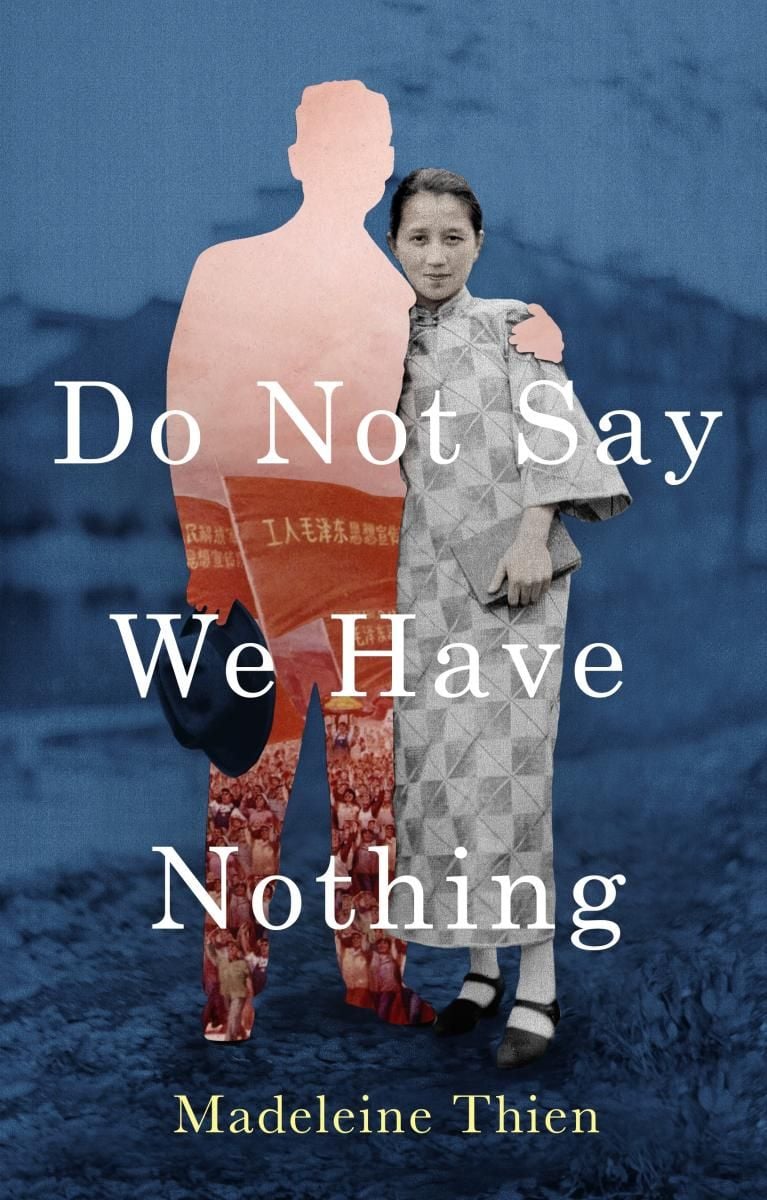
Do Not Say We Have Nothing by Madeleine Thien, shortlisted for the Booker Prize 2016
Madeleine Thien’s third novel is a moving, multi-generational story about what happens to artistic expression in times of political turmoil. The action moves from China to Canada and follows musicians who suffered during the Cultural Revolution and in the aftermath of the Tiananmen Square protests. A gripping evocation of the persuasive power of revolution and its effects on personal and national identity, the book won two of Canada’s biggest literary awards: the Scotiabank Giller Prize and the Governor General’s Award.
In Canada, in 1991, ten-year-old Marie and her mother invite a guest into their home: a young woman who has fled China in the aftermath of the Tiananmen Square protests. Through the sharing of the woman’s family story, Madeleine Thein brings to life one of the most significant political regimes of the 20th century and its traumatic legacy, which still resonates for a new generation.
In the Los Angeles Review of Books, Nick Admussen wrote: ‘This is a beautiful historical story, brilliantly told: Thien’s characters are sharply drawn, and their repeated involvement in the major events of 20th century Chinese life underline the way in which so much of the turmoil and transformation of China’s revolutionary century happened to the same people.’
Like Marie, Thien is a child of several cultures (her parents were from Hong Kong and Malaysia), who grew up in Canada. In an interview with Lit Hub, she said: ‘I really am at a cultural and language remove. At the same time, I have this almost childlike intimacy with Chinese culture (years of calligraphy lessons, traditional dance classes, 1980s Hong Kong television serials, family, etc). I’ve always felt that the history that appears to be distant… is in fact the history that reveals ourselves. They are the narratives in which we are implicated, but which we have tried to forget.’
Buy the book
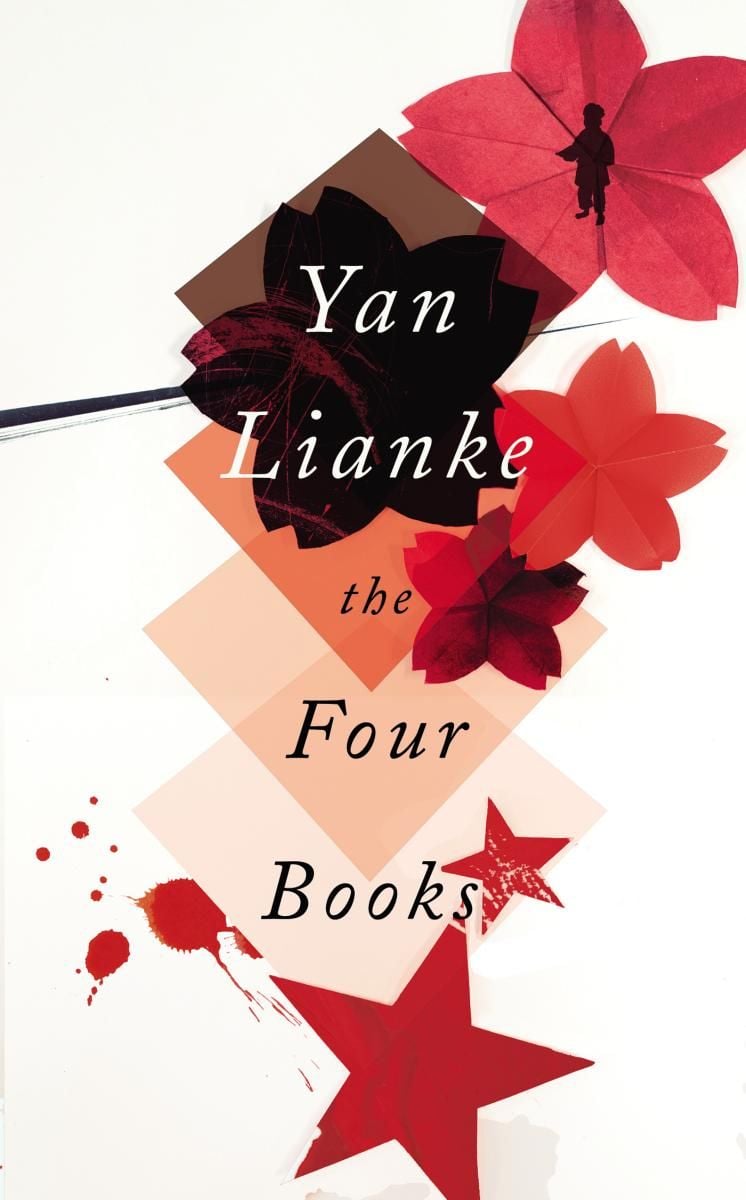
The Four Books by Yan Lianke, translated by Carlos Rojas, shortlisted for the International Booker Prize 2016
Yan Lianke’s compelling Orwellian satire tells the story of one of China’s most controversial periods, Mao’s Great Leap Forward, in which at least 45 million people died.
It’s 1958, and in a sprawling, brutal re-education camp, like hundreds of others, inmates (mostly Chinese intellectuals) must meet challenges set by the higher-ups: to grow an ever-spiralling amount of wheat and to smelt vast quantities of steel. The stakes are high: they can win their freedom if they collect enough red blossoms, awarded for effort, obedience and informing on others. But when bad weather arrives, followed by three bitter years of famine, the inmates are abandoned by the regime and left on their own to survive.
In the Guardian, Xiaolu Guo wrote: ‘A great writer is able to transfigure harsh reality, tread a path equally absurd and transcendent. In The Four Books, Yan confronts his characters with brutality, but also immerses them in religion and myth, and not just of the Chinese variety. As a reader, you close the book with a profound sense of how ideology has permeated and changed every sector of collective human life, from trivial daily matters to the great ruptures of history.’
The novel is a demonstration of what Yan calls ‘mytho-realism’, a literary style he invented that merges harsh Chinese social reality with absurd myths, as a way to explore deeper, invisible truths. In an interview with The Believer, Yan explained that we are living in a ‘no-truth age’, in which ‘the real truth cannot be detected by our own eyes… That is why I propose the idea of mytho-realism. In writing, I reveal the truth in my mind, the truth that is closer to reality, but it needs to be based on the suspicion of the truth. This is mytho-reality, psychic reality, spiritual reality. It looks ridiculous superficially, but it might be how life really is.’
Buy the book
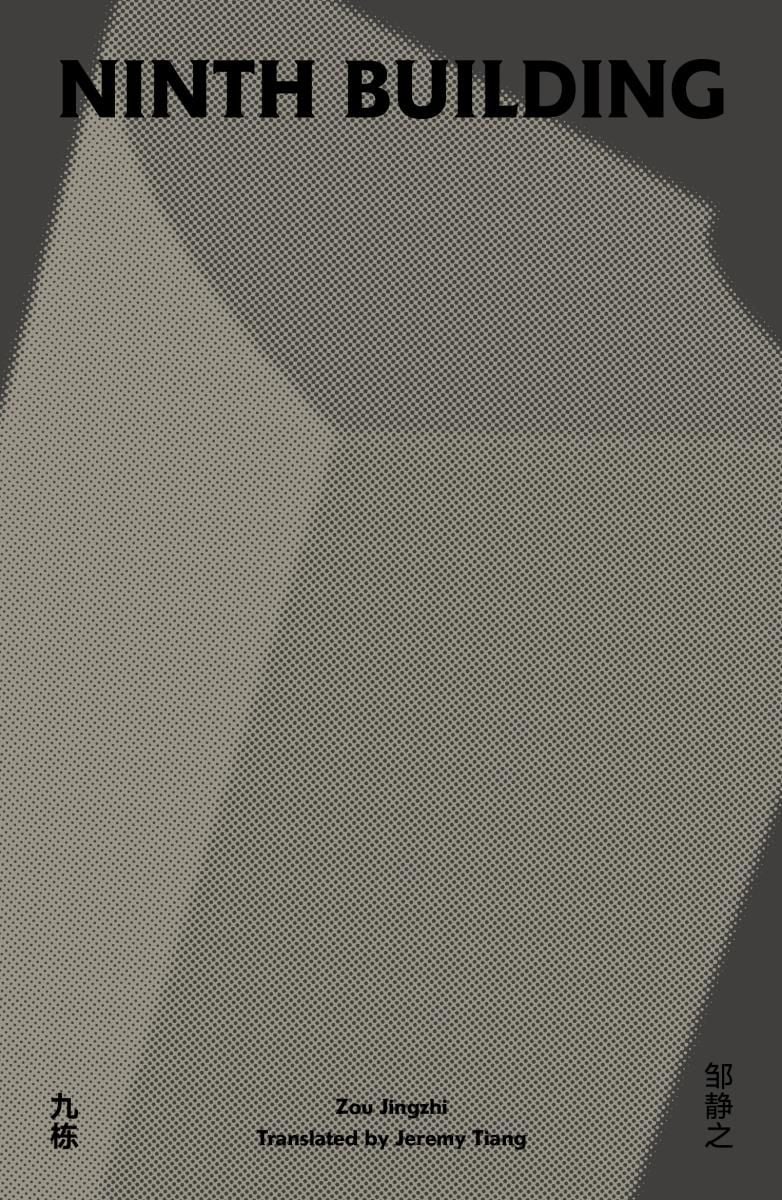
Ninth Building by Zou Jingzhi, translated by Jeremy Tiang, longlisted for the International Booker Prize 2023
A fascinating collection of short vignettes, based on the author’s life in China during the 1960s and 70s – a time of enormous societal and political upheaval and chaos.
The book takes its title from the residential apartment complex in Beijing where the author spent the early part of his childhood. Revisiting his experiences as a boy, at first in the Chinese capital and then exiled to the countryside, Zou captures a side of the Cultural Revolution that is rarely talked about – the utter boredom of life and the sense of a wasted youth under the regime, as well as the dark humour that accompanies such desperate situations.
Born in 1952 in Nanchang, Zou Jungzhi is a poet, screenwriter, essayist and novelist, and the winner of multiple awards. In an interview with the Booker Prizes website in 2023, about Ninth Building, he said: ‘In the early 1990s, my childhood felt like it had been a gust of wind behind the trees. I used to spend my days being lost: What should I write? Whatever I wrote was wrong. It was impossible to get rid of my childhood back then. So I just wrote like that. I wrote for myself. I wrote to let go of my childhood.’
The International Booker Prize 2023 judges described the book as ‘a kaleidoscopic and understated collection of interlocking tales of life in an apartment building under the Cultural Revolution – the daily tedium of its inhabitants, lit by brief and tenuous moments of shared humanity’.
Features

- Long read
- Book recommendations
The Booker Prize guide to... dystopian fiction

- Interview
C Pam Zhang Q&A

- Book recommendations
13 International Booker Prize-nominated books to take you around the world

- Interview
- Opinion
Why we should celebrate translated fiction, according to our longlistees


- Quiz
- Book recommendations