
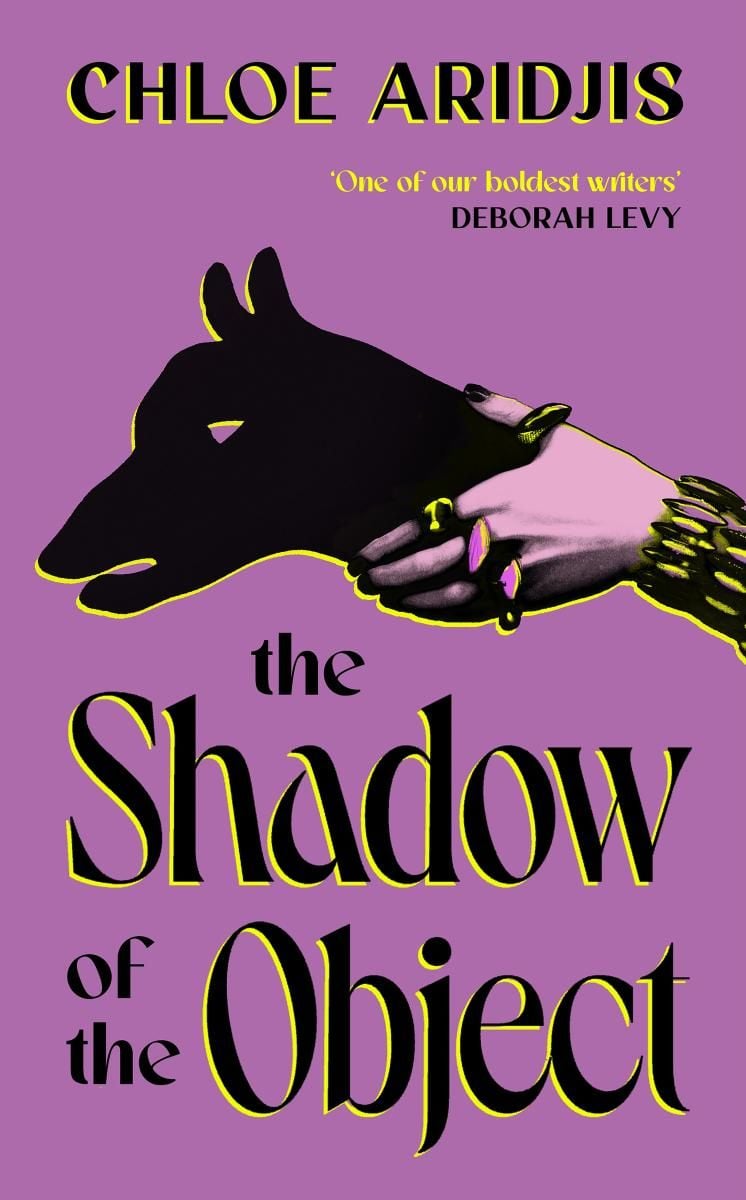

The Shadow of the Object is a magnificent work of shadow-play and a meditation on desire, metamorphosis and mortality
- Published
The author of The Shadow of the Object, longlisted for the Booker Prize 2026, talks about her beloved chaise longue, revisiting Kafka, and the art historian who inspired her latest novel
Buy the book
The inspirations behind my Booker-longlisted book
An obsession with magic lanterns and other early optical instruments. Visits to Magic Lantern Society conventions, where I observed the individuals who attended and tried to imagine their lives. And Aby Warburg, the brilliant, extravagant art historian from Hamburg who a century ago had his own very tactile, dynamic way of handling images. With our present so overrun by technology and the virtual, these vanished worlds were increasingly appealing.
The book that made me fall in love with reading
One of my earliest favourite books was Margaret Wise Brown’s Goodnight Moon. I loved the illustrations in primary colours and the lulling bedtime ritual of naming everything in the room. There’s something about that book that continued to interest me years later. When I was around 10, I read The Chronicles of Narnia by C.S. Lewis and loved that too, especially the first few volumes. It was all so intriguing: Aslan the lion, the witch with her Turkish delight, the wintry landscape just beyond the wardrobe. Portals. Those were times when I read without any notion of allegory.
The book that made me want to become a writer
A collection of Baudelaire’s prose poems. These 50 vignettes, mostly set in Paris, teemed with urban alienation and fraught encounters between the charmed and the damned. Baudelaire wrote them late in life, but as a teen I was thrilled and unnerved by how easily a scene, a reverie, could tip into anguish or something grotesque. The language might occasionally feel dated now, but the sentiments are still so modern. These prose poems always remind me to focus on the periphery rather than the well-trodden centre.
The book I read again and again
It would have to be my collection of Kafka’s short stories. I return to them every year or two, and the experience varies each time. Few writers depict the strangeness of existence so imaginatively or with such compassion. My first published story from around 20 years ago was called ‘The Kafka Society’, and I guess you could say I’m a permanent member.
The book that changed the way I think about the world
Perhaps not a terribly original reply for a Mexican writer but it would have to be Juan Rulfo’s Pedro Páramo, a little masterpiece from 1955, which I first read at school. Part ghost story, part dark rural manifesto. We were initially disoriented by the disembodied voices and ambiguity between the dead and the living, and the non-linear structure, but the teacher made us see how it was also a profound indictment of social inequality in the countryside.
Baudelaire’s prose poems teemed with urban alienation and fraught encounters between the charmed and the damned. They remind me to focus on the periphery rather than the well-trodden centre
The book that changed the way I think about the novel
Thomas Bernhard made me think about how a voice and cadence can carry the reader through a novel, not only movement from A to B. His fiction is full of permutations and digressions, and narrators who rarely leave one spot, yet it’s all sustained by an incredible tension. I started with Wittgenstein’s Nephew and then read everything else. Years later it was Ann Quin, who also experimented with narrative form and expectation. She was a master at depicting haunted female interiors, women who often found themselves in strange, alienated environments, and she wrote in such adventurous, unsettling prose.
The book I’m reading right now
I’ve been reading The Pillow Book by Sei Shōnagon, an extraordinary journal kept by a lady-in-waiting at a Japanese court at the turn of the 11th century. The world she describes is cloistered yet vast in detail, and she’s given to cataloguing in wonderfully unusual ways. Her lists include ‘Slovenly-looking things’ and ‘Occasions when something inconsequential has its day’. As someone prone to list-making myself, I highly appreciate reading those made by others. This book is a marvel of observation and imagination, and as it progresses Shōnagon’s own personality – her wit, her aesthetic tastes, her minor irritations – is revealed.
Where I most like to read
On a scarlet chaise longue that a friend in Berlin once gave me. He’d received it as a wedding present and discarded it. I spotted it on the lawn, waiting to be collected. It looks like an analyst’s couch and has occupied an important place in my home ever since. I like reading first thing in the morning, late at night, and on most forms of public transportation.
Where and when I most like to write, and the tools I need
On my laptop at my desk, after my 9am coffee. My study overlooks the street, so I usually have music playing at low volume since the street is so quiet I’m thrown off by the slightest sound. Mornings are definitely best – distraction sets in by early afternoon. If I feel particularly restless, I walk over to the British Library with a notebook and continue working there. But my best writing is still done in my childhood bedroom in Mexico City, unchanged since I left for university. I return home several times a year and enter into hermit mode.
The Booker-nominated book everyone should read
Drive Your Plow Over the Bones of the Dead by Olga Tokarczuk – a poetic and extremely original defence of the animal kingdom, impassioned without ever being didactic.
The Shadow of the Object
- Published by
- Chatto & Windus
A magnificent work of shadow-play and a meditation on desire, metamorphosis and mortality


Features

- Book recommendations