
- Book recommendations
An extract from The South by Tash Aw
An extract from The South by Tash Aw
- Written by
- Tash Aw
- Published
The South by Tash Aw is longlisted for the Booker Prize 2025. Read an extract here
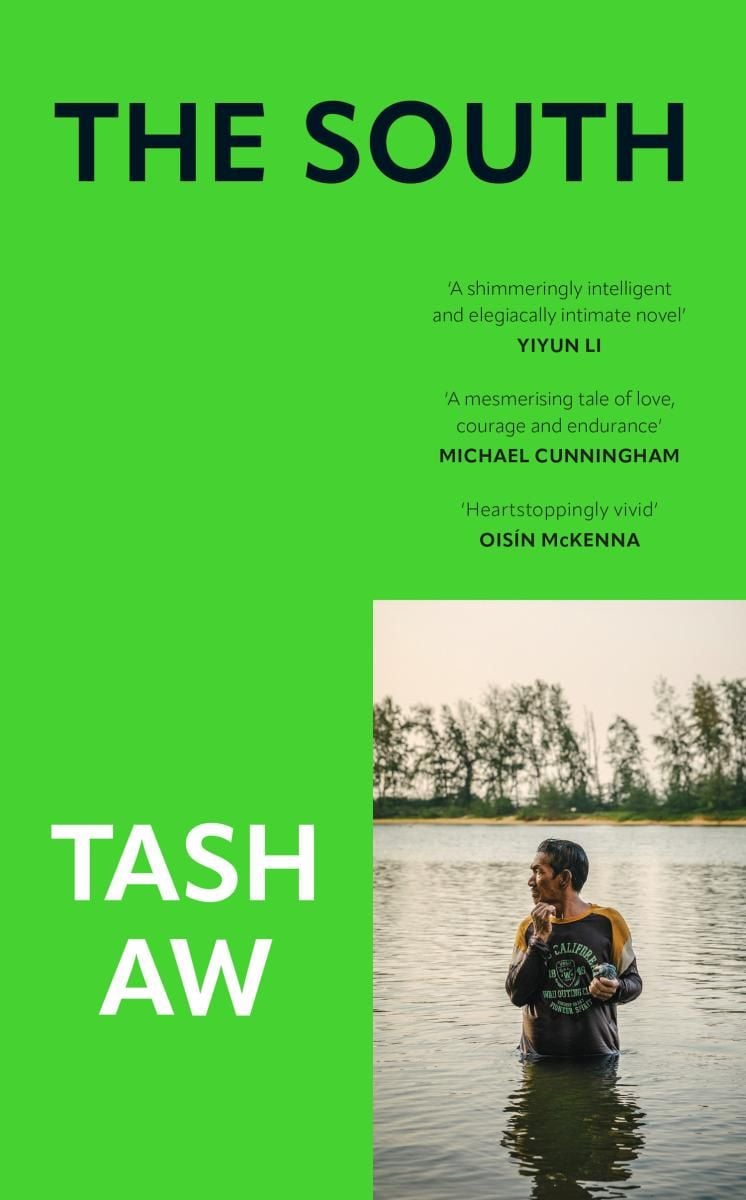
When his grandfather dies, a boy named Jay travels south with his family to the property he left them, a once flourishing farm that has fallen into disrepair. The trees are diseased, the fields parched from months of drought.
Still, Jay’s father, Jack, sends him out to work the land, or whatever land is left. Over the course of these hot, dense days, Jay finds himself drawn to Chuan, the son of the farm’s manager, different from him in every way except for one.
Out in the fields, and on the streets into town, the charge between the boys intensifies. Inside the house, the other family members confront their own regrets, and begin to drift apart. Like the land around them, they are powerless to resist the global forces that threaten to render their lives obsolete.
At once sweeping and intimate, The South is a story of what happens when private and public lives collide. It is the first in a quartet of novels that form Tash Aw’s masterful portrait of a family navigating a period of great change – a reimagined epic for our times.
The South is published in the UK by 4th Estate. This extract is taken from towards the beginning of the book.
Buy the book
Sui knows what the house will look like even before the bend in the road brings it into view. She has imagined this moment of return many times over the past decade, recreating every detail of the house as she approaches it: the way it perches on the low slope of the land, shrinking into the murky backdrop of the old rubber trees; the green paint on the timber cladding faded with time so that it looks barely coloured; the uneven ridge of the roof. Now, the house shimmers in the distance, hovering as if detached from the land, and because the car is juddering on the uneven dirt track, Sui is unable to fix her gaze on it, unable to gauge how far away it is. It has always seemed beyond her reach.
She has no illusions of romance or beauty. She has received occasional snippets of news of the house and the estate over the years, and has adjusted her reconstructed image to take them into account. In 1991 a portion of the roof collapsed after particularly heavy rains – thankfully over the utility area, which housed the kitchen and toilets – and was replaced by corrugated zinc sheets instead of clay tiles, which would have been too costly. The handsome semicircle of trees that her father-in-law had planted nearly half a century earlier had been uprooted in a storm (how many, she’d wanted to ask – all of them?). The handsome timber veranda had become riddled with termites or beetles or some other pest and had to be replaced with a modern concrete porch. Jack had reported these events in passing, each one a brief afterthought.
Our stupid currency is worth nothing these days, the Americans are screwing us, we can’t afford a new car, and by the way the old orchard is being ripped out.
Did you see, the Prime Minister’s best buddy got arrested with a suitcase of cash in Australia, what a bunch of thieves they are, oh, I heard the stream at the farm got contaminated by toxic waste.
I’m up for promotion, can you imagine, your husband might get the top job! Did I tell you the farm manager’s been sick for a few months?
Toxic. A few months. She’d held the information silently inside her and waited for the right moment to ask Jack for more information, but for many days he spoke only of his potential new post, which was of more obvious use to the family than her own concerns – her hopes and anxieties. The things that mattered to her at the time, she realised, were secondary to his concerns. It was hard not to see her entire married life in these terms.
She has imagined this moment of return many times over the past decade, recreating every detail of the house as she approaches it
Not much longer to go now. They have turned off the main road, leaving the grey tarmac behind them and slowing down as they ease their way onto the dirt track. It seems less rutted than before, and a bit wider. Sui remembers the way the tips of the overhanging branches brushed against the car the first time she came here, more than twenty years ago; she could have reached out, if she’d wanted to, and caressed the leaves. But now the forest seems at a safe distance from the car, the foliage covered in the pale rust-coloured dust thrown up by the car.
Jack has slowed right down, the engine of the Volvo wheezing as he shifts between first and second gears. I wish Fong would just tarmac this whole damn road, he says, and curses under his breath, two tight Hokkien syllables. One of the children coughs in the back seat – Jay, of course, always observant, always vigilant. She has to keep an eye on that one. Unlike his sisters, he doesn’t say much; sometimes she wonders what his silence holds. All three have been quiet up to this point – dozing, Sui imagines, but the rocking of the car has woken them up, and now the girls are groaning and complaining. Have we reached the end of the earth yet? Why don’t we just drive to the Sahara, it’ll be closer. We need some water.
The windows are rolled up against the dust outside, and the car’s air-conditioning has never worked properly. Sui feels pinpricks of sweat form on her forehead and dabs at her face with a small square towel. She finds it hard to breathe. She wonders who will be at the house, whether anyone will be there to greet them. Maybe no one.
At last – there it is, smaller than she remembers, but less dilapidated than in her imaginings. Neither the patches of zinc roof nor the cheap incongruous modern porch can change the way the house occupies the land around it, almost obscured from view but still, somehow, undiminished.

The South by Tash Aw
© Yuki Sugiura for Booker Prize Foundation


