
From witchcraft to warfare, trauma to transformation, resilience to cruelty, this year’s longlist shines a light on a vast range of experiences
An extract from The Remembered Soldier by Anjet Daanje, translated by David McKay
An extract from The Remembered Soldier by Anjet Daanje, translated by David McKay
- Published
The Remembered Soldier is longlisted for the International Booker Prize 2026. Read an extract here
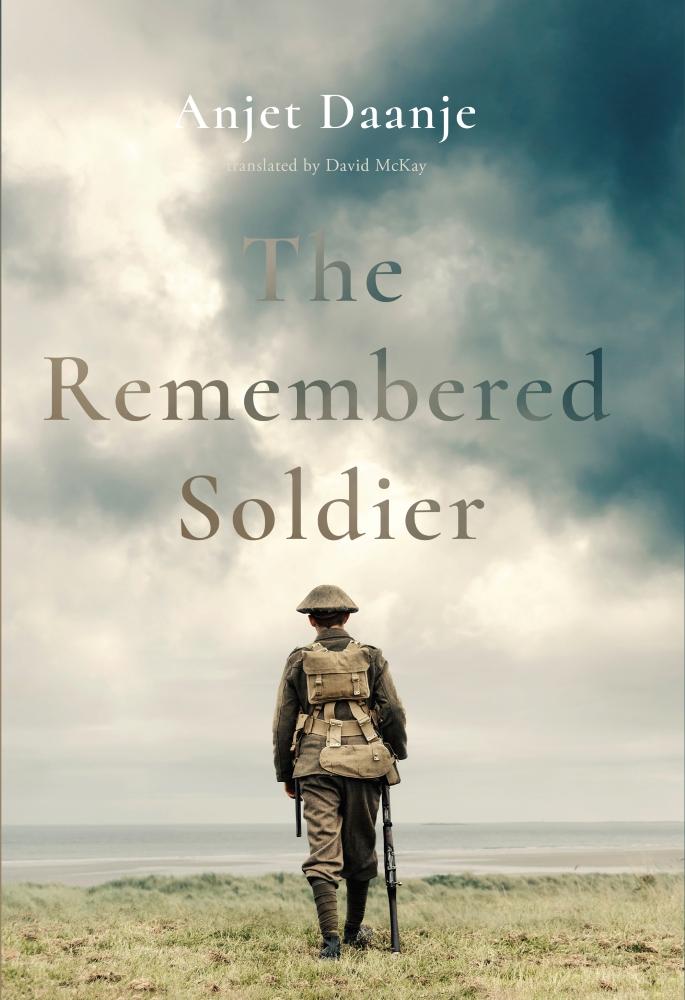
Set in the aftermath of the First World War, The Remembered Soldier is an extraordinary love story about the power of memory and imagination.
Flanders 1922. After serving as a soldier in the Great War, Noon Merckem has lost his memory and lives in a psychiatric asylum. Countless women, responding to a newspaper ad, visit him there in the hope of finding their spouse who vanished in battle.
One day a woman, Julienne, appears and recognises Noon as her husband, the photographer Amand Coppens, and takes him home against medical advice.
Their miraculous reunion doesn’t turn out the way that Julienne wants her envious friends to believe. Only gradually do the two grow close, and Amand’s biography is pieced together on the basis of Julienne’s stories about him.
But how can Amand be certain that Julienne is telling the truth? When he comes to doubt her word, the reader is caught up in a riveting spiral of confusion.
In The Remembered Soldier, we are immersed in the psyche of a war-traumatised man who has lost his identity. It’s published in the UK by Scribe UK. This extract is taken from the novel’s opening chapter.
Buy the book
Maybe this is the last time he will walk down the familiar corridor as the man called Noon Merckem, that door there on the left with those welcoming panes of glass could mean the end of his existence, weak in the knees like a man being dragged to the gallows, that’s how he feels in this instant, as the hope that sustained him, the certainty that everything would be new and better beyond imagining and normal at last, that he would pass through that everyday door and be another man when he came out, a man with a home and a family and a life outside these walls, all drains away. And he comes to a halt on the sun-dappled tiles and Brother Reginald turns toward him and sees the desperation on his face and murmurs that God will never test Noon more harshly than he can bear, and gives an encouraging nod, and Noon remains silent, because in his four years here he has not seen much to reassure him about God’s notions of what is bearable.
And his heart pounds in his throat as he sits on the chair in Dr. De Moor’s office and stares at the colored tiles on the floor, the recurring pattern, its predictability, and he tries not to think of the door leering at him, motionless, a few yards away, soon to open and let her in. The garden, he is in the garden, on his knees pulling weeds in the gentle rain, the heads of lettuce, the endives, the cabbage, the beans, everything is covered with fat drops of water and he watches their slow roll down-ward, down to their death in the black earth. And just when the silence of the garden has rendered her imminent arrival impossible, made it unthinkable like a fantasy that has filled his mind for days and now loses its hold on him as he awakens, just then he hears her voice in the corridor. She is speaking to Dr. De Moor as they approach, what a shrill, unpleasant voice she has, she doesn’t seem to sense that everything here is supposed to make as little noise as possible, the people and footsteps and things and even the nightmares, like hiding your head under the covers so long you start to suffocate, that’s how it sometimes feels, and when the wind rages and the other men grow restless and fearful, Noon steals out into the garden to hear the cry of the gale around the building and imagine himself for just a moment a living part of the world.
And she talks about her husband, she calls him Kamiel, she never could believe he was dead, she says, she tried, but she went on dreaming about him as he had been when he was with her, and then in the morning it seemed he had come in the night to give her courage. And she stops outside the door, and he sees through the grid of the glass her silhouette, a woman’s frail head, a broad-rimmed hat bustling with flowers, and his breath is ragged in his throat, and she, she must be just as nervous as he is, he thinks he hears it in her voice, and he feels a slight pity for her, and at the thought of her fear, his own abates. And the handle is lowered on the other side of the door, and Brother Reginald motions to him to stand up, and the door swings open, and Dr. De Moor steps aside and lets her enter first.
And she is beautiful, he had pictured his wife only in the vaguest outlines, like a figure in a dream, more a feeling than a tangible presence, but never like this woman, with her dark hair arranged in artful, wavy strands, stylish and slender, and in a tasteful outfit. And she doesn’t dare look up at him, as she crosses the threshold he feels her gaze linger on his crude asylum shoes, then creep up the legs of his trousers and hover at knee level until the doctor silently closes the door behind her and with desperate courage she decides the time has come. She raises her head and, trembling, looks him in the eye, hers are large and dark brown, the color of damp soil, and it must be her, it can’t be otherwise, she is a woman he could love, sincerely, deeply, and a weight lifts from his shoulders, and he gives her a cautious smile.
But she stares at him, and deep disillusionment shadows her lovely features, so deep that all the beauty rushes out of her, and her dark eyes fill with tears and she shakes her head, not in quiet denial, but wildly, as if to punish herself for entertaining naive, stupid thoughts for weeks, thoughts she now wishes to cast off by force. And she turns to Dr. De Moor and begins to speak of her husband, Kamiel, conjuring him up, as if she hopes Noon will have turned into her husband the next time she dares to look, and her shrill voice fills the office, her Kamiel, she says, was a hero who fought for the fatherland, he offered himself up for his comrades in arms, he shared the last of his food with them, risked his own life to carry the wounded back to the trenches, that was what they wrote to her after he disappeared, she tells the doctor. And she doesn’t say it, but it echoes in every word, this man, this simple man who stands before her in his scruffy asylum uniform, could never live up to the standards she’s set for her Kamiel, who’s been missing since December 1917, she’s had almost five years to perfect him, he is her masterpiece, her sanctuary, and she’s outraged that Dr. De Moor’s advertisement persuaded her that her Kamiel could ever assume the shape of a madman with amnesia.
And Dr. De Moor listens placidly, his eyes focused on her face with a friendly look as if weighing her words, just as he does in his sessions with his patients, but Noon knows from experience that after the first sentence he draws his conclusions and after the second he lets his mind wander and then he hears nothing except what confirms his diagnosis.
And Noon can’t stand to go on listening either, the feeling that he is the one who has caused her this pain, this immense disappointment she’s been trying to purge with her words for minutes and minutes and is sure to remember until the end of her days, that feeling grips him by the throat, nothing, he has done nothing but sit here and wait for her, and he is no one, he does not exist, and yet evidently he is capable of being the wrong man, and he tells her he’s sorry, and the torrent of words lurches to a startled halt, and she begins to turn toward him but doesn’t dare, her gaze alighting on his left ear and then shrinking back, as if he is her greatest nightmare made flesh, and he closes his mouth and bows his head and stares at the pattern of the tiles, and tries to forget her and her suffering.
And it takes awhile before she leaves, Dr. De Moor tries several times to bring the conversation to a polite close, but she goes on talking, and not once does she turn to face Noon, the man she came for, she’s afraid of him and at the same time doesn’t dare to give up the idea that he might be her Kamiel and face the daylight without the illusions of an hour ago, and she keeps talking, she just keeps talking. And finally Dr. De Moor says the next woman is waiting, and she breaks off, stunned, the next woman, and Noon thinks for an instant that she will cry, she wrings her face into a tortured grimace, and he can’t bear the sight of her grief, he sits in the chair with his head in his hands and doesn’t dare look up until he hears the door shut, and she’s gone, it’s as if she has taken his desires away with her, the silent garden in the rain has vanished, the world outside the walls, the next woman, and he waits.

The Remembered Soldier
© India Hobson for Booker Prize Foundation
The Remembered Soldier
- By
- Anjet Daanje
- Translated by
- David McKay
- Published by
- Scribe UK
Set in the aftermath of the First World War, this is an extraordinary love story about the power of memory and imagination


