

- Book recommendations
An extract from Seascraper by Benjamin Wood
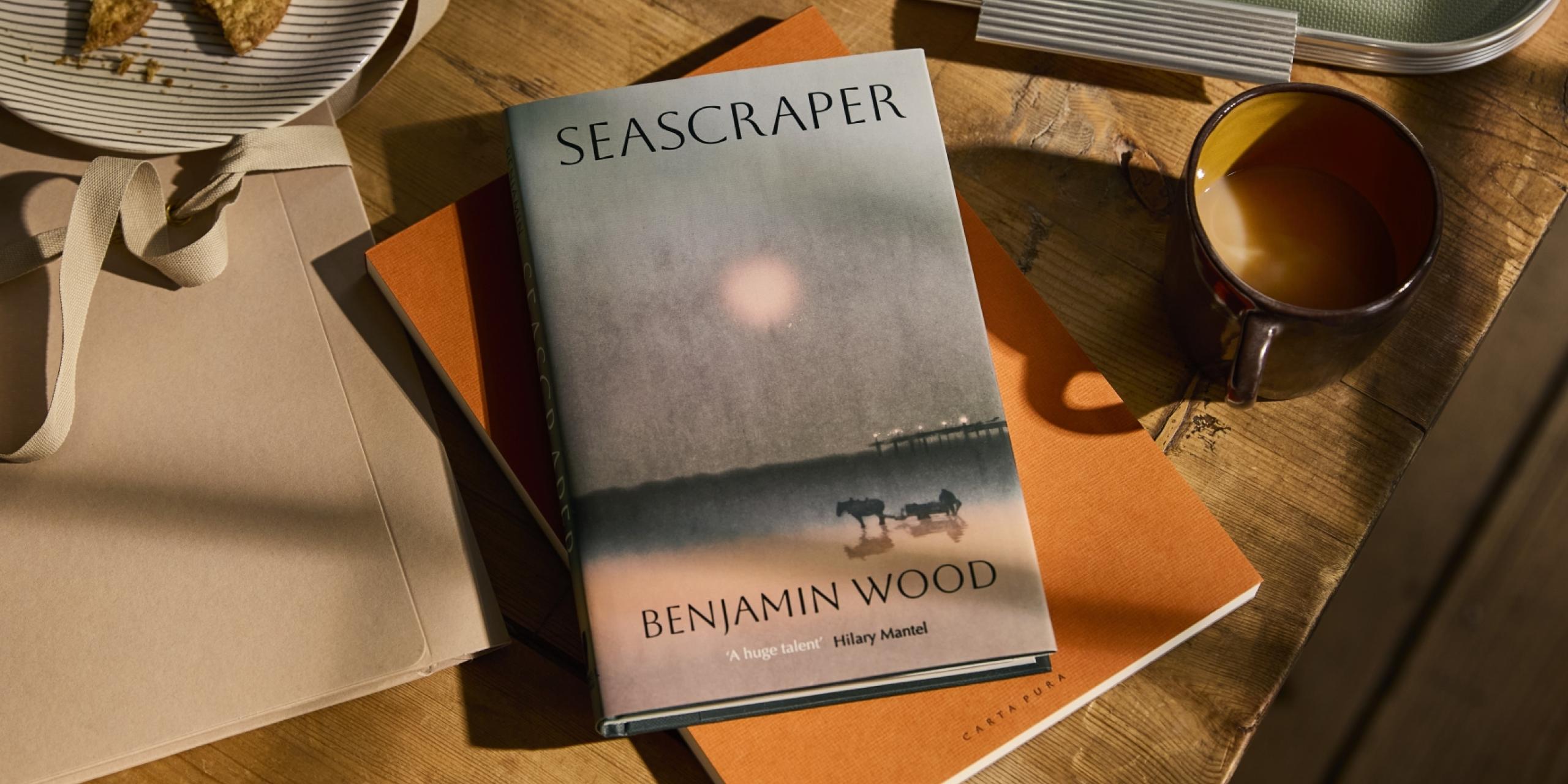
An extract from Seascraper by Benjamin Wood
- Written by
- Benjamin Wood
- Published
Seascraper is longlisted for the Booker Prize 2025. Read an extract here
Thomas lives a slow, deliberate life with his mother in Longferry, working his grandpa’s trade as a shanker. He rises early to take his horse and cart to the grey, gloomy beach and scrape for shrimp, spending the afternoon selling his wares, trying to wash away the salt and scum, pining for Joan Wyath down the street, and rehearsing songs on his guitar. At heart, he is a folk musician, but it remains a private dream.
When a striking visitor turns up, bringing the promise of Hollywood glamour, Thomas is shaken from the drudgery of his days and begins to see a different future. But how much of what the American claims is true, and how far can his inspiration carry Thomas?
Haunting and timeless, this is the story of a young man hemmed in by his circumstances, striving to achieve fulfilment far beyond the world he knows.
Seascraper is published in the UK by Viking. This extract is taken from the novel’s opening chapter.
Buy the book
Thomas Flett relies upon the ebb tide for a living, but he knows the end is near. One day soon, there’ll hardly be a morsel left for him to scrounge up from the beach that can’t be got by quicker means at half the price. Demand for what he catches is already on the wane, and who’s to say the sea will keep on yielding shrimp worth eating anyway. There’s all sorts in the water now that wasn’t there when he was just a lad. Strange chemicals and pesticides and sewage. Barely a few weeks ago, there was a putrid fatty sheen upon the sand from east to west; a month before, he waded in a residue of foam that reeked of curdled milk as he approached the shallows. Fleeting things, but if you’re asking him, they augur trouble – it’s been hard to sleep of late. His dreams are full of slag heaps made from rotten shrimp, and he’s there in amongst them with a shovel, trying to clear a path.
It’s five o’clock or thereabouts. He rises with the sky half-dark between the junction of his curtains, weary with the aches of yesterday. The sea-clothes he peeled off when he came home are slung over the chair beside the open window for an airing: his wool jumper, oiled and mangy at the chest from the persistent wiping of his hands; his trousers patched up at the knees; a shirt gone vinegary beneath the armpits. But no matter. Who’ll be sniffing him except his mother and the horse?
He wears clean long-johns and a fresh white vest to balance out the stink; his ma has folded them so small and neat inside the drawer that he could slide them into envelopes and post them back to her. It’s Thursday, so a hot bath will be taken when he gets back home this afternoon. A nip or two of brandy will be needed afterwards to dull the sting of his exertions. Sleep should follow then, till suppertime at least.
For now, he scrubs his teeth and dashes water on his face. His eyes are puffy, jellified. Three days’ letting whiskers grow has made a scratchy beard – he’ll shave it later, when he feels awake enough to hold the razor straight. His ingrown nails are doubly sore this morning, and his knees crack when he walks – it always takes him half an hour to get his body moving properly. He’s barely twenty years of age, but he goes shuffling down the hallway in his stocking feet with all the spryness of a care-home resident. The bulb inside the kitchen light is faltering again – a quick tap of the lampshade fixes it. He fills the kettle, sparks the stove beneath it, rinses out his flask, and spoons in mounds of instant coffee and three sugars.
His ma is snoring in her room along the hall. The noise is like a pig slurping its feed out of a trough, and if it isn’t getting louder every morning then his tolerance is fading fast. Each snagging intake of her breath grates on his nerves. He makes a good strong cup of tea for her, the bag squeezed in the water till it has the look of casserole, and carries it into the gloom to leave upon her bedside stand. She doesn’t stir when he clicks on the lamp; he has to prod her shoulder. All the baggy flesh there wobbles with the jabbing of his fingertip, which makes him recognise how long it’s been since he last touched another woman. An awful shudder passes through him at the thought – his youth is coming to an end, and all the lasses he has ever kissed could sit around a bridge table.
The crust on his ma’s eyes cracks open slowly, and she levers herself up to rest against the headboard, not a word of thank you, just a nod to mark the furtherance of their routine. Her curls are flattened on one side. She seems as tired as he feels. Her single denture bathes inside a glass upon the windowsill; it makes him mindful of those extra sugars in his coffee, all the butterscotches from the corner shop he’s chewed in secret down the years. He goes to fill his flask over the kitchen sink, knowing she’ll be in her dressing gown and moving soon, to fry some rashers for his breakfast.
He’s barely twenty years of age, but he goes shuffling down the hallway in his stocking feet with all the spryness of a care-home resident
The horse needs feeding up and harnessing. He gets into his boots on the back doorstep, rolls a ciggie underneath the rusty canopy his grandpa built from corrugated iron – it’s hanging by loose screws, and one more heavy rain could bring it down. He’s not repaired it yet, as mending stuff like that requires an aptitude he doesn’t have. His talent is for something else – his grandpa would decry it as a waste of time if he were still alive to hear him sing a tune, and if his ma knew anything about the pocket watch he gave to Harry Wyeth in trade for his guitar, then she would make a bonfire of it in their own backyard.
The first smoke of the day is always one to savour, but it feels especially good this morning – he’s not certain why. A change of weather’s coming, he can sense it in the air, the early dampness of it on his face, the low hang of the clouds beneath the waking sky. It looks an average day for shrimping, but he’s thought that many times before and come back with his whiskets empty. Standing tall, he can make out the chimney stacks of Longferry a mile away, a line of upstairs windows not yet lit. What do people have to dream about so deep into the day, if not great piles of rotten shrimp? Where do they all go while he’s out labouring on the beach?
The draught horse – a well-tempered gelding he’s declined to give a name for superstitious reasons – is expecting him. Its big head juts out of the stable door, awaiting his arrival with the buckets. Stable is too nice a word: it’s no more than a tin-and-breezeblock shack his grandpa made some time ago, just wide enough to house one animal and all its tack, an eyesore that abuts their cottage to the east. Their backyard is a paddock with a mesh wire fence; great dollops of manure abound in it like molehills. It’ll be his task to shovel it and spread it on the rose-beds for his ma, but that’ll keep. For now, he trowels some forage in one bucket for the horse and fills another up with water. He carries them along the bald track in the grass and puts them down inside the stable, saying, ‘Morning, boy,’ and stroking the daft creature’s neck. While it drinks and guzzles, he goes out to finish off his rollie and prepares the harness, lifting down the heavy collar from its hook in readiness. It’s always a surprise how fast the horse is satisfied and empties out the buckets: a fair-sized animal like his needs roughly thirty pints of water every day, which means a lot of circuits from the stable to the outside tap and back throughout the week. He brushes down its coat to clean away what’s left of any grit and sand, then rushes through the sequence of the harnessing, so automatic to him now that he can do the job with bleary eyes and weakened fingers. The horse is gentle and it takes the collar gladly. It’ll wait there nice and patient for him while he checks the gear’s right in the cart and eats his breakfast.

Seascraper by Benjamin Wood
© Yuki Sugiura for Booker Prize Foundation
Seascraper
- Published by
- Viking
A mesmerising portrait of a young man confined by his class and the ghosts of his family’s past, dreaming of artistic fulfilment
Features

- Book recommendations
The best Booker audiobooks to curl up with this winter, chosen by you

- Book recommendations


