

- Book recommendations
An extract from Endling by Maria Reva
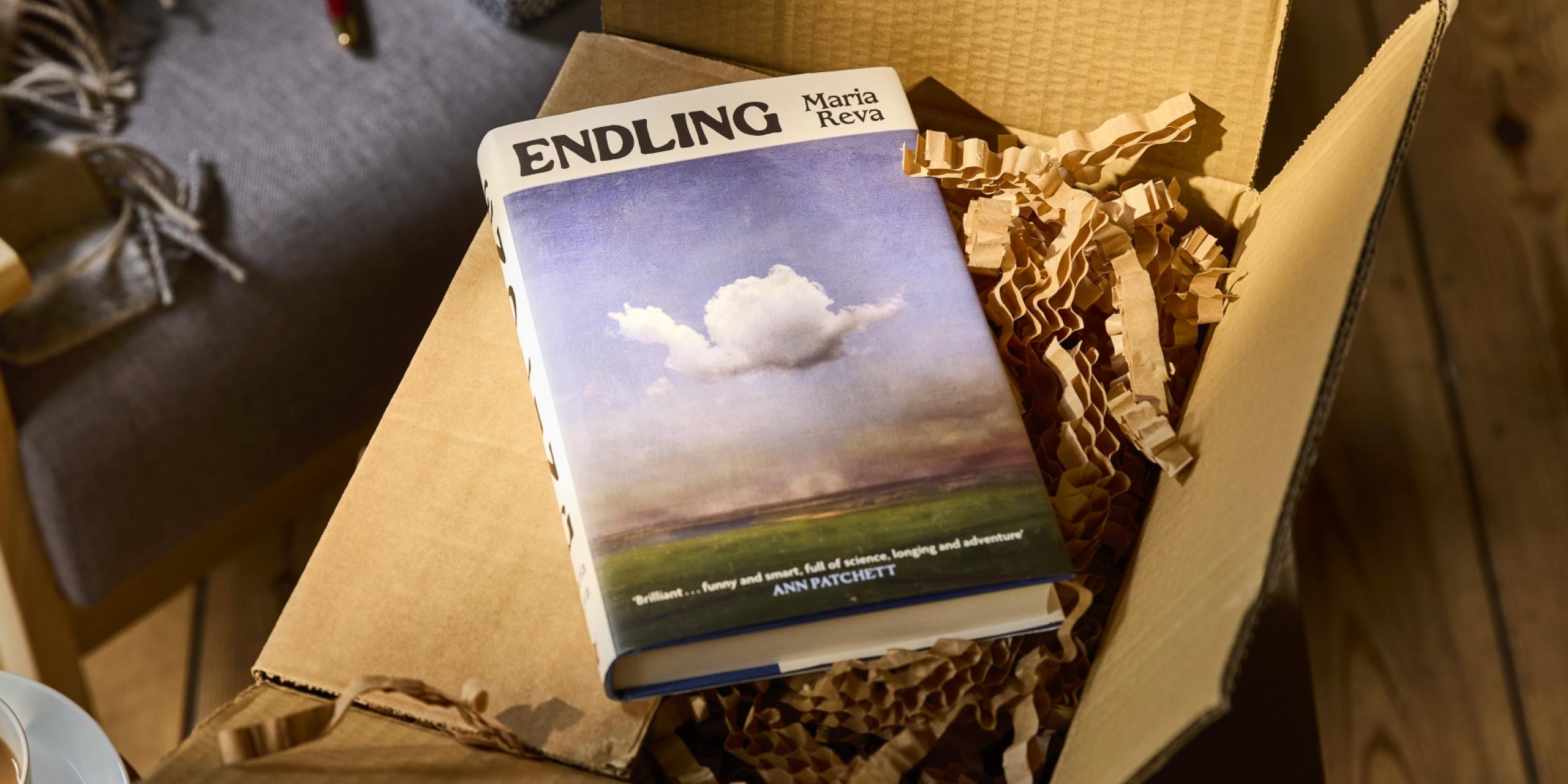
An extract from Endling by Maria Reva
- Written by
- Maria Reva
- Published
Endling is longlisted for the Booker Prize 2025. Read an extract here
Ukraine, 2022. Yeva is a maverick scientist who scours the country’s forests and valleys, trying and failing to breed rare snails while her relatives urge her to settle down and start a family of her own. What they don’t know: Yeva already dates plenty of men – not for love, but to fund her work – entertaining Westerners who come to Ukraine on guided romance tours believing they’ll find docile brides untainted by feminism.
Nastia and her sister, Solomiya, are also entangled in the booming marriage industry, posing as a hopeful bride and her translator while secretly searching for their missing mother, who vanished after years of fierce activism against the romance tours.
So begins a journey of a lifetime across a country on the brink of war: three angry women, a truckful of kidnapped bachelors, and Lefty, a last-of-his-kind snail with one final shot at perpetuating his species.
Endling is published in the UK by Virago. This extract is taken from the novel’s opening chapter.
Buy the book
PROLOGUE
In the cities, buildings still stood whole. Some new or freshly renovated, some worse for wear but functional, complete with floors, walls, ceilings. When a hand turned on a tap, water poured from it. A flick of a switch, and light flooded a room. The parks also lay whole, grass stretched uninterrupted. Residents lived and residents died, in balance. Animals too lived and died in balance, mostly inside the buildings; those who roamed the streets in search of their owners were few. Beyond the cities, fields. Yellow and brown, pockmarked by farmhouses, sliced by trenches for irrigation. Beyond the fields, sky. A sturdy, solid blue, like a freshly painted ceiling. Not much fell from it yet, the occasional bird. Once, a fragment of comet, catching the breaths of those who witnessed in terror the flash of light—but when it was over, they clapped at the miracle.
PART I
Anastasia, the girl called herself. Achingly young—too young, thought Yeva, to be taking part in the romance tours. Yeva would be getting talked at by some bachelor, and from across the banquet room or yacht deck she’d notice the girl watching her intently, round blank face trained on her like a telescope dish. That face, normally flat and deadened, as if the girl had long ago checked out, twitched, tried to wink, send a signal to Yeva, now that the girl’s handler had loosened her clutches. Help. Maybe the girl was being trafficked, who knew. Once, the girl followed her to the parking lot and watched as Yeva got into her trailer. She was probably longing to get in, too, be whisked away somewhere safe before her “interpreter” caught up with her, quick and officious, and yanked her away by the elbow.
Rumor had it the girl was into God. Of course she was, sad thing. The religious ones made the perfect victims, used to bowing under threat from above. In the past Yeva would have risen to the rescue, but she was done caring. All those earthly worries she used to have—mollusk conservation, romantic prospects, the Russian tanks amassing at the border and how no one believed anything would come of it except Yeva, who according to her family was always crying wolf and blowing everything out of proportion, prattling on about the collapse of this ecosystem or that, ruining all the fun, ruining, on behalf of barely there river turtles, the marriage agency’s balloon release over the Dnipro—blah blah blah. None of it mattered anymore. Even Yeva was tired of Yeva.
How Yeva became involved with the romance tours: a blue-eyed blonde had approached her at a gas station as she was refueling her mobile lab. The woman had seemingly materialized out of nowhere. This was on the dusty outskirts of some backwater town after another snail-finding expedition (a success: two survivors found). As Yeva watched the numbers tick up on the diesel pump gauge, her tank taking forever to fill, the woman chatted on about the weather. Then she told Yeva about an “opportunity” to get free headshots.
When Yeva asked what in hell she’d need headshots for, the stranger seemed taken aback, like Yeva had just turned down a free lottery ticket. She recovered quickly. “Pardon me, I hope you don’t mind my saying so,” the woman said in a low secretive voice (which, surely, was part of her script, too), “I just thought you might be an aspiring model.”
Had Yeva’s family sent the woman, in their latest matchmaking scheme? Had they stooped as low as that, plotting to send portraits of her to any viable suitor? When the fuel pump clicked off, Yeva tore her credit card from its slot (the payment authorized, she saw with relief) and began her usual maintenance check of the mobile lab. Some idiot had graffitied free candy on the expanse of white on the trailer’s side. Yeva swore under her breath, continued the check. Kneeling by the front wheel, she had already forgotten the woman when a chirping voice asked from above, “Nice RV. Are you on holiday?”
Yeva saw the way the high-heeled stranger peered at the piles of clothes strewn over the bench seat of the driver’s cabin, the crumpled up sleeping bag, the slimy yellowed mouth retainer on the dash. The woman’s face sank with pity over Yeva’s itinerant life.
The woman told her about a party at the hotel in town that night. Did she want to come?
Yeva climbed into the driver’s seat, about to slam the door on the stranger.
“Free entry for the ladies. There’s a thousand-dollar raffle.”
The woman emphasized, “USD.”
Yeva saw the way the high-heeled stranger peered at the piles of clothes strewn over the bench seat of the driver’s cabin, the crumpled up sleeping bag, the slimy yellowed mouth retainer on the dash. The woman’s face sank with pity over Yeva’s itinerant life
-
That Saturday night was the first time Yeva had ever won anything. She’d stayed through the entire party, waiting for the winner to be announced at 2:00 a.m., tipping back free rosé at an empty corner table as more blue-eyed blondes in tight club dresses and stilettos wriggled around her to the thumping music. The hotel: self-consciously second-tier, the faded carpet patterned with crowns and the word lux. The wine tasted like acid reflux from that golden time when Yeva was still full of hope and cared what alcohol tasted like. There were a few men there, foreigners dressed like they’d just come from a ball game, accompanied by interpreters. Some of them tried to yell words at Yeva over the crackling loudspeakers beside her. Their interpreters gestured, urging Yeva to follow them to a quieter place: Photo booth? Outside? Anywhere but beside these earsplitting speakers? Yeva stayed in her spot, ignoring whatever this was—an afterparty of diplomats? A corporate retreat?—eyes on her phone in case of an alarm from her lab, until at last the hall went silent and a matronly woman in a powder-blue pantsuit stood at a tippy lectern, introduced herself by an ancient sounding name, Efrosinia, and began rattling off the raffle numbers.
Before the romance tours, Yeva had relied on government and NGO grants, which had dwindled in recent years. Who wants to fund the research on functionally extinct species? People like Yeva are never the stars of environmental summits and galas, prattling on and on about yet another battle lost, yet another species gone down the chute. Donors only want to fund winners.
That evening, holding the raffle money in her hands, for the first time in her life Yeva felt like a winner. Later she suspected that the raffle was rigged in favor of newcomers to pull them into more of these weird parties, but winning felt good at the time. And one thousand USD got her far: a new multi-stage filtration and misting system, specialized UV and full-spectrum lighting with automated dimming, a sanitization chamber for soil (second-hand, but still good), more realistic terrarium landscaping that included live moss.
Endling
- By
- Maria Reva
- Published by
- Virago
An unforgettable debut novel about the journey of three women and one extremely endangered snail through contemporary Ukraine
Features

- Book recommendations
11 of the best debut novels that were nominated for the Booker Prize

- Book recommendations
The Booker Prize 2025 longlisted authors on the books they reread again and again

- Book recommendations


