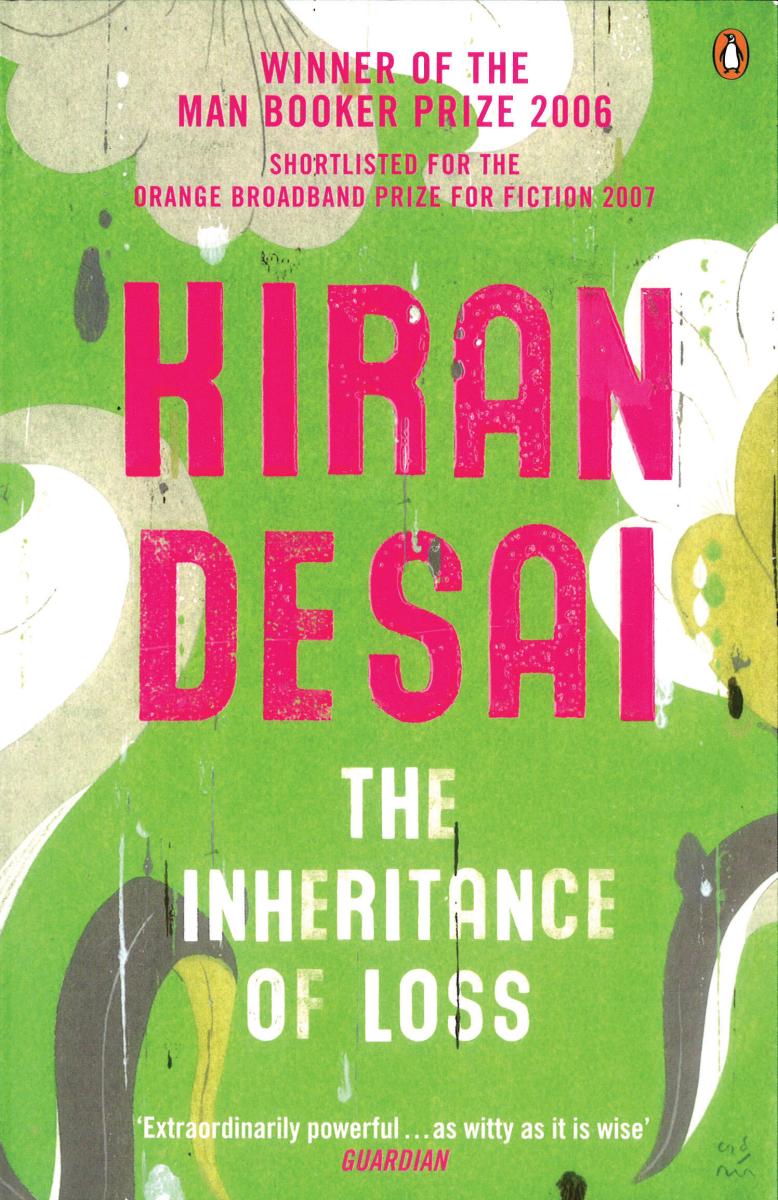
The Inheritance of Loss
by Kiran Desai (prize winner)
A spellbinding story of two young people whose fates intersect and diverge across continents and years – an epic of love and family, India and America, tradition and modernity
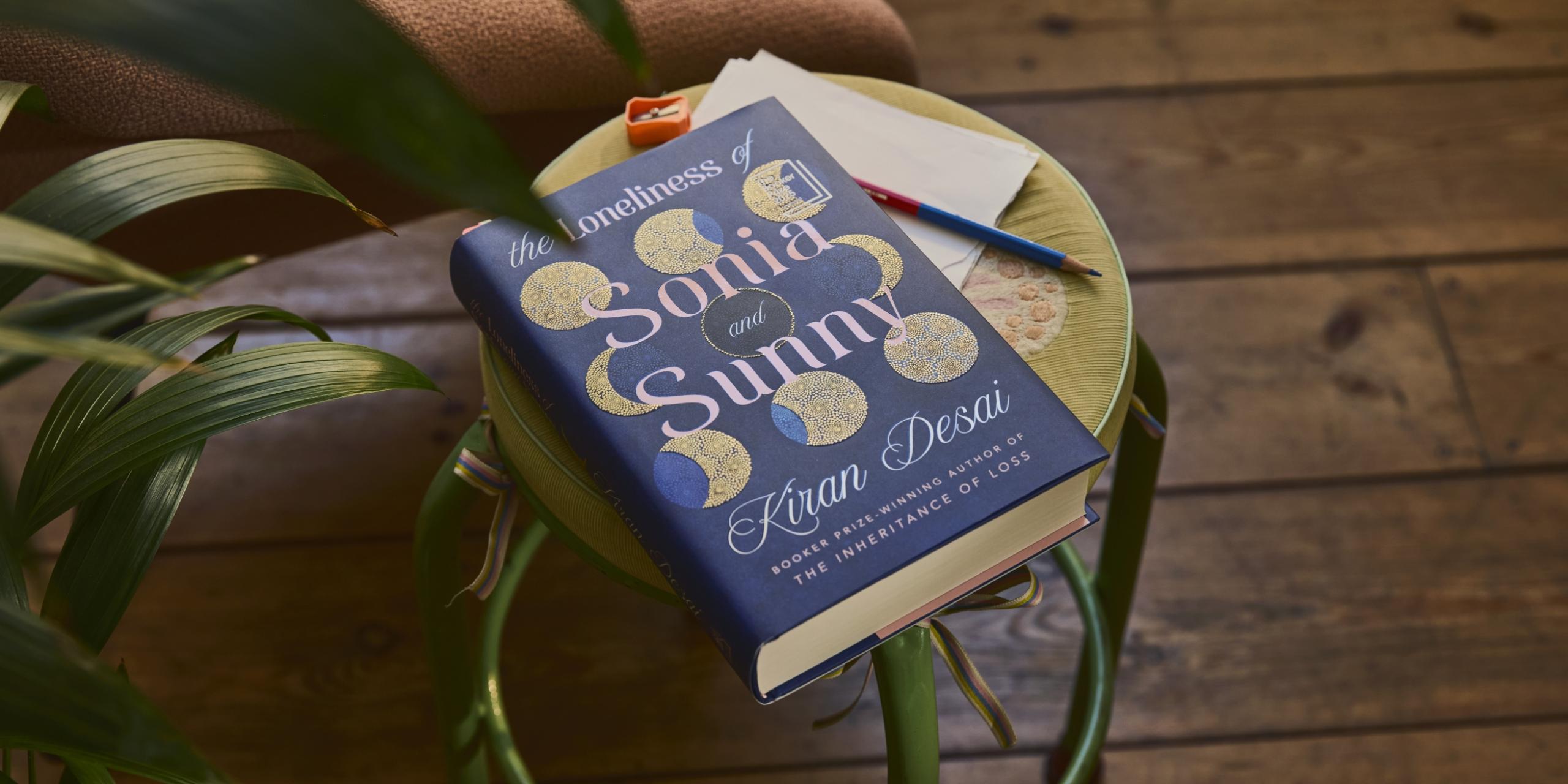
Whether you’re new to The Loneliness of Sonia and Sunny or have read it and would like to explore it more deeply, here is our comprehensive guide, featuring insights from critics, our judges and the book’s author, as well as discussion points and suggestions for further reading.
When Sonia and Sunny first glimpse each other on an overnight train, they are immediately captivated, yet also embarrassed by the fact that their grandparents had once tried to matchmake them, a clumsy meddling that only served to drive Sonia and Sunny apart.
Sonia, an aspiring novelist who recently completed her studies in the snowy mountains of Vermont, has returned to her family in India, fearing she is haunted by a dark spell cast by an artist to whom she had once turned for intimacy and inspiration. Sunny, a struggling journalist resettled in New York City, is attempting to flee his imperious mother and the violence of his warring clan. Uncertain of their future, Sonia and Sunny embark on a search for happiness together as they confront the many alienations of our modern world.
The Loneliness of Sonia and Sunny was shortlisted for the Booker Prize 2025.
Sonia
Sonia is an aspiring novelist who studies in Vermont before moving to New York City. She gets trapped in a relationship with a troubling and toxic artist. Sonia later returns to her family in India, fearing that she is cursed. Early in the novel, her grandparents try to arrange a marriage between her and Sunny.
Sunny
Sunny works as a journalist in New York City after moving there from Dehli to escape his overbearing mother. He struggles with his identity away from his family and finds it hard to connect with his own culture.
Kiran Desai was born in New Delhi, India, was educated in India, England and the United States, and now lives in New York.
She is the author of Hullabaloo in the Guava Orchard, which was published to unanimous acclaim in over 22 countries, and The Inheritance of Loss, which won the Booker Prize in 2006, as well as the National Book Critics Circle Award, and was shortlisted for the Orange Broadband Prize for Fiction.
In 2015, the Economic Times listed her as one of 20 most influential global Indian women.
Kiran Desai
‘At its heart, this book is about Sonia and Sunny’s love, but it is also an expansive novel that encompasses several other characters and concerns. It is an intimate story about two people finding a pathway to love and each other. Read it if you are looking for a truly unforgettable epic, one rich in meditations about class, race, nationhood and the titular loneliness.’
Alex Clark, Guardian
‘This capacious story of love, work and family set between India and the US is both dizzyingly vast and insistently miniature’
Hassan Akram, Literary Review
‘The Loneliness of Sonia and Sunny is a sprawling work of social portraiture stuffed with allusions to Dickens, Tolstoy and Dostoevsky. Although it is set between 1996 and 2001, its themes are urgently contemporary.’
Alexandra Jacobs, The New York Times
‘Crowded but never claustrophobic, The Loneliness of Sonia and Sunny is among those most rarefied books: better company than real-life people. Feel the tingle.’
Nalini Iyer, International Examiner
‘The Loneliness of Sonia and Sunny is a deeply satisfying, profoundly moving, witty, and occasionally heart-rending novel that explores immigration; alienation; the relationship between art, the artist, and artistic subject; and the changing role of women in contemporary India.’
Somak Ghoshal, Mint
‘The prose takes a while to warm up, but when it does, it flows like a mountain stream, uninhibited even when faced with obstacles. Finally, there are many digressions along the way, often veering into quasi-occult or spooky zones—but it remains a page-turner till the end, serious and funny in turn, a chameleon-like entity of warmth and chill, where love is impossible to separate from hurt.’
The Loneliness of Sonia and Sunny by Kiran Desai
© Yuki Sugiura for Booker Prize Foundation
‘I wanted to write a story about love and loneliness in the modern world. I wanted to write a present-day romance with an old-fashioned beauty. In the past of my parents, and certainly my grandparents, an Indian love story would mostly be rooted in one community, one class, one religion, and often also one place.
‘But a love story in today’s globalised world would likely wander in so many different directions. My characters consider: Why this person? Why not as easily someone else? Why here, not there? In the past people were always where they had to be. My indecisive lovers, Sonia and Sunny, meet and part across Europe, India and America, their idea of themselves turning ever more fluid.
‘As I wrote across geographies and generations, I realised that I could widen the scope of my novel, to write about loneliness in a much broader sense. Not just romantic loneliness, but the huge divides of class and race, the distrust between nations, the swift vanishing of a past world – all of which can be seen as forms of loneliness.’
According to a New York Times interview, it took 20 years for The Loneliness of Sonia and Sunny to be completed, as Kiran Desai started writing it after the publication of her last book The Inheritance of Loss which won the Booker Prize in 2006. How do you think the passing of real time has affected the shape and scope of the fictional world within the book?
That same interview suggests that Desai ‘gave Sonia a background much like her own, including a boisterous Delhi family with a beloved household cook who excels at making kebabs.’ And, like Desai, Sonia is a writer who struggles with ‘how to portray her homeland, and worries that if she writes about arranged marriages or magical realism, she’ll be trafficking in cultural clichés.’ How much of the book do you think is autobiographical? Does it affect how you feel about any of the characters?
In an interview with the Booker Prizes website, Desai says that she ‘realised that I could widen the scope of my novel, to write about loneliness in a much broader sense. Not just romantic loneliness, but the huge divides of class and race, the distrust between nations, the swift vanishing of a past world – all of which can be seen as forms of loneliness.’ In what specific instances do you think Desai has portrayed these different forms of loneliness?
At the start of the book, there is a comprehensive family tree that details all the people involved in Sonia and Sunny’s lives, including their pets and household staff. Considering the wide range of characters in the novel, did you think their stories were easy to follow?
Sonia and Sunny both immigrate to the United States from India as young adults to study and work. Does moving away change how they feel about the culture and traditions they grew up with? How does immigration shape their identities and sense of belonging?
While Sonia is in college she starts a relationship with Ilan, an artist who is manipulative and emotionally abusive. When friends wonder why Sonia stays with Ilan despite his horrible behaviour, her response is ‘Because you have to be a person to be able to leave, and hadn’t they noticed that Sonia was no longer a person, that she was made of fear? She could not think any one of her thoughts through.’ Why do you think she believed this? What did you make of the relationship between Sonia and Ilan?
When we first meet Sunny he’s living in Brooklyn with his girlfriend Ulla, whom he met at university. Sunny keeps Ulla a secret from his mother, while at one point Ulla takes Sunny to meet her parents in Kansas but the visit feels awkward and fake. What do you think drew Ulla and Sunny together, and how does their fractious relationship feed into Sunny’s loneliness?
Towards the end of the book, Sonia says, ‘“Why do we try to solve other problems? There is only one that is necessary to solve.” “Loneliness?” “The other problems would melt away in importance.”’ Do you believe this to be true?
The book spans the 1990s and into the 2000s, with both Sonia and Sunny confronting a range of different experiences throughout their lives in that time. Comparing their character arcs from the beginning of the story to the end, how have they both changed?
New York Times: Why Writing Her Big New Novel Took Kiran Desai 20 Years
Publisher’s Weekly: Kiran Desai’s Labor of Love
The New Yorker: Kiran Desai on Life with Her Characters
Guardian: The Loneliness of Sonia and Sunny by Kiran Desai review – a dazzling epic
by Kiran Desai (prize winner)
by Anita Desai
by Rohinton Mistry