

The Bottle Factory Outing
by Beryl Bainbridge
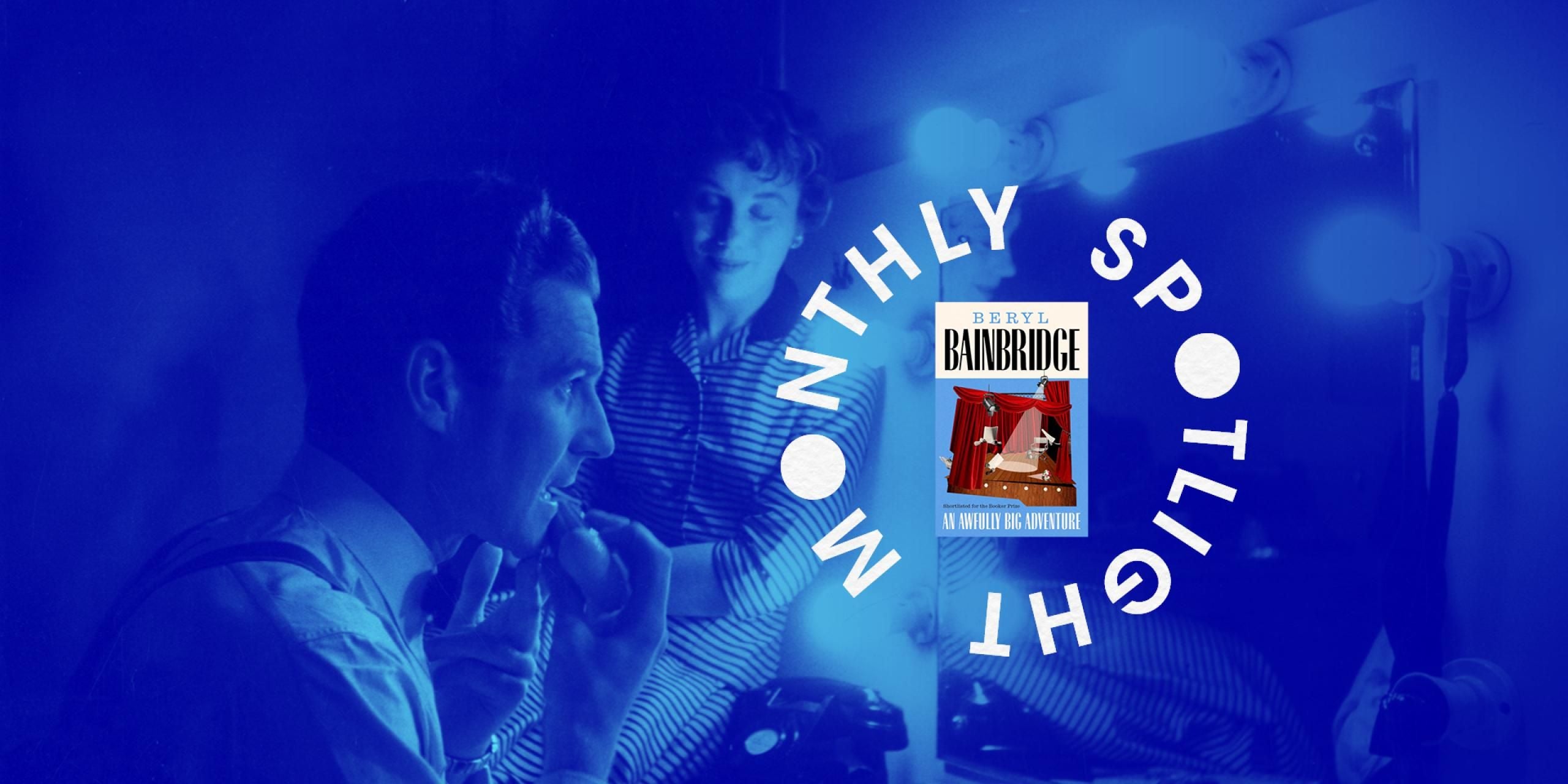
Full of backstage scandal and romantic intrigue, this darkly comic novel is about class, the long shadow of war, and unrequited first love
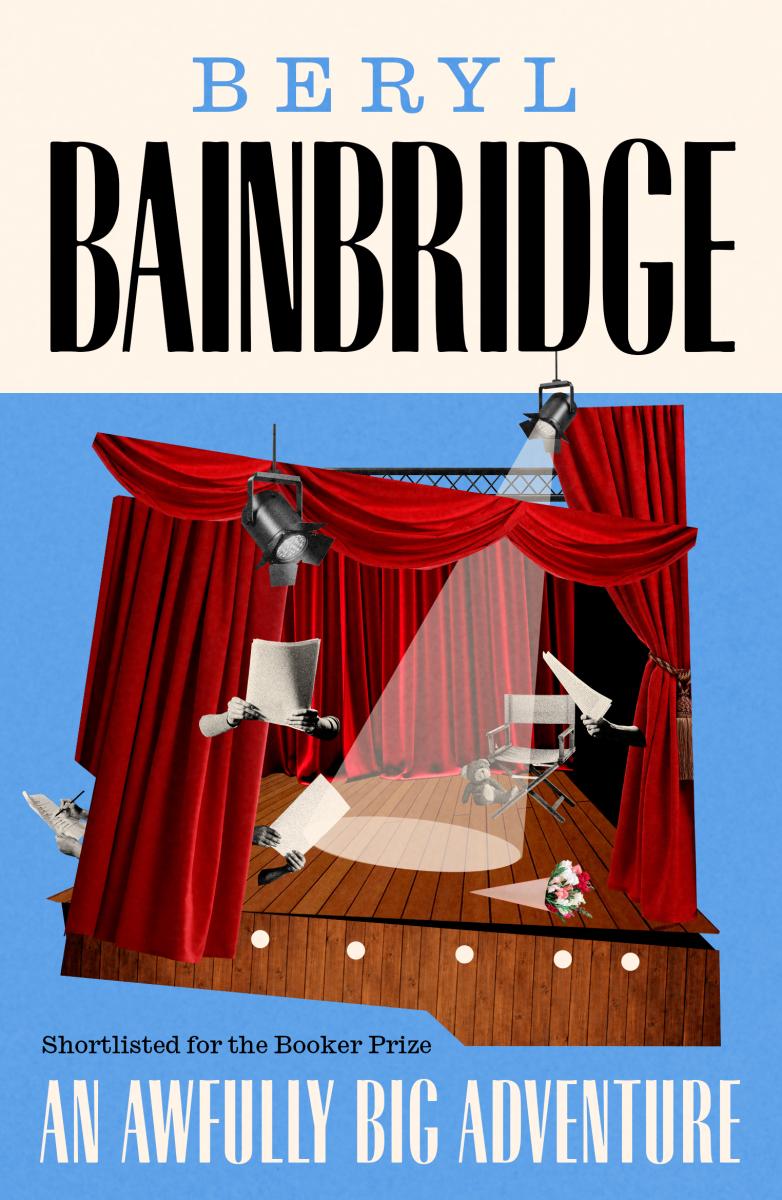
Whether you’re new to An Awfully Big Adventure or have read it and would like to explore it more deeply, here is our comprehensive guide, featuring insights from critics, the book’s author, as well as discussion points and suggestions for further reading.
Liverpool, 1950. Young Stella Bradshaw is hired as assistant stage manager by a repertory theatre company and soon falls into a heady infatuation with the director, Meredith – failing to notice how he shows not only no interest in her, but in any woman.
When the celebrated actor O’Hara arrives to take the lead in their production of Peter Pan, it sets in motion a drama offstage of lost innocence, tragedy and miscommunication.
An Awfully Big Adventure was shortlisted for the Booker Prize in 1990.
Stella Bradshaw
Stella is a naive teenager who lives with her aunt and uncle in a boarding house in Liverpool. After failing her mock school certificate, she begins working for a local theatre company as an assistant stage manager. Stella becomes infatuated with the director, Meredith Potter, and entangled with the actor P.L. O’Hara.
Meredith Potter
Meredith Potter is the manipulative and arrogant theatre director whom Stella has a crush on. Secretly gay, he forms relationships with other men, including the stagehand Geoffrey. He has no interest in Stella and treats her with indifference.
P.L. O’Hara
Cynical but charismatic, P.L. O’Hara is a talented actor who is haunted by his past. He returns to Liverpool to play Captain Hook in the theatre’s production of Peter Pan, and is drawn towards Stella.
Beryl Bainbridge was the author of 20 novels, finding her greatest success with historical fiction. She was an actor (appearing in the British soap opera Coronation Street) before becoming a novelist and much-loved, cigarette-dangling public figure.
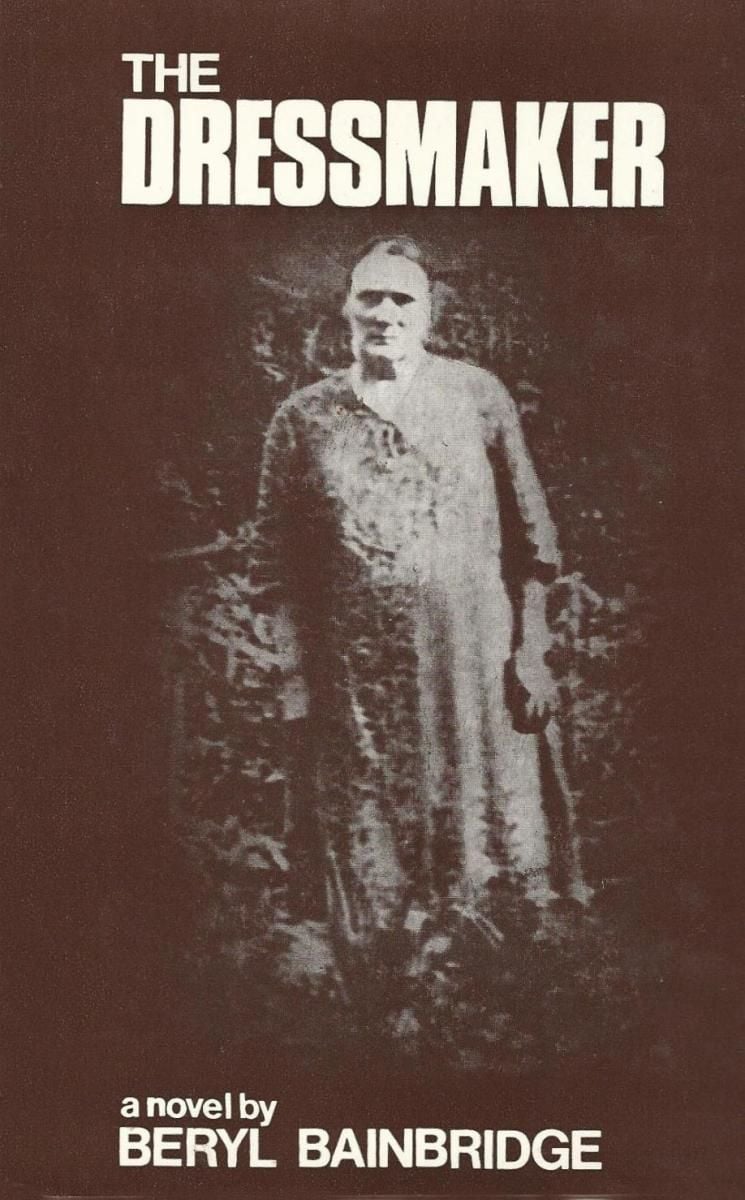
Bainbridge was shortlisted for the Booker Prize five times with The Dressmaker in 1973, The Bottle Factory Outing in 1974, An Awfully Big Adventure in 1990, Every Man for Himself in 1996 and Master Georgie in 1998, as well as being longlisted in 2001 for According to Queeney.
Although Bainbridge never won, some degree of correction occurred in 2011 when, after a public vote, her 1998-shortlisted novel Master Georgie won a one-off prize, The Man Booker Best of Beryl.
Beryl Bainbridge at home in Camden Town, London,1998
© David Levenson/Getty Images
The Times
‘This is one of Bainbridge’s best books. The close observation and hilarity are underlain by a sense of tragedy as deep as any in fiction.’
Janet Watts, Guardian
‘Acknowledged as one of the best novelists of her generation… Beryl’s literary fiction can have a quality of a detective story: only when we reach a novel’s final denouement do we see that we were given the key to its coded mystery at the start. A certain menace emanates from a story’s first page and builds almost imperceptibly to its climax in a refined but savage violence.’
Sunday Times
‘Imagine Priestley’s The Good Companions as written by Gogol and you will have some idea of the mixture of waggish humour and sordid pathos in Bainbridge’s novel.’
Time Out
‘A subtle schizophrenic insight into adult relationships… Bainbridge’s understated prose and obsessive eye for the smallest and most telling of details have never been better employed.’
Elaine Kendall, Los Angeles Times
‘Succinct and tart, “An Awfully Big Adventure” never takes itself too seriously, the ironic intent underlined by a title suggesting a bedtime story for grown-ups. Gleefully exploiting the limits of her material, Bainbridge manages, against all the odds, to recycle stock characters and situations into a sophisticated entertainment.’
‘This is what English society doesn’t understand—I mean, what was accepted as middle class then isn’t necessarily what is seen as middle class now. For example, in An Awfully Big Adventure the girl wants to have a bath and fusses about it. One or two reviewers said, What a seedy background, not realizing that there was no central heating then, that you got pneumonia if you had a bath before trying to heat up the house. It wasn’t that people were dirty, just that it was a different world. In Liverpool lots of middle-class people had outside loos. My aunts, for instance, had an outside loo, but they subscribed to the local library.’
An Awfully Big Adventure begins where the narrative eventually ends, with the first chapter written as if all the action to come has already taken place. What was your initial reaction to the opening pages and did they help clarify anything once you’d finished the book? Why do you think Beryl Bainbridge chose to start the novel this way?
In an interview with the Guardian, Beryl Bainbridge said, ‘When I write a novel, I’m writing about my own life; I’m writing a biography almost, always. And to make it look like a novel, I either have a murder or a death at the end.’ Bainbridge drew on her experiences working as an actor at a Liverpool theatre when she wrote An Awfully Big Adventure. Were there any instances in the novel where you felt she was writing with particular authority or from her own life?
In a review for the London Review of Books, Peter Campbell describes Stella as ‘a human catalyst who wills nothing evil, but whose character and history have shaped her to cause trouble. Through her, the psychology and mechanics of mischief, of why accidents are likely to happen, are wonderfully displayed.’ Do you think this is a fair representation of Stella? Why do you think she behaves as she does?
In a New York Times article written by Thomas Mallon, Bainbridge’s biographer Brendan King argues that early exposure to radio drama and films ‘perhaps accounts for Beryl’s later obsession with the rhythmical qualities of her prose and the way it had to sound when read aloud.’ Mallon adds that, ‘Drama also made her dramatic; she craved emotional turbulence and relentlessly indulged in exaggeration.’ What did you think of the language in An Awfully Big Adventure? Were you tempted to read any passages out loud? Do you agree with Mallon’s comments about emotional turbulence and exaggeration?
The theatre is located in post-war Liverpool, with Bainbridge using small details to portray the bleak and grey atmosphere. In what ways do you think Bainbridge successfully captured the era, and how does that influence the way the theatre company is run?
Thomas Mallon writes in the New York Times that ‘Bainbridge’s work is as spare and macabre as Muriel Spark’s, but there’s a rawness to it, a lack of ontological underpinning, that can make it even more unpredictable and disturbing.’ Do you agree? What did you find most unpredictable and disturbing about An Awfully Big Adventure?
At one point, Stella reflects on the difference between the clothes worn by men and women: ‘Trousers, she now realised, were so designed not because their wearers had funny legs but because men were constantly worried that an essential part of themselves might have gone missing. They wanted instant access, just to make sure things were in place. What was more puzzling was why they needed everyone else to check as well.’ What did you make of Stella’s uncomfortable encounter with the predatory newspaper reporter and her response to his assault?
The book is set in the 1950s and was first published in 1989, and it contains instances of racism and sexism. How did the discriminatory language and attitudes make you feel as a contemporary reader? What do they reveal about attitudes at the time?
In the book, Stella visits the phone boxes around the theatre ostensibly to ring her mother, who she claims says ‘the usual things’. It’s later revealed towards the end of the book that Stella’s mother has passed away. Why might Bainbridge have decided to include this detail? What purpose does it serve in the wider story?
An Awfully Big Adventure ends with a major plot twist. When reading the novel, did you notice any clues that hinted at the real relationship between Stella and P.L. O’Hara?
The Times: Now’s the time to read Beryl Bainbridge, queen of comic darkness
McNally Editions: A Talent for Living: Yiyun Li on Beryl Bainbridge’s ‘An Awfully Big Adventure’
New York Times: The Complicated Life of Beryl Bainbridge
Literary Review: To Keep That Tumult of Weeping at Bay
by Beryl Bainbridge
by Penelope Fitzgerald (prize winner)
by Beryl Bainbridge
by Muriel Spark
by Iris Murdoch (prize winner)
by Muriel Spark