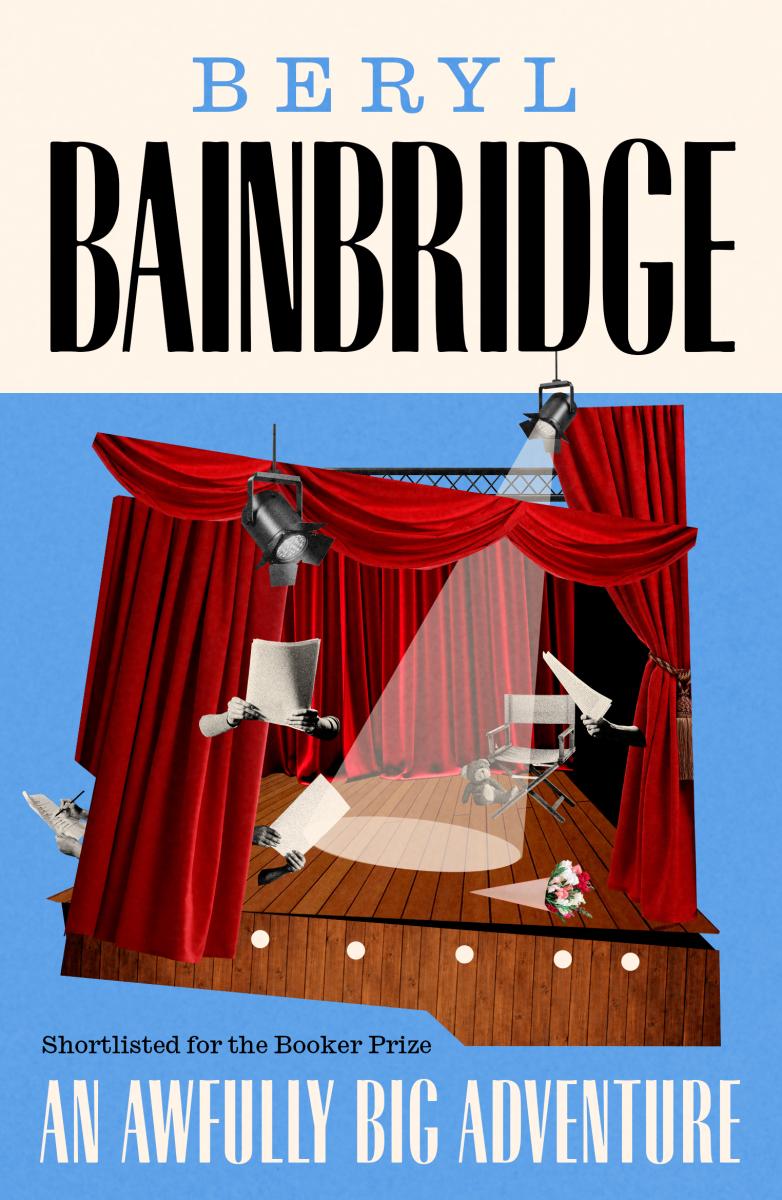

Full of backstage scandal and romantic intrigue, this darkly comic novel is about class, the long shadow of war, and unrequited first love
An extract from An Awfully Big Adventure by Beryl Bainbridge
An extract from An Awfully Big Adventure by Beryl Bainbridge
- Published
Young and naive, Stella becomes entangled in the backstage drama that unfolds at a Liverpool theatre
In 1950, the Liverpool repertory theatre company is rehearsing its Christmas production of Peter Pan, a story of childhood innocence and loss.
Young Stella Bradshaw has been taken on as assistant stage manager and quickly becomes obsessed with Meredith, the dissolute director. But it is only when the celebrated actor O’Hara arrives that a different drama unfolds. In it, he and Stella are bound together in a past that neither dares to interpret.
An Awfully Big Adventure was first published in 1989 by Duckworth. It is now published in the UK by Daunt Books.
Buy the book
At first it had been Uncle Vernon’s ambition, not Stella’s. He thought he understood her; from the moment she could toddle he had watched her lurching towards the limelight. Stella herself had shown more caution. ‘I’ll not chase moonbeams,’ she told him.
Still, she went along with the idea and for two years, on a Friday after school, she ran down the hill to Hanover Street and rode the lift in Crane Hall, up through the showrooms of polished piano fortes where the blind men fingered scales, until she reached the top floor and Mrs Ackerley whose puckered mouth spat out ‘How now brown cow’ behind the smokescreen of her Russian cigarettes.
She came home and shut herself in her bedroom off the scullery and spouted speeches. She sat at the tea table and dropped her cup to the saucer, spotting the good cloth with tannic acid, wailing that it might be a poison that the Friar Lawrence had administered. When Uncle Vernon shouted at her she said she wasn’t old enough to control either her reflexes or her emotions. She had always had a precise notion of what could be expected of her.
Lily had imagined that the girl was merely learning to speak properly and was dismayed to hear it was called Dramatic Art. She fretted lest Stella build up hopes only to have them dashed.
Then Stella failed her mock school certificate and her teachers decided it wasn’t worth while entering her for the real thing. Uncle Vernon went off to the school prepared to bluster, and returned convinced. They’d agreed she had the brains but not the application.
‘That’s good enough for me,’ he told Lily. ‘We both know it’s useless reasoning with her.’
He made enquiries and pulled strings. After the letter came Stella spent four extra Saturday mornings at Crane Hall being coached by Mrs Ackerley in the telephone scene from A Bill of Divorcement. Mrs Ackerley, dubious about her accent, had thought a Lancashire drama more suitable, preferably a comedy; the girl was something of a clown.
Stella would have none of it. She was a mimic, she said, and sure enough she took off Mrs Ackerley’s own smoky tone of voice to perfection. Admittedly she was a little young for the part, but, as she shrewdly observed, this would only stress her versatility. The audition was fixed for the third Monday in September.
Ten days before, over breakfast, she told Uncle Vernon she was having second thoughts.
‘Get away with you,’ he said. ‘It’s too late to change things now.’ He wrote out a shopping list and gave her a ten-shilling note. Half an hour later when he came up into the dark hall, jingling the loose coppers in his pocket, he found her huddled on the stairs, one plump knee wedged between the banister rails. He was annoyed because she knew she wasn’t supposed to hang about this part of the house, not unless she was in her good school uniform. She was staring at the damp patch that splodged the leaf-patterned wallpaper above the telephone.
He switched on the light and demanded to know what she was playing at. At this rate there’d be nothing left on Paddy’s vegetable barrow but a bunch of mouldy carrots. Did she think this was any way to conduct a business?
She was in one of her moods and pretended to be lost in thought. He could have hit her. There was nothing of her mother in her face, save perhaps for the freckles on her cheek-bones.
‘Carry on like this,’ he said, not for the first time, ‘and you’ll end up behind the counter at Woolworth’s.’ It was foolish of him to goad her. It was not beyond her to run towards such employment in order to spite him.
‘You push me too hard,’ she said. ‘You want reflected glory.’
He raised his arm then, but when she pushed past him with swimming eyes his world was drowned in tears.
From the moment she could toddle he had watched her lurching towards the limelight. Stella herself had shown more caution. “I’ll not chase moonbeams,” she told him
He telephoned Harcourt and sought reassurance, in a round-about way. ‘Three bottles of disinfectant,’ he said, reading from the list in front of him. ‘Four pounds of carbolic soap … one dozen candles … two dozen toilet rolls … George Lipman’s put in a word with his sister. On Stella’s behalf.’
‘’Fraid I can only manage a dozen,’ Harcourt said. ‘And they’re shop-soiled.’
‘Am I doing the right thing, I ask myself?’
‘I don’t see what else is open to her,’ said Harcourt. ‘Not if the school won’t have her back.’
‘Not won’t,’ corrected Vernon. ‘It’s more that they don’t feel she’ll gain any benefit from staying on. And you know Stella. Once her mind’s made up …’
‘Indeed I do,’ said Harcourt. Although he had never met the girl he often remarked to his wife that he could take an exam on the subject, if pushed. His extensive knowledge of Stella was based on the regular progress reports provided by Vernon when making his monthly order for bathroom and washhouse supplies.
‘She caused an uproar the other week,’ confided Vernon, ‘over the hoteliers’ dinner dance: Lily got her hands on some parachute silk and took her to that dressmaker in Duke Street to be fitted for a frock. Come the night, with the damn thing hanging up on the back door to get rid of the creases, she refused to wear it. She was adamant. In the end none of us went. I expect you all wondered where we were.’
‘We did,’ lied Harcourt.
‘She took exception to the sleeves. According to her they were too puffy. She said she wasn’t going out looking as if her arms belonged to an all-in wrestler. I never saw her in it, but Lily said she was a picture. She’s burgeoning, you know.’
‘Is she?’ Harcourt said, and thought briefly of his own daughter who, in comparison with Stella, often seemed an imitation of the real thing. He had no idea whether his daughter was burgeoning or not; night and day she walked with rounded shoulders, clutching a handbag to her chest. ‘And how’s the cough?’ he asked. He listened to the faint scratching of Vernon’s moustache as it brushed against the mouthpiece.
‘No problem at all,’ Vernon said. ‘Absolutely none. Kind of you to ask. I’m much obliged to you,’ and he ordered a new bucket and a tin of bath scourer before replacing the receiver.
He told Lily that Harcourt believed they were doing the best thing. She was chopping up a rabbit in the scullery. ‘Harcourt thinks she was born for it,’ he said. Lily was unconvinced. ‘People like us don’t go to plays,’ she said. ‘Let alone act in them.’
‘But she’s not one of us, is she?’ he retorted, and what answer was there to that?


An Awfully Big Adventure
- Published by
- Duckworth
A darkly comic novel about class, the long shadow of war, and unrequited first love
Features
- Book recommendations
Where to start with Beryl Bainbridge: a guide to her best books
- Reading guides
Reading guide: An Awfully Big Adventure by Beryl Bainbridge

- Book recommendations
Eight Booker Prize-nominated books for fans of Downton Abbey


- Book recommendations
Booker Prize books that have been adapted for film and television

- Book recommendations
Nine Booker-nominated novels to take on a road trip

- Book recommendations
11 Booker-nominated books based on real-world events

- Book recommendations