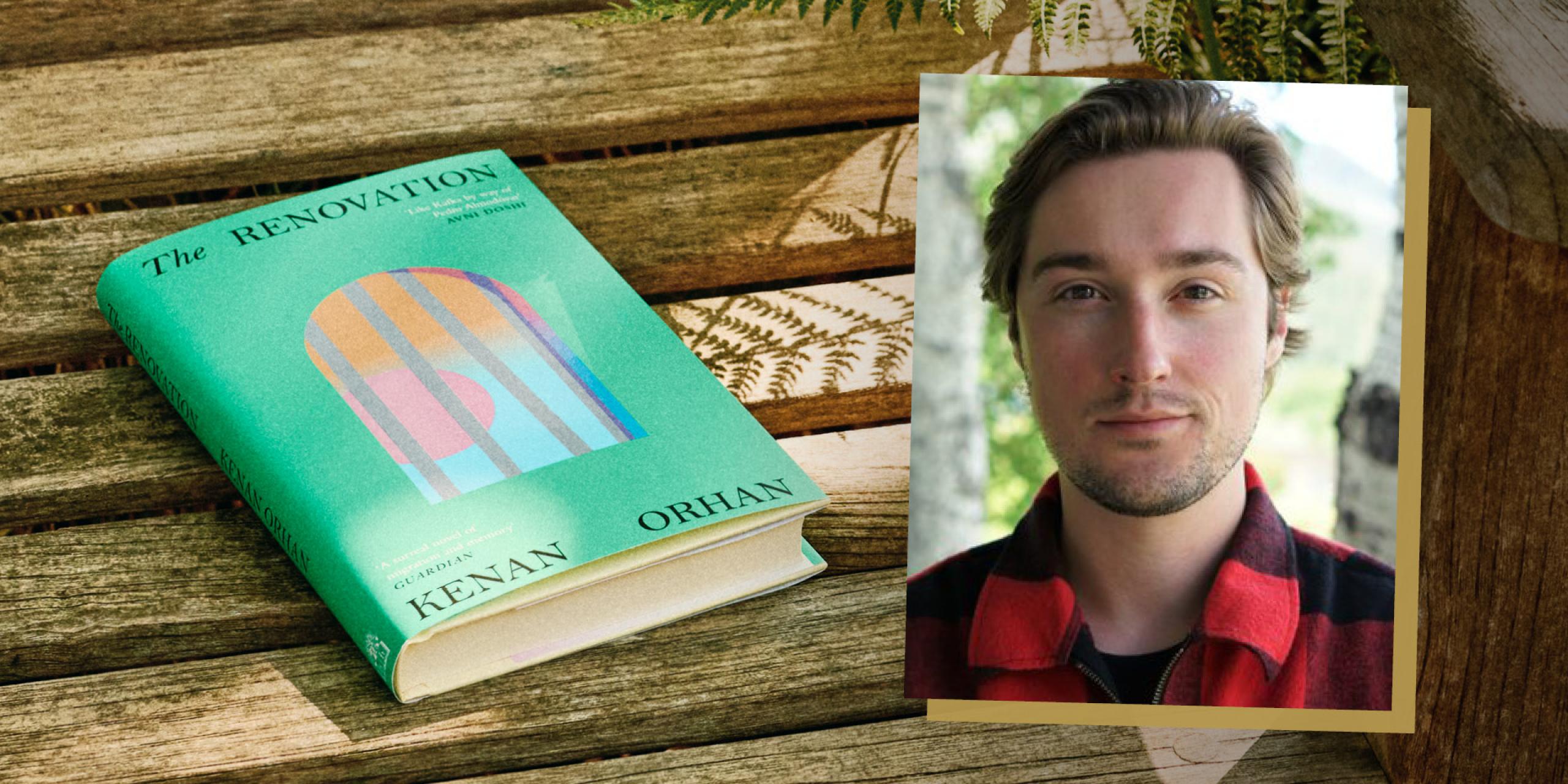
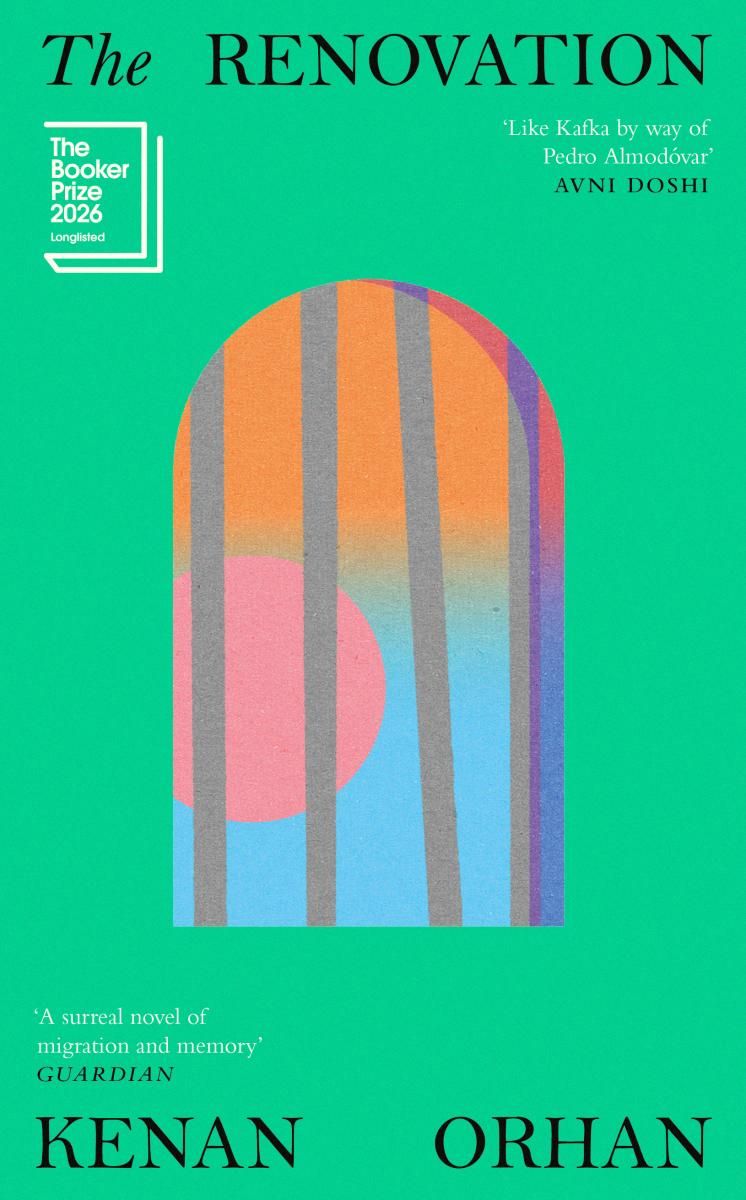

The Renovation is a heartbreaking portrait of one family caught in the tides of history, grappling with grief, exile, politics and the painful absurdity of love
- Published
The author of The Renovation, longlisted for the Booker Prize 2026, talks about holding on to memories, and the book that finally made him fall in love with reading
Buy the book
The inspirations behind my Booker-longlisted book
The Renovation was born out of several obsessions, anxieties and angers all coming to a head at the same time. My frustration with Erdogan’s regime, the heartbreaking outcome of the 2023 elections, the political violence, human rights abuses, economic catastrophe, environmental and geological disasters all piling up – and then in parallel my longing to see the relatives in Turkey who I’d not been able to visit for years, and starting to notice my beloved grandmother’s lapses of memory, noticing too my own trouble holding onto images of the past. It seemed as if everything – my family, Istanbul, Turkey itself – was disintegrating, threatening to become unrecognisable and leave me hollow.
The book that made me fall in love with reading
I’m somewhat ashamed to admit that I did not like reading as a child. I was no good at it. Even later, overcoming my very slow pace, starting university and enjoying my literature courses, I approached reading as quite a serious endeavour, as a kind of work, as a laborious passion rather than a love. I’m very glad that, eventually, a friend of mine recommended Italo Calvino’s The Baron in the Trees to me. It was like a switch was flipped. Reading that book and then so many books since has felt effortless, a real love.
The book that made me want to become a writer
It was probably Jim Shepard’s Like You’d Understand Anyway that finally convinced me to abandon my dreams of being a history professor and pursue writing fiction. He spans such incredible ranges of character, of time, of space, of action. Reading that collection, I found myself wanting to emulate it. I’m still mesmerised by his narratives, and I still hope to write a short story as good as his one day.
The book I read again and again
A bit difficult to pick one, but I think the books I reread the most are Elena Ferrante’s novellas, especially The Lost Daughter, and W. G. Sebald’s Austerlitz and The Rings of Saturn. The Rings of Saturn in particular draws me back, like re-entering a dream, the way reading one of his novels very slowly unfurls down to the roots of the reader’s own thoughts, as if there isn’t a book in front of you, as if these things occur to you naturally and unprompted. His obsessions with memory and death are my own obsessions.
The book that changed the way I think about the world
I change quite slowly. I wish I were perhaps cleverer, or swifter on the uptake, but many of my favourite books, many of the most deeply affecting ones, have changed me over time, long after I first read them. I don’t register the shift until something prompts me to reflect – like this question – to see how many books have recalibrated my relationship to the world. More seismic shifts have occurred with books like James Baldwin’s The Fire Next Time, Mikhail Buglakov’s The Master and Margarita, and Marlen Haushoffer’s The Wall.
I’m somewhat ashamed to admit that I did not like reading as a child. I was no good at it
The book that changed the way I think about the novel
The first one which comes to mind is Anne Carson’s Autobiography of Red. The novel as verse, the shimmering language sheaved into a compelling love story, gave me an appreciation of poetics in fiction. In a similar vein, Marguerite Duras’s The Lover was eye-opening for me. I’d also like to mention Milan Kundera’s The Book of Laughter and Forgetting, which seemed all at once and quite forcefully to liberate my understanding of what a novel can be and how to build one.
The book I’m reading right now
I’ve recently started Endling by Maria Reva. I was an enormous fan of her collection Good Citizens Need Not Fear – I have a soft spot for dark humour and the absurd.
Where I most like to read
I read right away, early in the morning in my chair between a large window and my bookshelves. Then in the late afternoon, I read in the same chair, the five or six books I’m reading at a time all waiting in a neat stack to pick from.
Where and when I most like to write, and the tools I need
I write from about 9am to noon in my office. It’s quite an empty room. I listen to my local classical music station. Some days I use a 20-minute timer with a five-minute break when I am struggling to get to work, and other days when things are flowing better there is no timer.
The Booker-nominated book everyone should read
Frankenstein in Baghdad by Ahmet Sadaawi. It’s odd, moving, hilarious, disquieting.
The Renovation
- By
- Kenan Orhan
- Published by
- Hamish Hamilton
The Renovation is a heartbreaking portrait of one family caught in the tides of history, grappling with grief, exile, politics and the painful absurdity of love


Features

- Book extract
An extract from The Renovation by Kenan Orhan
- Book recommendations