
From witchcraft to warfare, trauma to transformation, resilience to cruelty, this year’s longlist shines a light on a vast range of experiences
An extract from We Are Green and Trembling by Gabriela Cabezón Cámara, translated by Robin Myers
An extract from We Are Green and Trembling by Gabriela Cabezón Cámara, translated by Robin Myers
- Published
We Are Green and Trembling is longlisted for the International Booker Prize 2026. Read an extract here
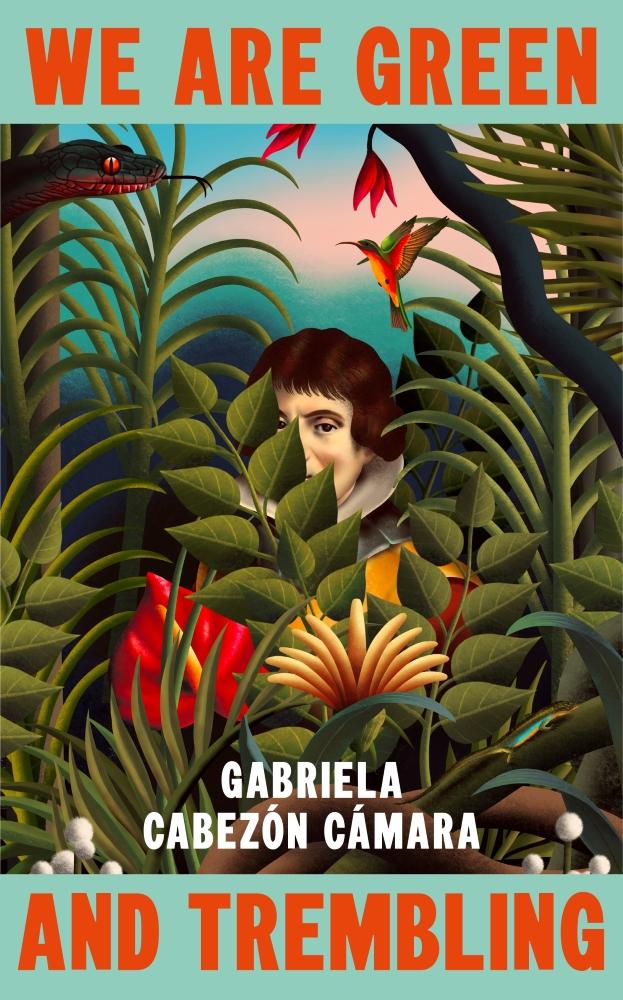
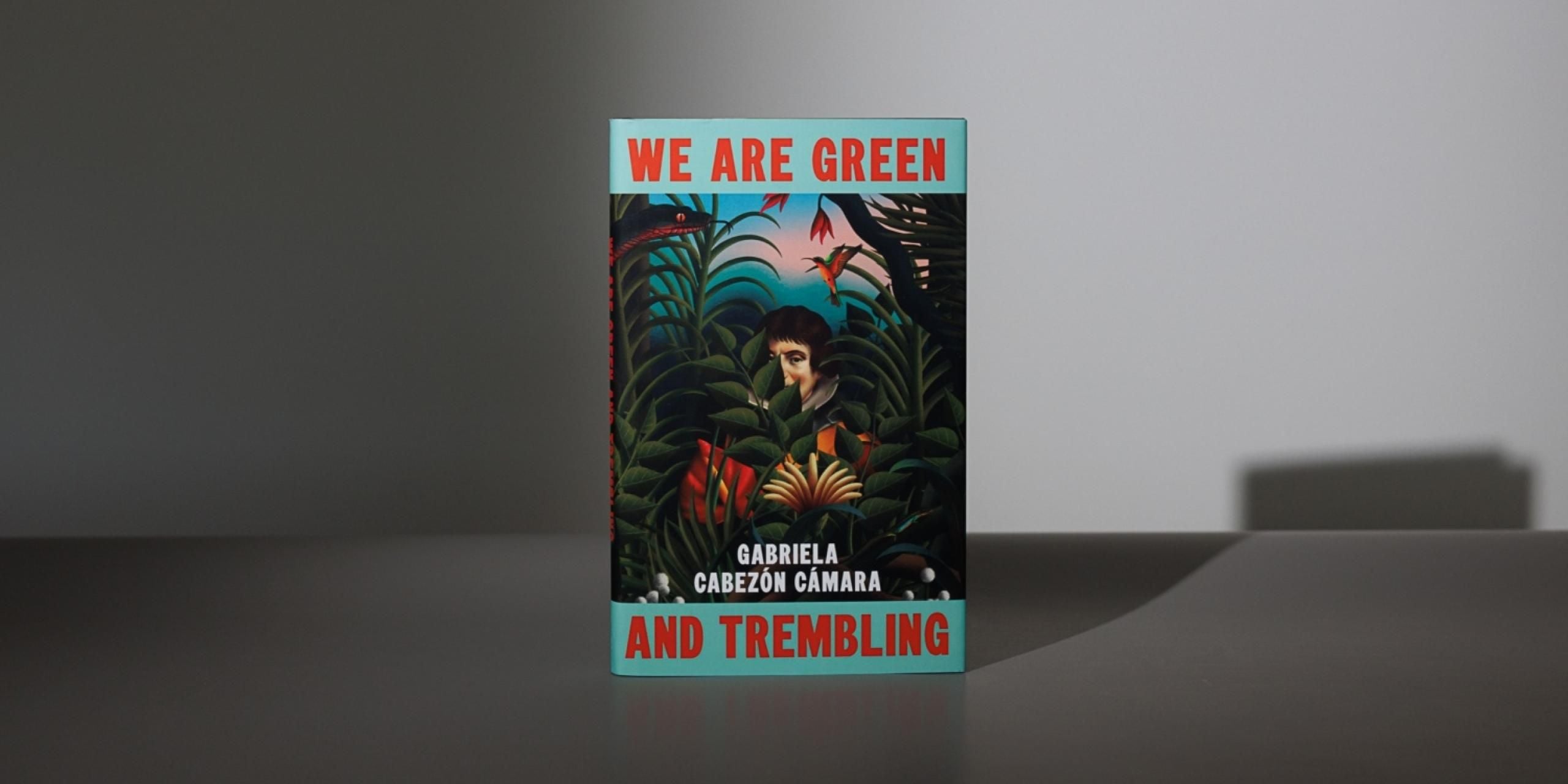
We Are Green and Trembling is a queer, baroque, tender and surreal novel that conveys glimmers of hope for the future within the brutal colonial history of Latin America.
From deep in the wilds of the New World, Antonio writes a letter to his aunt, the prioress of the same Basque convent he escaped as a young girl. Since transforming into Antonio, he has had monumental adventures and taken on numerous guises. He has been a mule driver, shopkeeper, soldier, cabin boy and conquistador. He has wielded his sword and slashed with his dagger.
Now, hiding in the jungle and hounded by the army he deserted, Antonio is looking after two Guaraní girls he rescued from enslavement. But the New World has one more metamorphosis in store, which might save them all from extinction.
Based on the life of Antonio de Erauso, a real figure from the Spanish conquest, We Are Green and Trembling offers a critique of religious tyranny and the mistreatment of women and Indigenous people – finding in the rainforest a magical space where transformation is not only possible but necessary.
The novel is published in the UK by Harvill. This extract is taken from the opening chapter.
Buy the book
My beloved aunt,
I am as innocent and forged in the image and likeness of God as any other, as every other, though I have been a cabin boy, shopkeeper, and soldier, and before then, long before, a small girl at your skirts. “Daughter,” “little daughter,” so did you call me, and not even now, not even with my martial shoulders and my mustache and my calloused sword-wielding hands, would you think to describe me otherwise. Dear aunt, I would ask you if I could, are you still alive? For I believe you are, and I believe you are waiting to bestow upon me what is yours, what was ours; the convent of Saint Sebastián el Antiguo, whose construction was commanded by your grandfather, the father of the father of my father, the Marquis Don Sebastián Erauso y Pérez Errázuriz de Donostia. Give it to some other girl, and, I beg of you, pray do keep reading these words.
You must know that I’ve become a teller of tales, and that I carry things to and fro, for I am a muleteer, which I suspect will surprise you. And I sing, and, should the need arise along the way, I hunt, and I arrive and deliver my cargo, which is not my own, as the cargo of a muleteer is never his own, and I collect my coins and return to doing what I wish; I behold the trees and vines, the long and flexible roots of the air; they become a net, like the nets cast by fishermen, or no, like webs spun by spiders, rather, throngs of spiders engrossed in their weaving, some above and some below and some within the others, oh, green and vast and aquiver, aquiver like all living things, my beloved, like you and I and all the plants, like the lizards and the entire jungle, which, as I must tell you again and again until you understand, is an animal made of many others. It cannot be traversed on foot as people do; there are no paths or straight lines, the jungle makes its clay of you, it shapes you with its own shape, and now you fly, an insect, you clamber, a monkey, you slither, a snake. As you can see, it is not so strange that I, once your beloved little girl, should be today your firstborn American son; no longer the prioress you dreamed of, nor the noble fruit of the noble seed of our lineage, your little girl is now a respected muleteer, a man of peace. And in the jungle, a creature of two, three, or four legs alongside the others, who are mine as I am theirs, a creature, after all, that darts up and down and scales and encloses and leaps and swings on vines and tipples the poisonous venom of the voracious tendrils and the tiny flowers with petals so fragile that they can scarcely weather the faintest breeze, buckling under the weight of mere droplets, for all things are always dripping here, and the butterflies— how you would love the sight of them!— as large as the fist of a large man, larger than my own hands, larger than my soldier hands, beloved aunt; for did you know I have been named a second lieutenant and strung with medals? Yet that was not in the jungle …
“Hey, che, who do you speak to, stranger, Yvypo Amboae?”
“Antonio. My name is Antonio. I come from distant lands, not strange ones. These lands are strange. And I wasn’t speaking but writing, Mitãkuña.”
“You are strange, che. All day talking and talking, reñe’˜e, reñe’˜e, reñe’˜e, talking to yourself.”
“Mba’érepa?”
“What was that, Michī?”
“She asks you why, why do you talk to yourself.”
“I am writing a letter to my aunt. Look, you two, this is a quill, this is ink, and these are words. Would you like to hear them?”
“I hear you for hours. Lies you speak, Yvypo Amboae, lies to your aunt. Where is your aunt?”
“Far away, in Spain. Be still a while, Mitãkuña, and let me keep writing. Yet that was not in the jungle …”
… that is a story I will tell you in time, dear aunt. Let me tell you now about the fragrances of the forest, which are strong as the spirits soldiers drink, as village rotgut, and about the other flowers, mammoth and fleshy and carnivorous, nearly beasts, for here in the jungle the animals bloom and the plants bite, and I believe I have even seen them walking, I swear this to you, and leaping, for vines do leap; all things seethe here, whereas the forest rustles, as well you know; I remember your attention to the presence of the fox, with its faint rustle of leaves in your forest, and to the bear, with its heavy rustle of trunks and branches; the forest rustles, but not the jungle, the jungle seethes, full of eyes; life surges inside it as lava surges in volcanoes, as if the lava were trees and birds and mushrooms and monkeys and coatis and coconuts and snakes and ferns and caimans and tigers and trumpet trees and fish and vipers and palms and rivers and fronds, and all other things within it were amalgams of these primary ones.
The jungle is a volcano, beloved aunt, a volcano in eternal eruption, slow, very slow, an eruption that does not kill, that brings forth green and pulses green water welling from the soil of my forest that in no way belongs to me, but I to it, and is nothing like the forest, nothing at all, dear aunt; jungle, wild jungle, this jungle of mine, much like the distant jungles of your stories, yes, but you should see it, you should smell it, and you would make it yours and take of it as I have done, and oh, if you could touch the stalks and petals and enormous leaves and furred vermin and colors, for here colors can be touched, how pale your Donostian rainbow by comparison, verily spectral in the chill mists, but not here; here colors are flesh, because all things are flesh in this jungle, where I dwell in the company of my animals and my servants, they belong to me, just as I, first girl, then boy, was yours, and the forest was ours in our Donostia when I was but a maiden, my most beloved aunt.

We Are Green and Trembling
© India Hobson for Booker Prize Foundation
We Are Green and Trembling
- Translated by
- Robin Myers
- Published by
- Harvill
A queer, baroque, tender and surreal novel that conveys glimmers of hope for the future within the brutal colonial history of Latin America


Features

- Book recommendations
10 Booker Prize-nominated books that explore sapphic love


- Book recommendations
11 Booker-nominated books that reimagine classic works and ancient texts
- Book recommendations