- Published
International Booker Prize 2026 judge Marcus du Sautoy reflects on the privilege of being a judge, and reveals how a commitment to read more has cured his social media addiction
Main image © Sophie Davidson for Booker Prize Foundation
You will read more than 100 books over seven months as an International Booker Prize judge. How are you approaching this unique challenge, and what are your tips for busy people who want to find more time for reading?
I wish I knew some secret tips to reading over 100 books in seven months, but the truth is I haven’t discovered a secret formula. It has basically taken over my life. I guess reading, like writing, is a muscle and the more you exercise it, the easier it gets. I can certainly sustain longer periods of reading than I perhaps could at the beginning of this marathon. The one thing that it has achieved is to cure me of my addiction to social media. The first thing I do in the morning is reach for a novel rather than my mobile phone.
What are you hoping to find as you select the books for the International Booker Prize longlist? Are there certain qualities or attributes that you’re looking for?
I decided to just start reading and to allow the qualities that make a great book to emerge organically, rather than imposing criterion that I was looking for at the beginning. I think it’s like trying to define beauty. Impossible, but you know it when you see it. I wanted to be open and to allow books to win me over and surprise me.
What do you think, if anything, good translations can bring to the original language version of a work of fiction?
I have always been someone who loves reading books in translation and I realised quite quickly that a translator can make or break a book. I’ve read different versions of classic Russian fiction, for example, and been astounded how one translation is unreadable while another can make the book sing. There have been some fascinating translation challenges in the books that we have read that reveal how important a good translator is to bringing a book to an English-speaking audience. Still very much a human skill that AI won’t get anywhere near… yet!

The International Booker Prize 2026 judges – l-r Nilanjana S. Roy, Marcus du Sautoy, Troy Onyango, Natasha Brown and Sophie Hughes – photographed at Poon’s London
© Sophie Davidson for Booker Prize Foundation
Being a judge has taken me beyond many borders and exposed me to worlds, lives and writing traditions that are so varied and different from the novels I usually read
The International Booker Prize is celebrating its 10th birthday in its current form in 2026. How do you think the prize has changed the landscape and the perception of translated fiction over the last decade, and why does this award matter?
I have had quite a few people say that as a judge on the International Booker Prize I have a real responsibility to readers to pick out the top translated fiction for this year. There are so many books published each year (which I can testify to, given the boxes of books I’ve read for this prize) that there is no way people can read all of them themselves. I realised how much people appreciate the work the International Booker Prize does in highlighting those books from around the world that are worth the time to read.
The theme of the International Booker Prize 2026 campaign is ‘Fiction beyond borders’. How do you think the International Booker, and translated fiction generally, helps readers see beyond geographical boundaries? Why is that important?
It has been such a privilege as a judge to go Around the Literary World in 80 Novels (except it was a lot more than 80). To be spooked by a Korean ghost story one day, then to escape a south American prison the next and then plunge into the fiords of Norway the day after. Being a judge has certainly taken me beyond many borders and exposed me to worlds, lives and writing traditions that are so varied and different from the novels I usually read. My mathematics has always connected me with people from around the world, but I’ve discovered through judging this prize how fiction, too, can be an amazing passport to the world.
What’s your favourite International Booker-nominated book since 2016 and what’s special about it? Who would you recommend it to?
Benjamin Labatut’s When We Cease to Understand the World (translated by Adrian Nathan West, shortlisted in 2021). Such a daring mix of fiction and non-fiction, almost like a new genre of storytelling. To meet fictional versions of my real-life mathematical heroes like Grothendieck, Mochizuki, Heisenberg and others was a lot of fun. The challenge of pushing the boundaries of scientific knowledge has important implications for us all, which is why I’d recommend this book to everyone.
What book made you fall in love with reading as a child? How and why did it capture your imagination?
I was not a big reader as a child but it was Tove Jansson’s Moomintroll books that helped me fall in love with reading. Such a brilliant range of characters, like the mischievous Little My and, my favourite, the wandering Snufkin. I wonder if my love of Moomin Valley is why I’ve really enjoyed the novels we’ve read this year from the Nordic countries.

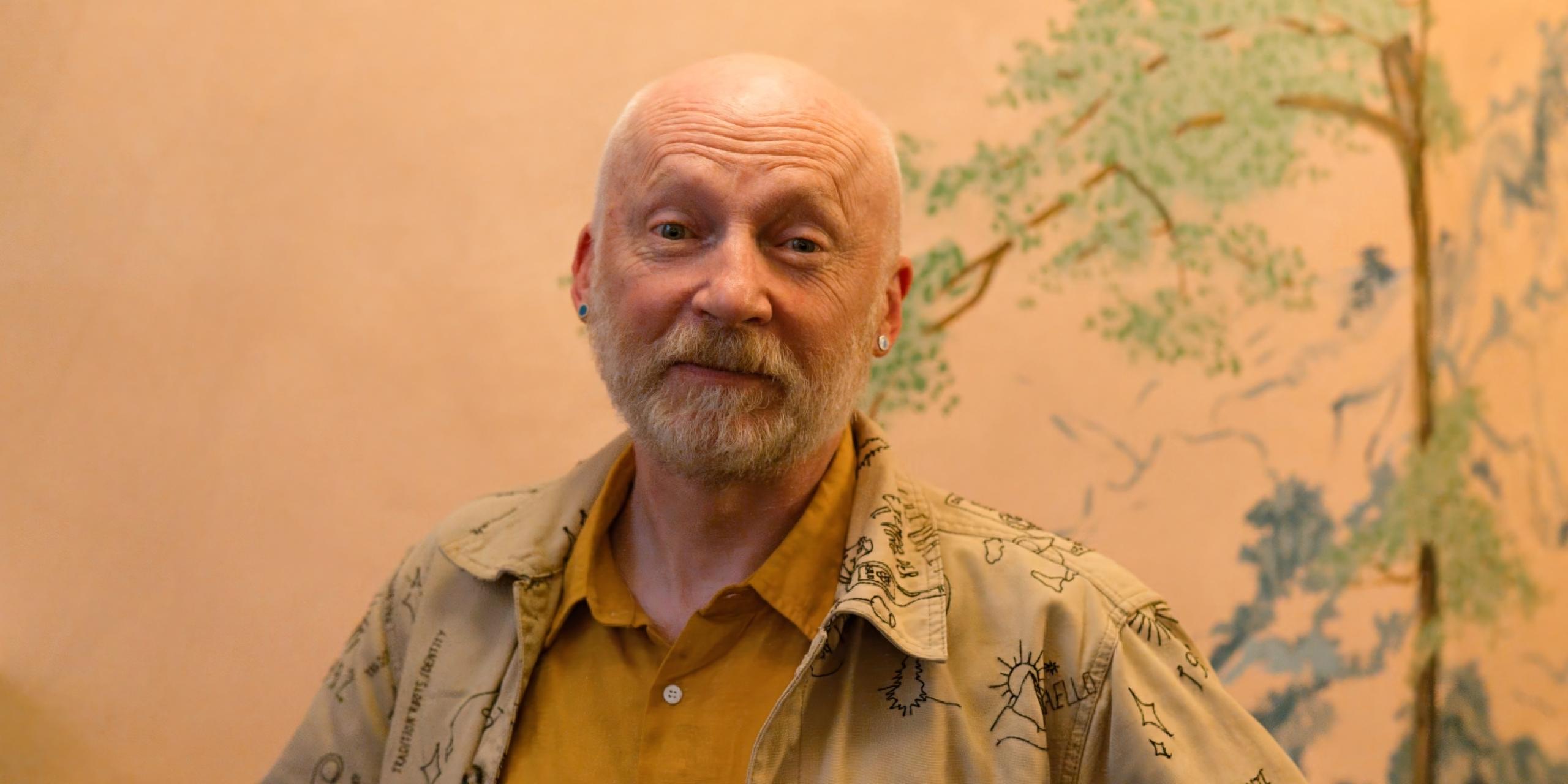
International Booker Prize 2026 judge, Marcus du Sautoy photographed at Poon’s London
© Sophie Davidson for Booker Prize Foundation


