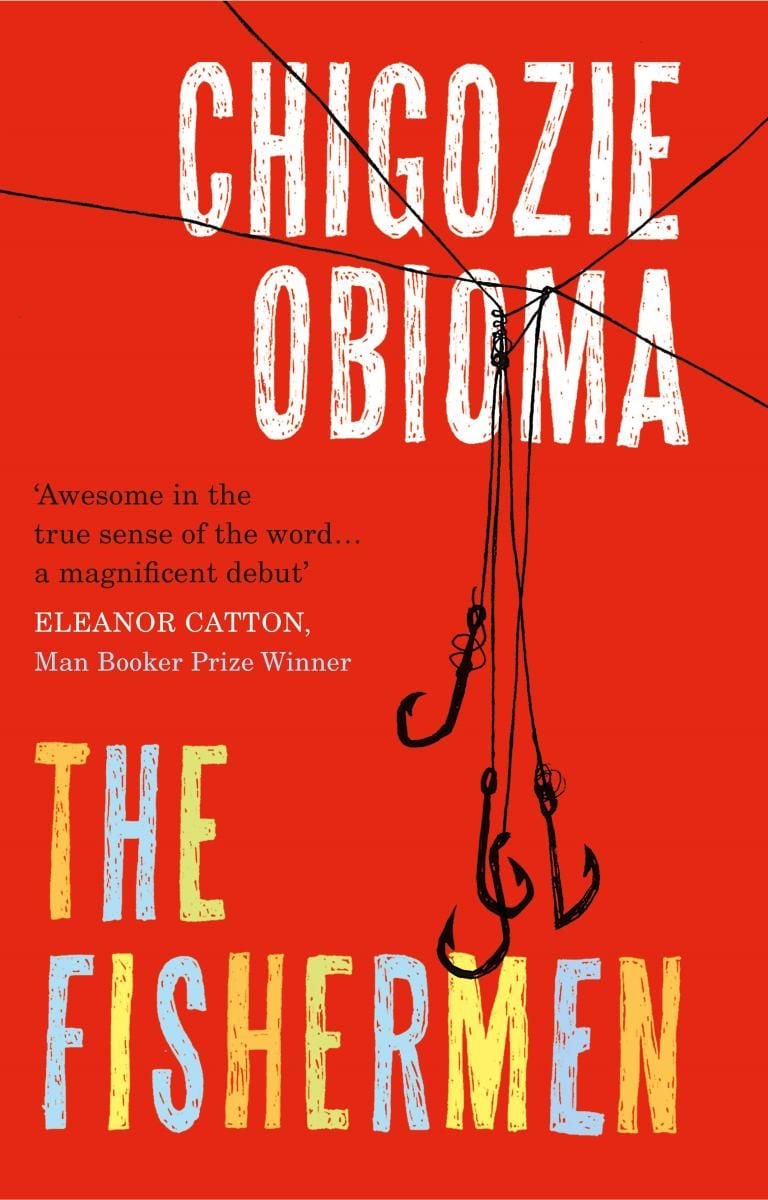

The author of The Fishermen – shortlisted for the Booker Prize in 2015 – on his inspirations and influences, his strong bond with the characters he creates, and how being a Booker judge made him a faster reader
An extract from The Fishermen by Chigozie Obioma
An extract from The Fishermen by Chigozie Obioma
- Published
Chigozie Obioma combines classic African storytelling with contemporary fiction in this haunting fable suffused with supernatural power
In a small Nigerian town in the mid-1990s, four brothers take advantage of their strict father’s absence to go fishing in a forbidden river. They encounter a dangerous local madman, whose mystic prophecy of violence threatens the very core of their close-knit family. He predicts that one of the brothers will kill another. This evil prophecy of violence unleashes a tragic chain of events.
The Fishermen is published in the UK by Pushkin ONE.
Buy the book
We were fishermen:
My brothers and I became fishermen in January of 1996 after our father moved out of Akure, a town in the west of Nigeria, where we had lived together all our lives. His employer, the Central Bank of Nigeria, had transferred him to a branch of the bank in Yola—a town in the north that was a camel distance of more than one thousand kilometres away—in the first week of November of the previous year. I remember the night Father returned home with his transfer letter; it was on a Friday. From that Friday through that Saturday, Father and Mother held whispering consultations like shrine priests. By Sunday morning, Mother emerged a different being. She’d acquired the gait of a wet mouse, averting her eyes as she went about the house. She did not go to church that day, but stayed home and washed and ironed a stack of Father’s clothes, wearing an impenetrable gloom on her face. Neither of them said a word to my brothers and me, and we did not ask. My brothers—Ikenna, Boja, Obembe—and I had come to understand that when the two ventricles of our home—our father and our mother—held silence as the ventricles of the heart retain blood, we could flood the house if we poked them. So, at times like these, we avoided the television in the eight-columned shelf in our sitting room. We sat in our rooms, studying or feigning to study, anxious but not asking questions. While there, we stuck out our antennae to gather whatever we could of the situation.
By nightfall on Sunday, crumbs of information began to fall from Mother’s soliloquy like tots of feathers from a richly plumed bird: “What kind of job takes a man away from bringing up his growing sons? Even if I were born with seven hands, how would I be able to care for these children alone?”
Although these feverish questions were directed to no one in particular, they were certainly intended for Father’s ears. He was seated alone on a lounge chair in the sitting room, his face veiled with a copy of his favourite newspaper, the Guardian, half reading and half listening to Mother. And although he heard everything she said, Father always turned deaf ears to words not directly addressed to him, the kind he often referred to as “cowardly words.” He would simply read on, sometimes breaking off to loudly rebuke or applaud something he’d seen in the newspaper—“If there is any justice in this world, Abacha should soon be mourned by his witch of a wife.” “Wow, Fela is a god! Good gracious!” “Reuben Abati should be sacked!”—anything just to create the impression that Mother’s lamentations were futile; whimpers to which no one was paying attention.
Before we slept that night, Ikenna, who was nearly fifteen and on whom we relied for the interpretation of most things, had suggested Father was being transferred. Boja, a year his junior, who would have felt unwise if he didn’t appear to have any idea about the situation, had said it must be that Father was travelling abroad to a “Western world” just as we often feared he someday would. Obembe who, at eleven, was two years my senior, did not have an opinion. Me neither. But we did not have to wait much longer.
Everything followed its natural course. We gave little thought to past events. Time meant nothing back then
The answer came the following morning when Father suddenly appeared in the room I shared with Obembe. He was dressed in a brown T-shirt. He placed his spectacles on the table, a gesture requesting our attention. “I will start living in Yola from today onwards, and I don’t want you boys to give your mother any troubles.” His face contorted when he said this, the way it did whenever he wanted to drive the hounds of fear into us. He spoke slowly, his voice deeper and louder, every word tacked nine inches deep into the beams of our minds. So that, if we went ahead and disobeyed, he would make us conjure the exact moment he gave us the instruction in its complete detail with the simple phrase “I told you.”
“I will call her regularly, and if I hear any bad news”—he struck his forefinger aloft to fortify his words—“I mean, any funny acts at all, I’ll give you the Guerdon for them.”
He’d said the word “Guerdon”—a word with which he emphasised a warning or highlighted the retribution for a wrong act—with so much vigour that veins bulged at both sides of his face. This word, once pronounced, often completed the message. He brought out two twenty-naira notes from the breast pocket of his coat and dropped them on our study table.
“For both of you,” he said, and left the room.
Obembe and I were still sitting in our bed trying to make sense of all that when we heard Mother speaking to him outside the house in a voice so loud it seemed he was already far away.
“Eme, remember you have growing boys back here,” she’d said. “I’m telling you, oh.”
She was still speaking when Father started his Peugeot 504. At the sound of it, Obembe and I hurried from our room, but Father was already driving out of the gate. He was gone.
Whenever I think of our story, how that morning would mark the last time we’d live together, all of us, as the family we’d always been, I begin—even these two decades later—to wish he hadn’t left, that he had never received that transfer letter. Before that letter came, everything was in place: Father went to work every morning and Mother, who ran a fresh food store in the open market, tended to my five siblings and me who, like the children of most families in Akure, went to school. Everything followed its natural course. We gave little thought to past events. Time meant nothing back then.


The Fishermen
- Published by
- Pushkin ONE
Chigozie Obioma combines classic African storytelling with contemporary fiction in this haunting fable suffused with supernatural power
Features

- Book recommendations
10 Booker Prize-nominated books featuring complicated sibling relationships


- Book recommendations
Booker Prize authors on the childhood books that made them fall in love with fiction

- Competition
Win a copy of The Fishermen by Chigozie Obioma
- Reading guides
Reading guide: The Fishermen by Chigozie Obioma

- Book recommendations
11 Booker-nominated books that reimagine classic works and ancient texts

- Book recommendations
70 classic Booker Prize-nominated novels, recommended by our readers

- Long read
- First person
- Video