
- Book recommendations
An extract from One Boat by Jonathan Buckley

An extract from One Boat by Jonathan Buckley
- Written by
- Jonathan Buckley
- Published
One Boat is longlisted for the Booker Prize 2025. Read an extract here
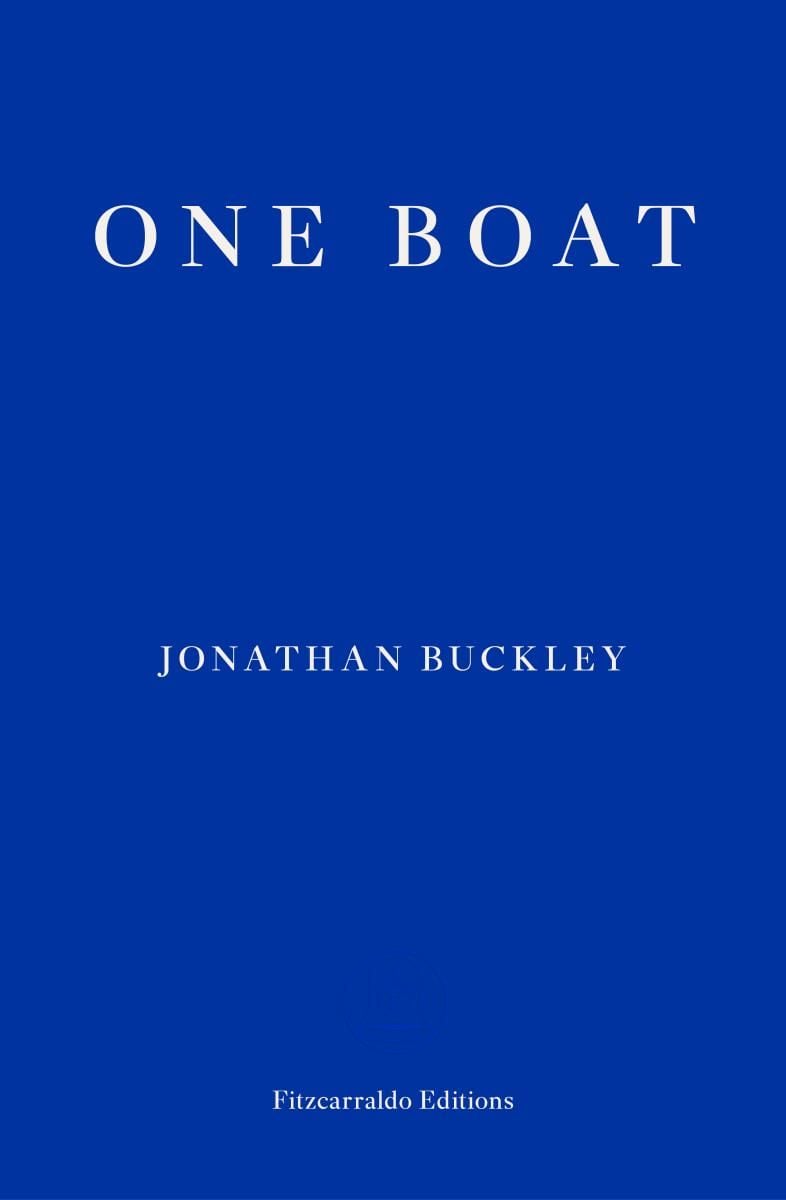
On losing her father, Teresa returns to a small town on the Greek coast – the same place she visited when grieving her mother nine years ago. She immerses herself again in the life of the town, observing the inhabitants going about their business, a quiet backdrop for her reckoning with herself. An episode from her first visit resurfaces vividly – her encounter with John, a man struggling to come to terms with the violent death of his nephew.
Soon Teresa encounters some of the people she met last time around: Petros, an eccentric mechanic, whose life story may or may not be part of John’s; the beautiful Niko, a diving instructor; and Xanthe, a waitress in one of the cafés on the leafy town square. They talk about their longings, regrets, the passing of time, their sense of who they are.
One Boat is published in the UK by Fitzcarraldo Editions. This extract is taken from the novel’s opening chapter.
Buy the book
The first time, the intention was simply to find a place that was quiet, but not somnolent. A town rather than a village. There had to be activity to observe. A few tourists, but only a few. Not too many people like myself. That was the plan, if it could be called a plan. During the stay, I would put my thoughts in order. I had pictured where this procedure would be carried out: a small square, the focal point, with café tables in the shade of a huge plane tree, an assortment of shops, whitewashed walls, the small hotel in which I would stay. At all times of day, encounters would occur there. In the evening, dozens would congregate.
The most popular resorts in the vicinity were to the east of the airport, and so were the nearest historical sites of significance. Drive north and I would be leaving the sea behind – the sea was a prerequisite; sand was not. To the south lay the city, then the bay. Therefore it had to be west, initially. I followed the coast, and the road turned south.
An hour later: a small town of immediate potential – optimum size, and open to the sea. Tables on the waterfront. No English overheard in the course of a meander through the streets. On the other side of the headland, a long and almost unpopulated beach – ideal for solitude, which would at some point be required. The main square, though, was not suitable: what I had imagined was a space in the centre of a town, through which everyone would pass, but this was not in the centre, and its café was no place for lingering.
Onward, another thirty kilometres, westward now, leaving the water for a while, and then another town and another headland, occupied by a fort which tapered to a little causeway and a pale stone tower. The square was close by, and also pretty, but again not what had been envisaged – it was too neatly picturesque. Insufficient wear and tear in evidence. The beach, across the road, did not satisfy either: the sand was as drab as concrete. A woman stood a long way out, in dead water that did not reach her waist.
From there the road led north, in the lee of a long, high, wooded hill, with green fields and olive trees on the other side, and the road became a slot through greenery, which had an effect on the mood – green being the colour of refreshment, tranquillity, resurgence, optimism – before the view opened out and water reappeared: a huge bay, with mountains beyond, on the horizon. Then I saw the town, and the words arose in my head, as clearly as if they were being spoken: ‘This will be the place.’
Then I saw the town, and the words arose in my head, as clearly as if they were being spoken: This will be the place
The plateia might have been created to order: a truncated triangle, touching the waterfront at its base, arcaded along the other two sides, with cafés and shops, and a lot of small tables and much-used chairs beneath plane trees, and some palms and a conifer, rising over a pavement of gleaming stone. A monument, an obelisk of white marble, was flanked by two cannons, supported on stone cradles. Children ran about; elders drank and smoked. There was no hotel on the square itself but I soon found one, perfectly situated, on a road that ramped up from the plateia, overlooking the town and the enormous bay. The decision to stay involved no deciding.
‘Five nights,’ I answered the receptionist. ‘Perhaps longer. If possible.’ I would be flying home in a fortnight, and intended to drive around, once the thought-ordering had been accomplished, or at least partly achieved. The school term had not ended, so the hotel was not yet busy. Accommodation would be available, whatever was decided. The new guest’s vagueness aroused some curiosity – and few, it seemed, stayed for so long.
The position of the restaurant, with tables at the water’s edge, determined the choice. The waiter enquired, ‘Just one?’ I heard an undertone of sympathy. ‘Oh yes,’ I told him, with a face that signified huge pleasure that this was so. I was aware of intermittent scrutiny. A single female diner, looking around, might be misconstrued as someone in need of company, so I took out the notebook and pen, to raise a modest barrier. It signified Do Not Disturb clearly enough, I would have thought, but it did not work. The man was intrigued, I wrote. ‘You are a writer?’ he asked, charmed – ‘Lord, no,’ I said, and left it at that, compounding the enigma. I made a note of the sunset’s colouring, I see. Water almost motionless, oil-like – a superfine oil – so many colours in the surface: violet, indigo, peach, brass, dark jade. The more one looks, the more there are. Not enough names for them. The sun, sliding behind the long, jagged, narrow island that formed the outer wall of the bay, was for a moment a red-hot ball bearing, in a socket of rock. A jellyfish swam up to the wall, apparently. Not a word about my mother, or any thoughts, and the few lines written later, back at the hotel, make no mention of the first encounter with Petros, below the Ottoman castle, which definitely happened that night, after the meal, when I strolled along the waterfront road as far as it went, to the castle entrance. Coming back, I saw him on the slope, under the trees, surrounded by cats, a dozen of them, scrawny specimens, some of them semi-furless and unhealthy to the point of repulsiveness, milling around the bowls that the man had set on the ground, which he was now filling with a meaty slurry. As I passed, he looked up and tapped a finger to his brow. He was wearing a half-crushed Panama, a dull white T-shirt and fraying jeans; his hair was close-cropped and substantially grey, as was the beard – a handsome man, perhaps mid-forties. There was nothing more to the exchange – a brief salute, acknowledged by a smile.

One Boat by Jonathan Buckley
© Yuki Sugiura for Booker Prize Foundation
One Boat
- Published by
- Fitzcarraldo Editions
Artfully constructed, absorbing and insightful, One Boat grapples with questions of identity, free will, guilt and responsibility


