The Booker Prize Foundation announces the Children’s Booker Prize
The Booker Prize Foundation announces the Children’s Booker Prize
- Published
The Booker Prize Foundation announces the Children’s Booker Prize supported by AKO Foundation, the first prize for children’s fiction from the charity that awards the Booker Prize and International Booker Prize
- The charity behind two of the world’s most significant literary prizes announces new £50,000 award for children’s fiction supported by AKO Foundation
- The UK’s Children’s Laureate Frank Cottrell-Boyce to be inaugural Chair of judges for 2027
- The Children’s Booker Prize winner will be selected by a combined panel of child and adult judges
- At least 30,000 copies of the shortlisted and winning books will be gifted to ensure more children can own and read the world’s best fiction
- Former Booker Prize and Carnegie Medal-winning author Penelope Lively will give the keynote speech at the Booker Prize 2025 ceremony to celebrate the new prize
- Watch the Children’s Booker Prize teaser video here

Children will be involved directly in the judging of the new prize
© Sanjeri/ Getty Images
The Booker Prize Foundation today (Friday, 24 October 2025) announces the Children’s Booker Prize supported by AKO Foundation, the first prize for children’s fiction from the charity that awards the prestigious Booker Prize and International Booker Prize.
The Booker Prizes have rewarded and celebrated world-class talent for over 55 years, helping to shape the canon of 20th and 21st century literature, transforming the careers of writers and building a global community of readers. Today’s announcement marks the first major new prize from the Foundation in two decades, since the launch of the International Booker Prize in 2005.
The Children’s Booker Prize, which will launch in 2026 and be awarded annually from 2027, will celebrate the best contemporary fiction for children aged eight to 12 years old, written in or translated into English and published in the UK and/or Ireland. The aim of the prize is to engage and grow a new generation of readers by recognising and championing the best children’s fiction from writers around the world. Their nominated works will join almost 700 books in the Booker library.
The founding partner and principal funder of the Children’s Booker Prize is AKO Foundation, a grant-giving charitable foundation focused on supporting charities that improve education and the wellbeing of young people, promote the arts, and combat the climate emergency. AKO Foundation has generously committed to supporting the prize for its first three years. The development of the prize over the last three years has been made possible with thanks to donations from a small group of philanthropic supporters.
Gaby Wood, Chief Executive of the Booker Prize Foundation, says:
‘The Children’s Booker Prize is the most ambitious endeavour we’ve embarked on in 20 years – and we hope its impact will resonate for decades to come. It aims to be several things at once: an award that will champion future classics written for children; a social intervention designed to inspire more young people to read; and a seed from which we hope future generations of lifelong readers will grow.
‘In other words, the Children’s Booker Prize is not just a prize – it’s part of a movement: a cause that children, parents, carers, teachers and everyone in the world of storytelling can get behind.
‘We have been laying the groundwork for this prize for the past three years, and in that time we have been buoyed by many fruitful conversations with prospective partners: we could not do this alone. And we absolutely could not have launched it without the generosity of its founding partner and principal funder, AKO Foundation, to whom we are enormously grateful.
‘We’re delighted that Frank Cottrell-Boyce, master storyteller and passionate advocate, will be the inaugural Chair of the judges. And we can’t wait to hear the views of the ultimate judges of the quality of children’s fiction: children themselves.
‘The Booker Prize Foundation exists to inspire more people to read the world’s best fiction – because if you can imagine a different world, you can help to create a better one. The possibility of welcoming young readers into our growing global community is hugely exciting. We hope they discover stories and characters that will keep them company for life.’

Chief Executive of the Booker Prize Foundation Gaby Wood at the Booker Prize 2024 ceremony
© David Parry for the Booker Prize Foundation
Philip Lawford, Chief Executive Officer, AKO Foundation says:
‘We are very pleased to support the Booker Prize Foundation in launching the Children’s Booker Prize. At AKO Foundation we believe strongly in the importance of nurturing a love of reading from an early age. The evidence linking reading for pleasure to improved educational outcomes and greater social mobility is compelling, and this initiative aligns closely with our priorities as a funder. We are proud to contribute to a project that will inspire and empower young readers.’
The multi-award-winning children’s book author and screenwriter Frank Cottrell-Boyce, who is the current Waterstones Children’s Laureate, will become the inaugural Chair of judges for the prize. Uniquely, the prize will be judged by a mixed panel of adult and child judges. Cottrell-Boyce and two other adult judges will select a shortlist of eight books. Three child judges will be recruited – with the support of schools and a range of partners across the culture and entertainment industries – to join the adults in choosing the winning book. The process will give children a direct voice in the outcome, ensuring the book is recommended by young readers to their peers.
Frank Cottrell-Boyce, Waterstones Children’s Laureate 2024-2026 and Chair of judges for the Children’s Booker Prize 2027, says:
‘Stories belong to everyone. Every child deserves the chance to experience the happiness that diving into a great book can bring. The Children’s Booker Prize will make it easier for children to find the best that current fiction can offer. To find the book that speaks to them. By inviting them to the judging table and by gifting copies of the nominated books it will bring thousands more children into the wonderful world of reading.
‘I am absolutely buzzing about the news that I’m going to be chairing the judging panel. It’s going to be – as they say – absolute scenes in there. Let the yelling commence.’

Frank Cottrell-Boyce, Chair of judges for the Children’s Booker Prize 2027
© David Bebber
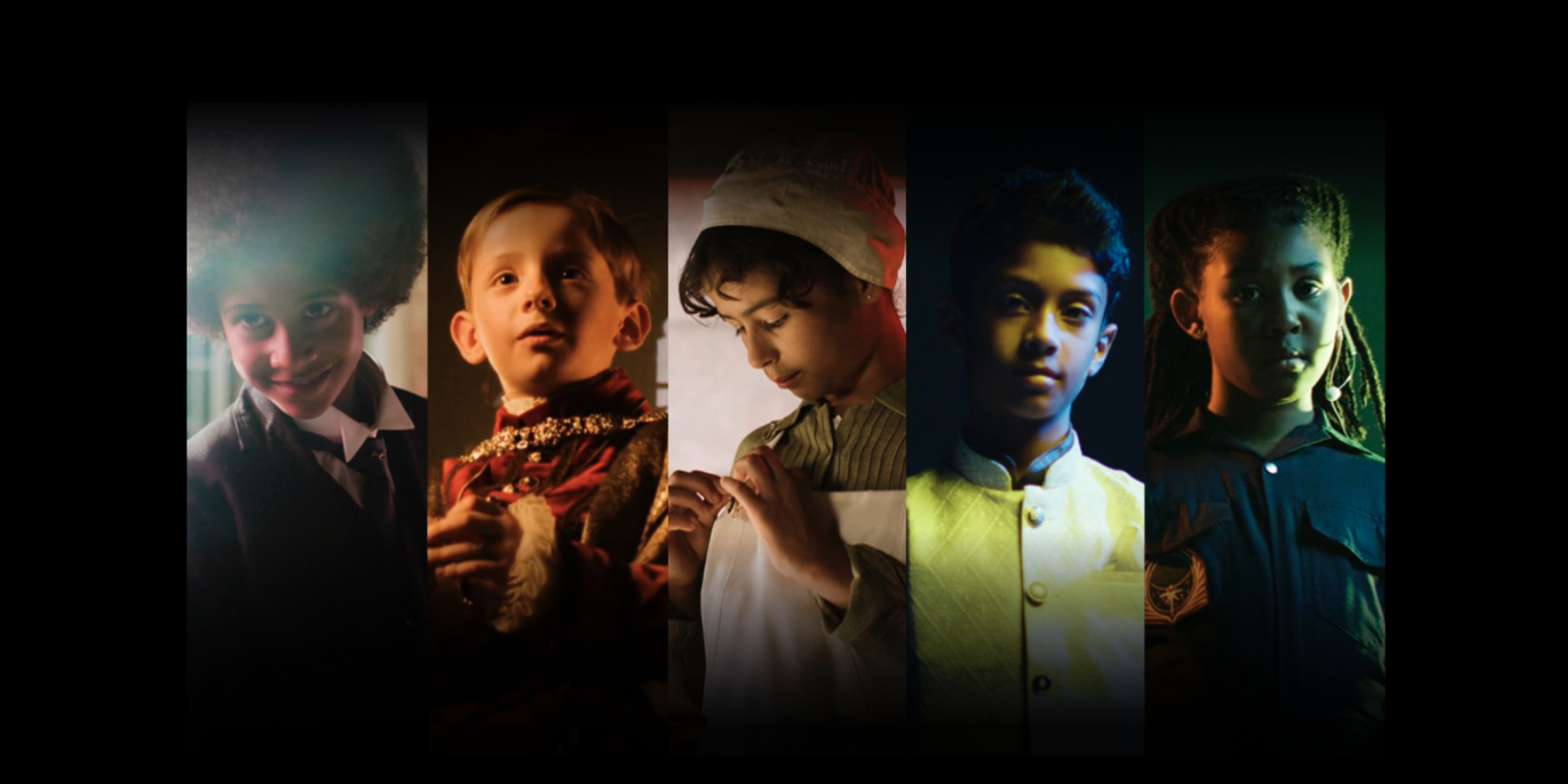
To mark the announcement of the Children’s Booker Prize, the Foundation has created a teaser video featuring children reading from a range of Booker Prize-winning classics. The much-loved author Penelope Lively will give the keynote speech at this year’s Booker Prize ceremony on Monday, 10 November 2025 at Old Billingsgate, London sharing the reasons she thinks that children’s literature should be celebrated by this new prize. Lively is the only recipient of both the Booker Prize (for Moon Tiger, 1987) and the Carnegie Medal for writing, the UK’s longest-running children’s book award (for The Ghost of Thomas Kempe, 1973). Welcoming the announcement of the Children’s Booker Prize, she says: ‘Those who write for children especially need this – and it is needed equally for the children who read the books.’
The inaugural prize will open for submissions from publishers in spring 2026, when the remaining two adult judges will be made public. The shortlist of eight books – and the three child judges – will be announced in late November 2026, with the winner revealed at a high-profile event for young readers in February 2027. The eligibility period for the 2027 prize is 1 November 2025 to 31 October 2026.
As with the Booker Prize and International Booker Prize, the shortlisted authors will each receive £2,500 and the winning author £50,000, ensuring that children’s prize recipients are given the same level of financial reward and recognition as their counterparts writing fiction for adults. The prize will be open to authors worldwide, both for books written originally in English and for those translated into English, as long as they are published in the UK and/or Ireland within the eligibility period. This fuses the eligibility of the two existing Booker Prizes. If a book that has been translated into English wins, the author and translator will share the £50,000 equally, as with the International Booker Prize. If a graphic novel wins, the author and illustrator will share the £50,000 prize equally; if a highly illustrated book wins, the author and illustrator will share the £50,000 in a manner to be agreed with the publisher.
Putting children’s books at the centre of our culture
The Booker Prize Foundation announces the Children’s Booker Prize at a time when children’s reading for pleasure is reportedly at its lowest in 20 years, and as the UK government and the National Literacy Trust have announced a National Year of Reading 2026 to change the nation’s reading habits.
The prize is being launched to inspire more children to discover and read great contemporary fiction and will tackle the challenge in a number of ways.
These include:
- consulting with children to inform the ongoing development of the prize
- involving children directly in judging so that the winning book is a peer-to-peer recommendation, underpinned by the quality stamp of the Booker Prizes’ rigorous selection process
- collaborating with experienced organisations including publishers, schools, libraries, and bookshops
- ensuring that more young people have access to the best new children’s fiction through targeted gifting of the shortlisted and winning books, delivered by a range of partners
- partnering with brands that children love, creating effective campaigns to engage them outside of traditional book and educational spaces
- and tracking trends in children’s reading for pleasure to measure impact and keep the prize relevant.
Delivering the Children’s Booker Prize with partners
The Booker Prize Foundation will be working with publishers and a range of partners, including the National Literary Trust, The Reading Agency, Bookbanks, and the Children’s Book Project to gift and deliver at least 30,000 copies of the shortlisted and winning books each year to children that need them the most.
The Foundation is working with Beano Brain, specialists in kids and youth insight, consulting children on the development of the Children’s Booker Prize, which will include regular co-creation sessions with eight to 12 year-olds. It will also be working with the National Literacy Trust to measure longer term trends in children’s reading.
Further partners will be announced next year. Organisations and brands interested in coming on board to inspire children to read the world’s best fiction can find out more by getting in touch with the Booker Prize Foundation at thebookerprizes.com/children.
Industry support for the Children’s Booker Prize
News of the Children’s Booker Prize has been met with enthusiasm from key figures across the books world, including a range of children’s authors and illustrators who have held the position of Waterstones Children’s Laureate, as well as the Publishers Association, the Booksellers Association and Waterstones.
Joseph Coelho, Children’s Laureate 2022-2024, says:
‘I’m incredibly excited by the announcement of the Children’s Booker Prize. This is a brilliant way to invite children into the world of words through a celebration of books, authors and illustrators. I fully welcome a robust prize that celebrates children’s literature in a manner equal to that which adult literature receives and one that makes essential space for the voice of the child.’
Cressida Cowell, Children’s Laureate 2019-2022, says:
‘I am hugely excited about the launch of the Children’s Booker Prize. Children are the toughest critics out there, so literature for children has to be created with the greatest expertise. It has to be exciting, adventurous, funny and wise. And the stakes are the highest they’ve ever been, because children have more competition for their time than ever before: children’s authors and illustrators are fighting for the survival of a medium. Thank you to the Booker for acknowledging that they’re doing this with world-class creativity, and for supporting us all in our quest to get all children reading for enjoyment.’
Chris Riddell, Children’s Laureate 2015-2017, says:
‘It is great news that the prestigious Booker Prizes will honour a children’s book. The books we read as children stay with us and shape our future tastes in literature. It is exciting that the Children’s Booker Prize will consider the children’s books it chooses holistically – not only for the excellence of their prose and storytelling but the beauty of their design and illustration.’
Malorie Blackman, Children’s Laureate 2013-2015, says:
‘The Children’s Booker Prize is a timely and very welcome addition to the children’s book world. Fundamental to the appeal of the prize is the fact that children are integral to the judging process. Children are an honest, discerning audience who deserve the very best stories and this award will highlight and celebrate the literary excellence to which they are entitled.’

Joseph Coelho
© Simone Padovani / Getty Images
Jacqueline Wilson, Children’s Laureate 2005-2007, says:
‘It’s a marvellous idea to have a Children’s Booker Prize. Now, more than ever, children’s books need a huge boost. It’s so dismaying that only 30% of today’s children enjoy reading for pleasure – and yet there are so many exciting and enjoyable children’s books out there, many sinking without trace. I think a Children’s Booker Prize, like the Booker Prizes for adult fiction, will become a talking point, signposting more children, parents, carers and teachers to the best new children’s literature. The prize will also be a level playing ground, so that new sparkling talented writers will have the same chance of winning the sizeable prize as well as long-established authors. Three cheers for such an exciting project!’
Michael Morpurgo, Children’s Laureate 2003-2005, says:
‘A Booker for children! Great news for children and books! And it comes at a moment when there is much anxiety about the enjoyment of reading amongst our young. A Booker Prize for children will stimulate interest and excitement in books amongst children and amongst grownup children too, shining a light on great writing for children, and crucially, bringing more children to a love of reading, which is such a critical pathway to knowledge and understanding. A truly welcome innovation for all of us, young and old alike. Bravo the Booker!’
Anne Fine, Children’s Laureate 2001-2003, says:
‘When it comes to book prizes we all say, The More The Merrier, and especially when it comes to writing for children, which has all too often been the overlooked Cinderella of the book world.’
Bea Carvalho, Head of Books at Waterstones, says:
‘The Booker Prizes provide us with two of the most prestigious and impactful moments in the bookselling calendar, reliably creating bestsellers and setting the literary tone for the year ahead. At a time when children’s reading for pleasure is so vital, when we should all be doing everything we can to help spark and maintain a love of books amongst the younger population, it is a huge joy that the Booker Prizes are adding a prize for young readers to their roster. Children’s authors deserve to be celebrated and this prize will be a gamechanger for any writers who are elevated by its shortlists. Everyone at Waterstones will look forward to championing the Children’s Booker Prize, and to working closely with the Booker Prize Foundation on reaching young readers everywhere.’
Fleur Sinclair, President of the Booksellers Association for the UK & Ireland and owner of Sevenoaks Bookshop, says:
‘I’m 100% here for anything that shines a light on the joy, wonder and delight of children’s books! We all have nostalgic favourites from our own childhoods, but I’m especially delighted to have a brilliant new platform for children’s authors writing right now, and their newly published books. The Booker Prize has a long legacy of championing noteworthy books for adult readers, so I’m excited to see whole families, the older members and soon the young as well, coming together to read and celebrate great new books uplifted by the Booker Prize spotlight.’
Dan Conway, CEO of the Publishers Association, says:
‘The decline in children’s reading for enjoyment is a tragedy and we should all be doing our best to turn that trend around. Going into the National Year of Reading in 2026, it is so important that authors, publishers, booksellers, prizes, reading charities and all those invested in solving this societal issue support and reinforce each other for the greatest impact possible. The fact that the Booker has stepped up to the plate with the launch of the Children’s Booker Prize is hugely exciting. A high-profile award for children’s fiction is a great opportunity to showcase some of the brilliant books available for children and it could not be launching at a more important time.’

Malorie Blackman
© GL Portrait / Alamy Stock Photo
The impact of the existing Booker Prizes
The Booker Prize, first awarded in 1969, is the leading literary award in the English-speaking world, and has brought recognition, reward and readership to outstanding fiction for over five decades.
The 2024 winner Orbital by Samantha Harvey sold over 20,000 print copies in the UK in the week following its win on 12 November 2024, making it the fastest selling winner of the Booker Prize since records began. It was the bestselling title in the UK that week, topping the Audible audio and Amazon physical and eBook charts. Sales through Waterstones were more than double the volume of each of the last decade’s winners, up 3,000% the day after the announcement.
The UK publisher of Orbital, Vintage, reprinted 250,000 copies in response to the sales demand following its Booker Prize win and it remained top of the mass market fiction chart for eight consecutive weeks. Total sales of Vintage’s edition of Orbital across all formats and including its export markets and exclusive territories (South Africa, Australia, New Zealand and India) are now almost 750,000. That includes 357,000 copies of the hardback and paperback editions sold in the UK, up 3,867% since the book’s longlisting. Translation rights deals increased from eight before Orbital’s longlisting to a current total of 44 territories.
The International Booker Prize, the world’s most influential award for translated fiction, continues to build in global importance each year. The winners can expect a worldwide readership and a significant increase in profile and sales, including in the author’s home country.
The announcement of the 2025 winner, Heart Lamp, written by Banu Mushtaq and translated by Deepa Bhasthi – the first collection of short stories to win the prize and the first translated from Kannada – was reported in over 1,826 news stories across 60 countries around the world in the week after its win and the winners’ speech had over 26 million views online. The book rapidly sold out in the UK in the subsequent days, with the UK publisher And Other Stories immediately reprinting 40,000 copies.
According to And Other Stories, sales of the paperback have increased by 351% since it won the International Booker Prize 2025. Prior to the winner announcement in May 2025, it had sold 5,100 copies in the UK; since, it has sold over 23,000 copies. Prior to its longlisting, translation rights to Heart Lamp had been sold in eight languages, including seven Indian subcontinent languages with a further two English rights sales (in addition to the UK, US and India); that has now increased to an additional 13 languages, including five new Indian subcontinent languages.
The prize has helped to drive a boom in translated fiction in the UK: according to the Bookseller, sales have doubled since the International Booker Prize launched in its current form nine years ago, with ‘roughly £1 in every £8 spent through NielsenIQ BookScan’s Fiction category over the past year … on a translated title’. This is largely down to younger readers, with almost half of translated fiction in the UK bought by under-35s. The prize’s influence also extends to other awards, with five authors – Han Kang, Jon Fosse, Annie Ernaux, Olga Tokarczuk, and László Krasznahorkai – recognised by the International Booker Prize going on to win the Nobel Prize in Literature.
Nominated works for the Children’s Booker Prize could also enter into a tradition of Booker Prizes adaptations. More than 74 books that have been longlisted or shortlisted for the Booker or International Booker Prize have been adapted for the big or small screen over the years, with several going on to win Oscars, BAFTAS and Emmys. They range from The Remains of the Day to Atonement, Normal People to The Handmaid’s Tale, Wolf Hall to Life of Pi, True History of the Kelly Gang to The Line of Beauty, The Underground Railroad to Small Things Like These, Hurricane Season to Elena Knows, and in the last year, The Narrow Road to the Deep North, Harvest, and Hot Milk.
For media enquiries, please contact:
Alice Ingall, Communications Manager at the Booker Prize Foundation
[email protected] / +44 7899 096 299