

Paddy Clarke Ha Ha Ha
by Roddy Doyle (prize winner)
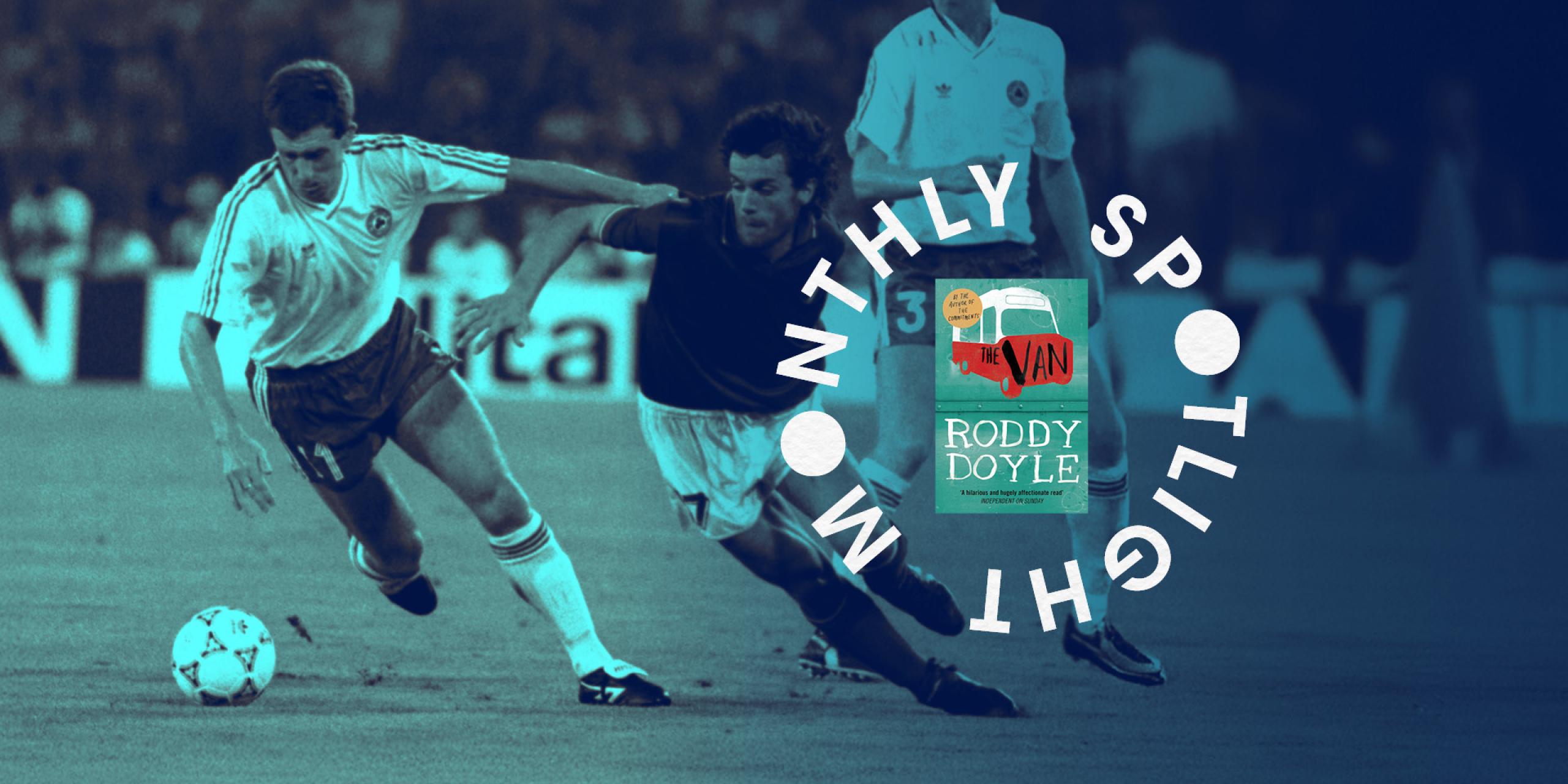
Shortlisted for the Booker Prize in 1991, the third novel in Roddy Doyle’s Barrytown trilogy follows two old friends working in a fast-food van against the backdrop of the 1990 football World Cup
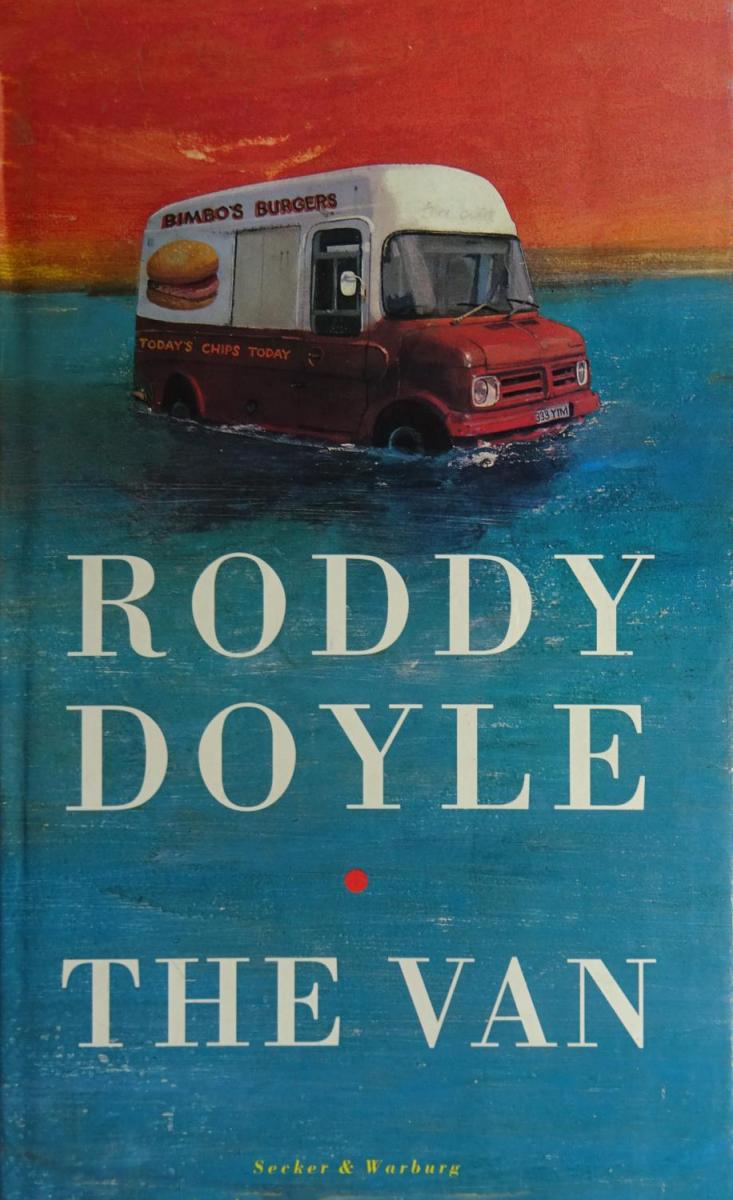
Set in Dublin in the early 1990s, The Van follows Jimmy Sr and Bimbo, two old friends who are down on their luck and short of options. Fuelled by beer and desperation, they decide that selling fish and chips might be the best way to make some fast cash. Bimbo buys a beat-up, old fast-food van and recruits Jimmy Sr as his wingman. The pair go into business just as World Cup fever sweeps the city. Not everything goes exactly to plan, however…
Furiously fast and viciously funny, The Van explores male friendship, masculinity, and a changing Ireland. With humour as its salt and harsh reality as its vinegar, the book is as entertaining as it is heart wrenching. Set against the heady backdrop of Ireland’s Italia ’90 footballing adventure, Doyle’s novel tackles topics including mental illness, estrangement, unemployment and misogyny with striking honesty.
Jimmy Rabbitte Sr
The patriarch of the Rabbitte family and antihero of The Van. He is unemployed, his children are growing up, and the top button of his trousers won’t fasten anymore. He’s often miserable and resentful. Despite his flaws, Jimmy Sr is a loyal friend and caring father. He works hard with Bimbo, but his masculinity is called into question when he realises Bimbo’s wife Maggie is the boss and he is the employee.
Brendan ‘Bimbo’ Reeves
When Bimbo is made redundant, he’s left without wages or a sense of identity. Jimmy Sr looks after him, keeping his mojo up and his pint glass full. One night, after noticing his favourite chipper van is no longer in its usual spot, Bimbo decides that he will be the one to provide chips to Dublin’s inebriated masses. And so, ‘Bimbo’s Burgers’ is born. He buys a van and sets out on his business venture to some success, and many, many losses – personally and professionally.
Veronica Rabbitte
Veronica is Jimmy Sr’s wife. She’s a busy mother and grandmother, and in her free time she’s taking night classes, studying for her ‘Leaving Cert’ (the final exams in the Irish secondary school system). Despite always juggling so much, she is her husband’s loyal and steadfast confidant. Jimmy Sr turns to her whenever he needs her and she provides for him: be it a slap, telling off, fry, rationale or a ride. She is the backbone of the Rabbitte family, throughout their many triumphs and tragedies.
Maggie Reeves
To Jimmy Sr, Maggie is Bimbo’s over-ambitious, controlling ‘wagon of a wife’. In fact, she is the brains behind ‘Bimbo’s Burgers’. Maggie designs the slogan and advertising, creates and buys in the menu, teaches the men how to cook, and organises logistics. In pushing her husband to take the business more seriously, she drives a wedge between the two friends.
Roddy Doyle was born in 1958 in Kilbarrack, Dublin. It is this suburb that provides the roots of the fictional Barrytown trilogy. He writes about where he is from, and he still lives there today. On Kilbarrack he said, ‘I still live in the same neighbourhood where I grew up, and I still have to face the milkman and the neighbours if they don’t like what I write.’
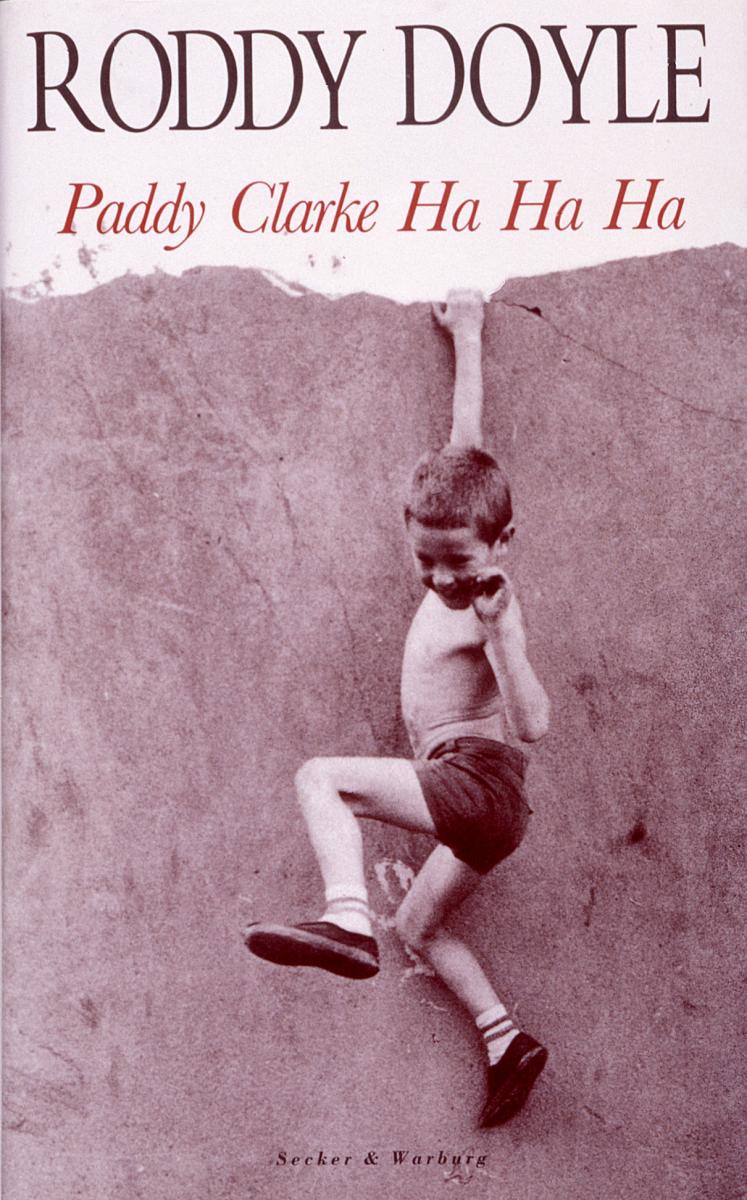
The Van was shortlisted for the Booker Prize in 1991. Doyle’s other works include The Commitments, The Snapper, Paddy Clarke Ha Ha Ha, for which he won the Booker Prize in 1993, The Woman Who Walked Into Doors, and, most recently, The Woman Behind the Door. He has also written three collections of short stories, eight books for children, the ‘Two Pints’ series, and a memoir of his parents, Rory and Ita.
In 2026, Doyle curated and contributed to the Booker Prizes’ first ever Quick Read, All Around the World. It’s a collection of seven short stories, written by Booker Prize- and International Booker Prize-nominated authors, aimed at adults who are experiencing barriers to reading, and published in partnership with The Reading Agency.
Doyle also writes for film and television. He co-wrote the screenplay for The Commitments and wrote the scripts for The Snapper and The Van. His most recent screen work was the script for Rosie, released in 2018. His four-part TV series, Family, was produced by the BBC in 1994. He has also written for the stage, including the book of The Commitments musical.
He is a co-founder of Fighting Words, which was set up to help and encourage children and young people throughout Ireland to write creatively.
He was the Chair of judges for the Booker Prize 2025.
Roddy Doyle photographed at Fortnum & Mason in London
© Neo Gilder for the Booker Prize Foundation
‘As usual, Doyle has got it all just right – this is what friendships and families are really like: stubborn, contrary, loving, and aware of life’s absurdities, always ready to be cheered by a good laugh. Vintage Doyle.’
Reviewed in Kirkus
‘It is almost as if he is writing a cultural history in real time. No easy task by any means. And for this reason, his work over the last two decades, which parallel the boom and bust of Ireland’s economy as well as the waves of immigration and emigration that accompanied those economic changes, is invaluable to making any sense of contemporary… Irish… migration and diaspora.’
John Dillon, Breac, A Digital Journal of Irish Studies
‘An important writer — not just an important Irish writer. Doyle’s take on the past is very deliberately demystifying, but quite empathetic with the people whose actions he’s demystifying. He has sympathy with revolutionary social romanticism … but he’s still determined to show the baggage that comes with that romanticism, the Anglophobia and the mindless violence. He writes sentences that hit you like a slap in the face.’
Roy Foster, The Times
‘Doyle takes a risk with the structure of … The Van… which is more complex than the other two. It starts in a low key, reflecting Jimmy Sr’s empty days. About a quarter of the way through Bimbo, too, is let go by his bakery firm and puts part of his redundancy money into a fish-and-chip van… the book’s action gets into gear with demonic scenes of frying and spilling and beating the frozen cod, hard as chipboard, against the rusty freezer. The family lend a hand as the van becomes a kind of fortress under siege… All these splendours and miseries keep pace (the year is 1990) with Ireland’s successes in the World Cup.’
Penelope Fitzgerald, London Review of Books
‘I wrote The Van in 1990 and 1991 about two unemployed men. Six or seven years later, I wouldn’t have been writing The Van, because I think at that point those men were probably finding work that wasn’t there six or seven years beforehand. So it wouldn’t have been about two unemployed men. It was very much of its time, and I’m not sure if anybody in that time saw what was coming in the next 10 years or so: that the place would reinvent itself so quickly, and that the exposure of the behaviour of bishops and the people brave enough to stand up and tell the horrors of what had happened to them. The power of the Church diminished so quickly that, I suppose in a way, you’d rather not look back at what it used to be like. That’s one of the reasons why I don’t think Irish people get overly nostalgic or sentimental about the past.’
Roddy Doyle in the Guardian
‘The proudest moment of my literary career… a woman telling me that she went into labour while reading my third novel… The Van… She was laughing so much her waters burst.’
Roddy Doyle in The Royal Literary Fund’s Substack
Roddy Doyle, Booker Prize 2025 judge
© Anthony Woods
In an interview with John Dillon for Breac, A Digital Journal of Irish Studies, Doyle explained: ‘There may well be that there was a confidence in…The Van… that began to hit the tone of the country at the time. Because I was writing it during the World Cup and I included the World Cup in it, in a way. But I was also open to the idea that… Ireland in… the World Cup would never quite take off and I’d just ignore it.’
While Doyle doesn’t support a team, he famously ghost wrote The Second Half: the second autobiography of Irish footballing legend Roy Keane. The pair recently wrapped up a series of highly anticipated ‘In Conversation’ events in Ireland. In an interview for the Guardian, Roy Keane said, ‘Roddy has a way about him. He’s likeable, quite laidback… writing the autobiography with him… was like a therapy session. I should have been charging him.’
When asked what song he’d liked played at his funeral, Doyle told the Guardian, ‘The theme music from Match of the Day. I’ve been watching it since I was a child. The music has never changed. They tried to change it once, people complained. I just think the beat and tone and rhythm and silliness of it as the curtains close and the coffin goes off – it’d be nuts.’
Ireland reached the World Cup quarter finals in 1990, the furthest they’d ever got in the tournament. Doyle writes that ‘the country had gone soccer mad’. He describes how everyone is watching the games, including ‘Oul’ ones’ and ‘mammies’, with ‘flags hanging out of every window’. When reflecting on this period, Doyle notes there was a confidence in the air that seeped into his novel. Ireland’s World Cup triumph pushes Bimbo and Maggie to take a business leap that is out of character. What did you think of the ways in which sporting success inspires patriotic hope in an otherwise declining Barrytown? Can events like this change how a place is perceived or create an illusion that differs from the real state of things? Do you think Bimbo and Jimmy are victims of false hope?
Doyle recently expressed how tedious it is to be asked about James Joyce as a Dublin writer. Despite this, it’s hard not to notice the way both writers create a sense of paralysis in their novels. In Dubliners, Joyce writes about men constantly finding themselves back where they started and young people unable to kickstart their futures. Doyle does this in The Van, too. What examples of paralysis did you find in The Van? Why do you think Doyle created characters who seem stuck?
Jimmy Sr’s misogyny is hard to ignore. He calls women ‘wagons’ and ‘c***s’ and spends a lot of time weighing up whether any woman he sees is a ‘ride’ or not. His baby granddaughter Gina even learns the word ‘bitches’ from her granddad and says it herself, ‘bitis’. Jimmy leers at young women and only stops so as not to be considered a ‘perv’. Does Jimmy’s sexism and misogyny make him hard to like? Do you think they’re symptomatic of the time and culture, or a specific trait of his?
In the world of Barrytown, women become less desirable when they marry. Jimmy Sr, Bimbo and their friends express that they’re lucky men, but their wives ‘are wives’. When looking at more attractive, younger women, they note that ‘they’re more women than wives’. So-called ‘poor Veronica’ does everything for her husband, all while doing everything for her children, too. At the end of the novel, Jimmy wakes Veronica up simply because he really needs a hug. Maggie, meanwhile, is hated by Jimmy, who resents her attempts to make Bimbo’s Burgers a success. What did you think of Doyle’s portrayal of married life in working-class Dublin in the 1990s? Did the women seem content or trapped?
Doyle’s novel is mostly written in fast-paced dialogue, in working-class Dublin dialect, complete with all its beloved profanities. There is very little traditional prose to drive the action. What did you think of the rhythm and speed of The Van? Did the writing style help immerse you in the world of the Barrytown trilogy, bringing you into the centre of the families and friendships?
The Van shows the reality of male loneliness and mental illness in a working-class community, at a time when such things were not openly discussed or acknowledged. When Bimbo loses his job, he falls into a deep depression that Jimmy Sr tries his best to bring him out of. He welcomes him into his own unemployed, everyday routine, no questions asked. They go to Pitch and Putt. They go to the pub. They go to the library. They go to the beach. When Bimbo cries, Jimmy Sr comforts him (as he knows how to). Even when the friends fight, they round things off with the suggestion of a pint. Fans of the novel admire this representation of men struggling together. What did you think of Jimmy and Bimbo’s relationship? Did it seem ahead of its time? What do you think of the way Doyle writes male friendship?
Masculinity and its fragility are a major theme in the novel. Jimmy Sr hides from the Guards so that they don’t see him and Bimbo unemployed together. When Bimbo and Maggie buy the chip van, he feels left out and resents his status an employee, rather than business partner. He discourages Bimbo from applying to work at McDonalds, and embarrassed that he ends up flipping burgers himself. He hates being unable to provide much for his family, especially at Christmas. How important is work to Jimmy’s sense of identity as a man? Do you think his fierce temper and fiery opinions are a defence to distract people from his insecurities, or are they simply a reflection of his true character?
A nappy is fried and fed to a customer. ‘Zombies’ ascend on the burger van whilst blaring UB40. A dog vomits after being fed chocolate for comedy. A baby learns to swear… The Van is full of controversial but hilarious moments. How did you find the comedy of the novel? As a reader today, were the japes dated and too gratuitous? Or did they provide a funny contrast from the bleak and claustrophobic setting? What was the funniest part of the novel for you?
A film still from The Van, directed by Stephen Frears
© Moviestore Collection Ltd / Alamy
Royal Literary Fund: My Working Life (Roddy Doyle)
Breac, A Digital Journal of Irish Studies: An Interview with Roddy Doyle
The Times: Roddy Doyle on his fictional treatment of Irish history
The Guardian: ‘People used to say I was undermining family life… ludicrous stuff’
by Roddy Doyle (prize winner)
by Anne Enright (prize winner)
by Douglas Stuart (prize winner)
by Paul Murray
by Colin Barrett
by Magnus Mills