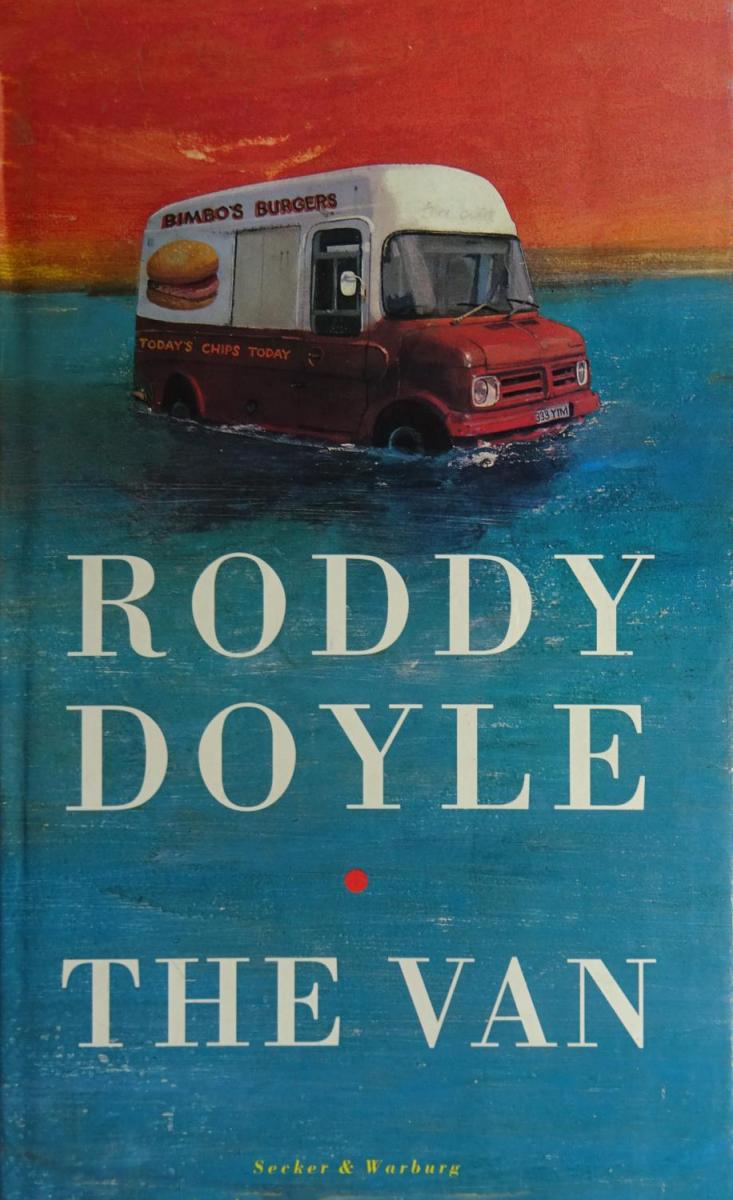

Shortlisted for the Booker Prize in 1991, the third novel in Roddy Doyle’s Barrytown trilogy follows two old friends working in a fast-food van against the backdrop of the 1990 football World Cup
An extract from The Van by Roddy Doyle

An extract from The Van by Roddy Doyle
- Published
Shortlisted for the Booker Prize in 1991, the third novel in Roddy Doyle’s comic Barrytown trilogy follows the adventures and misadventures of Jimmy Rabbitte Senior
Set in Dublin in the early 1990s, The Van follows Jimmy Sr and Bimbo, two old friends who are down on their luck and short of options. Fuelled by beer and desperation, they decide that selling fish and chips might be the best way to make some fast cash.
Bimbo buys a beat-up, old fast-food van and recruits Jimmy Sr as his wingman. The pair go into business just as World Cup fever sweeps the city. Not everything goes exactly to plan, however…
Furiously fast and viciously funny, The Van explores male friendship, masculinity, and a changing Ireland. With humour as its salt and harsh reality as its vinegar, the book is as entertaining as it is heart wrenching.
Set against the heady backdrop of Ireland’s Italia ’90 footballing adventure, Roddy Doyle’s novel tackles topics including mental illness, estrangement, unemployment and misogyny with striking honesty.
The Van was first published by Secker & Warburg in 1991. It is now published by Vintage.
Buy the book
Jimmy Rabbitte Sr had the kitchen to himself. He felt a draught and looked up and Darren, one of his sons, was at the door, looking for somewhere to do his homework.
-Oh-, said Darren, and he turned to go back into the hall.
-D’yeh need the table, Darren? said Jimmy Sr.
-Eh-
- No come on. Fire away.
Jimmy Sr stood up. His arse had gone numb on him.
-Jesus-!
He straightened up and grinned at Darren.
-I’ll go somewhere else, he said.
-Thanks, said Darren.
-Not at all, said Jimmy Sr.
Jimmy Sr left Darren in the kitchen and went out to the front step and sat on it. Christ, the step was cold; he’d end up with piles or the flu or something. But there was nowhere else to go until after the dinner. All the rooms in the house were occupied. He rubbed his hands; it wasn’t too bad. He tried to finish the article in the Press he’d been reading, about how people suffered after they got out of jail, with photographs of the Guildford Four.
A car went by. Jimmy Sr didn’t know the driver. The sun was down the road now, going behind the school gym. He put the paper down beside him on the step and then he put his hands in under the sleeves of his jumper.
He was tempted to have a bash at the garden but the grass was nearly all gone, he’d been cutting it so often. He’d have looked like a right gobshite bringing the lawn-mower for a walk around a baldy garden, in the middle of November. There were weeds in under the hedge, but they could stay there. Anyway, he liked them; they made the garden look more natural. He’d painted the gate and the railings a few months back; red, and a bit of white, the Liverpool colours, but Darren didn’t seem to care about that sort of thing any more.
-Look, Darren. Your colours.
-Oh yeah.
Jimmy Sr’d noticed small patches where some dust and bits of stuff had got stuck to the wet paint. He’d go over it again, but not today. It was a bit late.
The car went by again, the other way this time. He got a better look at the driver but he still didn’t know him. He looked as if he was searching for a house he didn’t know. He was only looking at the even numbers across the way. He might have been the police. That would’ve been good, watching the guards going in and arresting Frano Traynor again. It had been great gas the last time they’d done it, especially when Chrissie, Frano’s mot, started flinging toys down at them from the bedroom window and she hit Frano with Barbie’s Ferrari.
-Jesus; sorry, love!
-You’re alrigh’, said Frano back, searching his hair for blood.
That would have killed the time till the dinner. But the car was gone.
There was nothing else happening, no kids on the street even. He could hear some though, around the corner, and a Mr Whippy van, but it sounded a good bit away, maybe not even in Barrytown. He took his change out of his pocket and counted it: a pound and sevenpence. He looked at his watch; the dinner’d be ready soon.
Jimmy Sr left Darren in the kitchen and went out to the front step and sat on it. Christ, the step was cold; he’d end up with piles or the flu or something
***
Darren read the question he’d just written at the top of his page.
-Complexity of thought and novelty in the use of language sometimes create an apparent obscurity in the poetry of Gerard Manley Hopkins. Discuss this view, supporting the points you make by quotations from or references to the poems by Hopkins on your course.
Then he tore out the page and wrote the question out again, in red. He read it again.
Starting was the hard bit. He brought the poetry book in closer to him. He wrote Complexity, Language and Obscurity in the margin.
He could never start questions, even in tests; he’d sit there till the teacher said Ten minutes left and then he’d fly. And he always did alright. It was still a bit of a fuckin’ drag though, starting.
He read the question again.
His ma would come in to make the dinner in a minute and then he’d have to find somewhere else.
He read one of the poems, That Nature is a Heraclitean Fire.
Darren didn’t know when Tippex had been invented but Gerrah Manley Hopkins had definitely been sniffing something. He couldn’t write that in his answer though.
Down to business.
-Right, he whispered. -Come on. Complexity.
He started.
-In my opinion the work of the poet and priest -
He crossed out And Priest.
-Gerard Manley Hopkins is -
Then he stopped.
-Fuck it.
He’d just remembered; he shouldn’t have written In My Opinion. It was banned. Crosbie, their English teacher, wouldn’t let them use it.
He tore out the page.
***
Upstairs in her bedroom Veronica, Darren’s mother, was doing her homework as well.
The door was locked.
***
-You’re not even inhalin’ properly, said Linda.
-I am so, Linda; fuck off.
Tracy took another drag, held the smoke in her mouth for a bit, then blew it out, in behind the couch. She couldn’t blow it out the window cos her daddy was out there sitting on the step. Linda grabbed the Major from her and took a drag, a real one, and held it much longer than Tracy had- and got rid of it when they heard the stairs creaking. She threw the fag into her Zubes tin and shut it and nearly took the skin off her fingers. They beat the air with their copy books.
They waited. They looked at the door. But it didn’t open.
-Get it before it goes ou’, Tracy whispered.
Linda giggled, and so did Tracy. They shushed each other. Linda opened the tin.
-Jesus, she said. -I’ve crushed it.
-Let’s see.
It was their last one.
-Ah Jesus, said Linda. -I’m gaspin’!
-So am I, said Tracy.
-Yeh can’t be. You don’t even inhale.
-I do, Linda.
-Yeh don’t. Your smoke comes ou’ too puffy.
-That’s just the way I do it. It is, Linda. -God, I’m gaspin’.
-Yeah, said Linda. -Does tha’ look like Mammy’s writin’?
Tracy looked at the writing on the inside cover of one of Linda’s copies.
-Yeah, she said. -Sort of -
-Look it, said Linda.
She took the copy from Tracy and showed her the other inside cover.
-That’s wha’ it was like when I started, she told Tracy.
She turned back to the first cover.
-This’s much better, isn’t it?
-Yeah, said Tracy, and she meant it.
She read it; Please Excuse, about ten times down the page, getting smaller and closer near the bottom, not like her mammy’s yet but not like Linda’s usual writing either, much smaller, hardly any holes in the letters.
-She’ll kill yeh, Tracy told Linda
-Why will she? said Linda. -I haven’t done annythin’. I’m only experimentin’.
She wrote Please.
-Is tha’ like it?
-Yeah, said Tracy.
They’d forgotten that they were gasping. Tracy crossed out History in her homework journal. She’d just finished it, five questions about the pyramids.
-Jesus, she said, reading what was next on the list.
-Wha’ Irish story are yeh doin’, Linda?
-I’m not doin’ anny, said Linda.
She showed Tracy another Please and a new Excuse.
-Is tha’ like it?
***


The Van
- By
- Roddy Doyle
- Published by
- Secker & Warburg
The hilarious third novel of Roddy Doyle’s Barrytown Trilogy focuses on the senior Jimmy Rabbitte and his hugely unsuccessful business venture