
- Book recommendations
John Banville on Great Granny Webster: ‘Caroline Blackwood created a masterpiece’
John Banville on Great Granny Webster: ‘Caroline Blackwood created a masterpiece’
- Written by
- John Banville
- Published
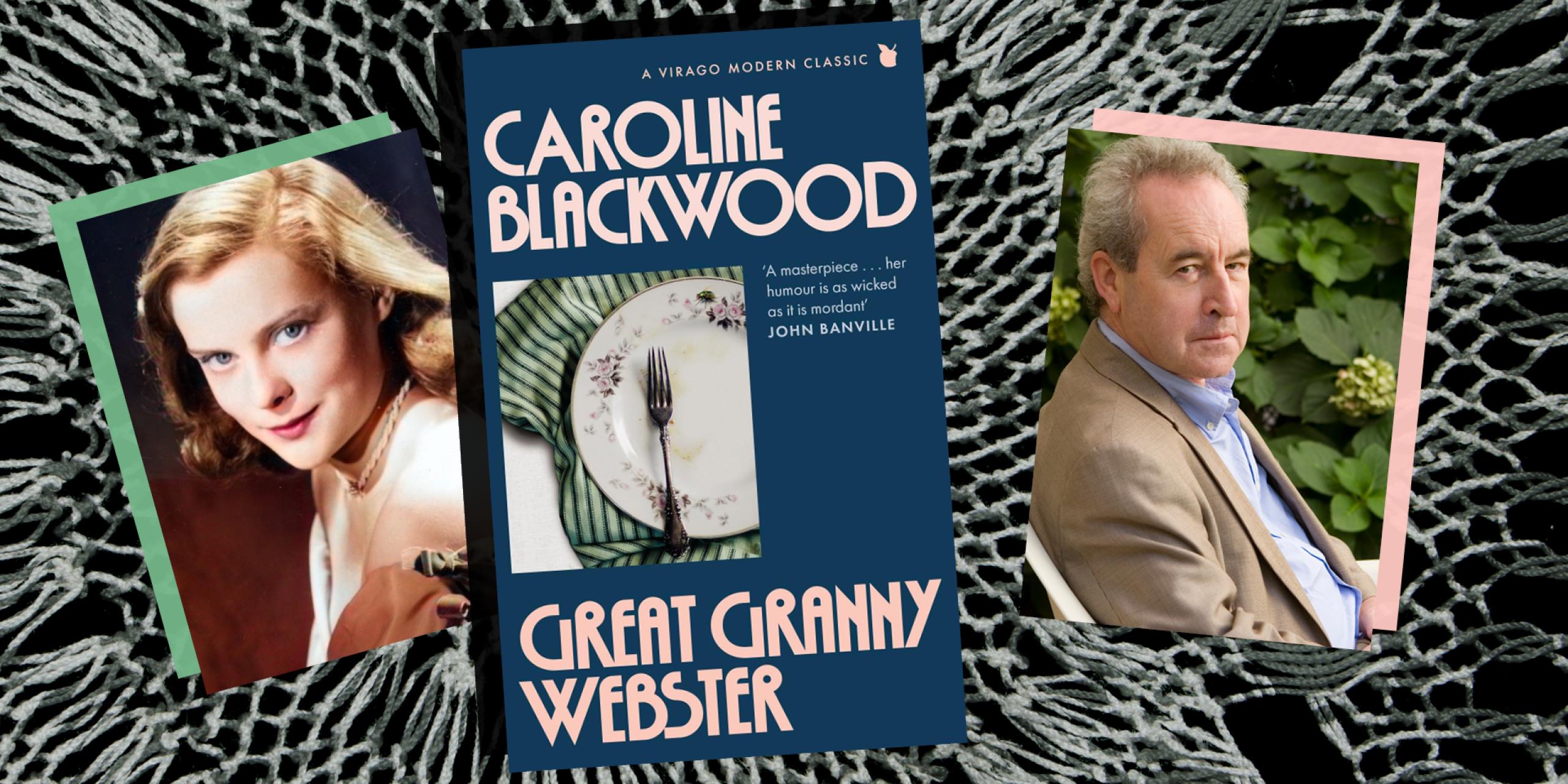
Thirty years after her death, Booker Prize-winning author John Banville revisits Caroline Blackwood’s 1977 novel – a wickedly funny portrait of a family in decline
Great Granny Webster is now reissued by Virago Modern Classics
Buy the book
Caroline Blackwood’s Great Granny Webster, the finest of her 10 or so literary works, was shortlisted for the Booker Prize in 1977. Indeed, it was tipped to win. However, according to Blackwood, one of the jury members, the poet Philip Larkin, voted against her on the grounds that her book was not so much a novel as a memoir. Whatever his misgivings about it, Larkin did afterwards accord the book high praise, describing it as ‘deceptively concise’ and ‘a unique literary experience’. Which assuredly it is – and much, much more. Besides, every novel is in part autobiographical, since every novelist’s material is inevitably derived from his or her own life.
Lady Caroline Maureen Hamilton-Temple-Blackwood was the daughter of Basil Blackwood, 4th Marquess of Dufferin and Ava, and his wife, Maureen Constance Guinness, one of the ‘Fabulous Guinness Girls’ who were among the brightest of the bright young things in the London of the 1920s. This meant that she was not only an Anglo-Irish aristocrat but also, and more impressively, a Guinness. The Guinness Great Granny Webster family, although very much ‘in trade’ – Guinness Is Good for You! – was every bit as classy as the Blackwoods, and way, way more fashionable.
Given that she was born with a canteen of silvery cutlery in her mouth, even if the silver was to be somewhat tarnished by a bleak and lonely childhood, Blackwood’s artistic achievement is remarkable, not only in the books she wrote but in the company she kept. She married first the painter Lucian Freud, then the American composer and pianist Israel Citkowitz, and lastly, and most resoundingly, the poet Robert Lowell, brilliant, mentally troubled – ‘my mind’s not right’ – and surely well-nigh impossible to live with. In the shadows cast by such giant egos, she was frequently and short-sightedly seen more as a muse than as a gloriously gifted artist in her own right.

Lady Caroline Blackwood with husband Lucien Freud, London, 1953
© ullstein bild via Getty Images
She is modelled on Blackwood’s own great-grandmother, a notoriously mean Scottish heiress named Woodhouse who lived, if that is the word, in a frightful Victorian mansion
Though distorted and re-formed through a novelistic lens, that early cocktail of privilege and neglect is precisely what animates Great Granny Webster, her second and most closely autobiographical novel. Or it would be better to say biographical, since the narrator, a teenaged girl at the time of the tale’s telling, hangs well back among the vast shadows thrown by the characters surrounding her, all of them based more or less closely, though mostly more, on members of the author’s family. Chief among these is the eponymous Granny herself, one of the great monsters of 20th-century literature, in which monsters abounded.
She is modelled on Blackwood’s own great-grandmother, a notoriously mean Scottish heiress named Woodhouse who lived, if that is the word, in a frightful Victorian mansion in Hove, near Brighton. It is in these forbidding surroundings that the aptly named Great Granny Webster sits, black-clad and immobile, at the centre of the great mesh of her own misanthropy, self-regard and dour religiosity. Deplorable though the old lady may be, she is a great comic creation – a creation, yes, even if much of what she is and does is a matter of fact.
The opening pages of the book, which are devoted almost exclusively to GGW, as we shall call her for convenience, are the most novelistic. We are being told a story, by a storyteller, about a storied character, in the grand fictional tradition. The spirit of Dickens hangs over this section – though Dickens would have spoiled the effect with his cloying sentimentality and rib-nudging humour. Indeed, in the calculated iciness of her tone, Blackwood is the polar opposite of the man who killed off Little Nell with overdoses of saccharine; her own humour is as wicked as it is mordant.
Blackwood’s friend the writer Jonathan Raban said of her: ‘She never failed to look on the dark side, or to search for the cloud in every silver lining’, yet somehow she managed to be ‘brilliance in the dark, laughter in the silence’. Part of the dark brilliance of Great Granny Webster is that its author maintains throughout the blank, unmoving mask of the born comedian. The book seems to regard us out of a pair of huge dark lustrous eyes – everyone said of Blackwood that her eyes were her most beautiful feature – that not only see us but see into us, with unnerving knowingness.

John Banville
© Sophie Bassouls/Sygma via Getty Images
Deplorable though the old lady may be, she is a great comic creation – a creation, yes, even if much of what she is and does is a matter of fact
The portrait of GGW is done with broad sweeps of a fine brush. On the very first page, when we are still in the postwar era, we learn that in the Hove house the ‘blinds and curtains were often drawn even during the day as if she was still preserving some kind of conscientious “black-out”’, and that in the chill of her sepulchral dining room ‘the meals she served seem[ed] far more austere and rationed than anyone else’s’. She has a downtrodden elderly housemaid named Richards, with a limp and a black patch over one eye, whom she bullies and, in the end, betrays. GGW ‘receives’ no one, has no friends, and goes out once a day every day at four o’clock in the afternoon, in a hired Rolls-Royce driven by ‘a uniformed, unctuous chauffeur, who would… drive both of us, as if he was driving two royalties, at a slow creep along the bleak misty sea-front of Hove’.
The foil to GGW is the narrator’s unfailingly flippant Aunt Lavinia, who is all froth and feathers, lipstick and lilies, and who makes two suicide attempts – ‘There’s something unexpectedly ghastly about finding oneself in a bath full of gore and melting soap’ – at the second of which she succeeds. In the midst of our delight in this relentlessly frivolous figure we realise, with a jolt, that she is GGW’s lightsome twin, a full and glaring moon to the old woman’s death-dealing crescent blade, yet just as fanatic, in her way.
At about the halfway point in the book we can almost hear Blackwood abandoning the fictional voice and giving the narrative over entirely to the rackety history of her real-life – or rather, larger-than-life – family, transmuted into a kind of dark fairytale. Her narrator revisits Dunmartin Hall, an undisguised portrait of Blackwood’s tumbledown ancestral home, Clandeboye House in County Down, where her grandfather lived long-sufferingly with his increasingly deranged wife Brenda, Lady Dufferin. Brenda believed in the ‘little people’ and spent long hours in her bedroom cutting pictures of fairies out of children’s books; indeed, in her later life she became a sort of fairy herself, a gossamer figure flitting through the gaunt Titania’s Palace that was Clandeboye.
You couldn’t make it up, as we say in Ireland, but Caroline Blackwood did; she made it up out of the facts, the memories and her own macabre imagination, and in the process created a masterpiece.
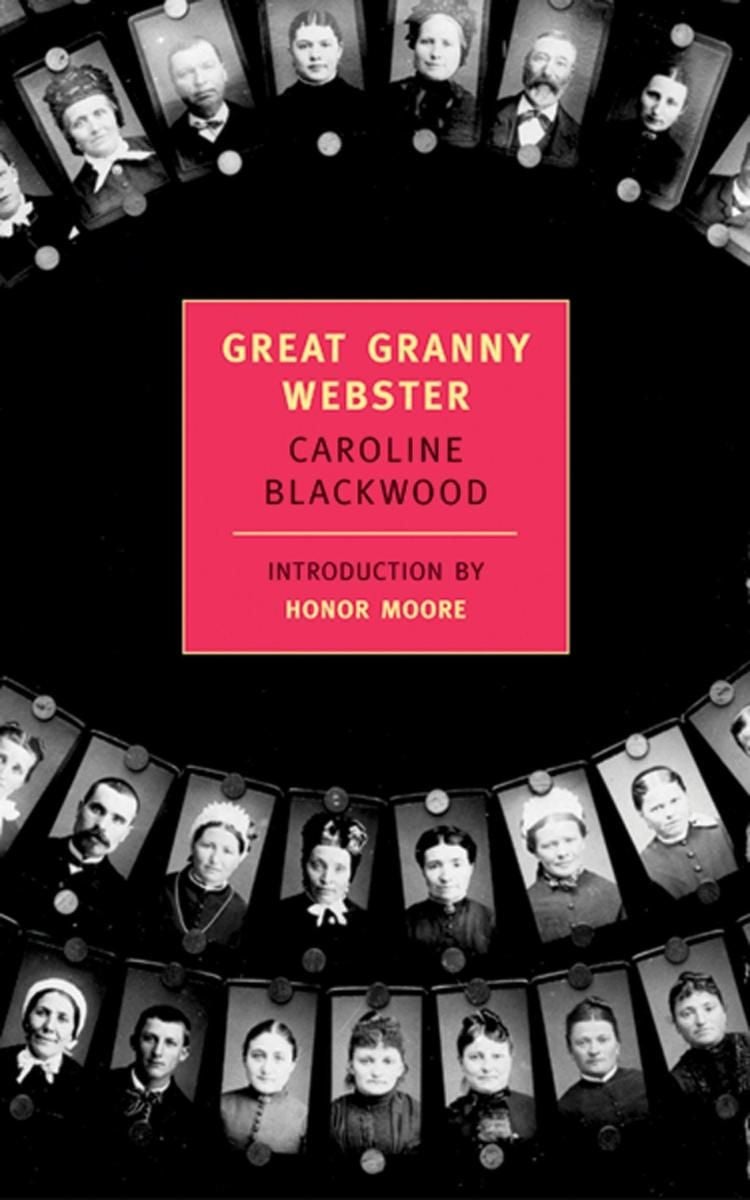
Great Granny Webster
- Published by
- Duckworth
Caroline Blackwood’s macabre and wickedly funny portrait of a monstrous, iron-willed dowager presiding over her long-suffering family
Features

- Book recommendations
The best wintry reads from the Booker Library, chosen by you

- Book recommendations
Eight Booker Prize-nominated books for fans of Downton Abbey

- Book recommendations
Booker Prize books that have been adapted for film and television

- Book recommendations
10 Booker-nominated books to take to the seaside
- Book recommendations
11 of the best very short books from the Booker Library

- Book recommendations
10 of the most dysfunctional families in Booker Prize-nominated novels

- Book extract
An extract from The Sea by John Banville

- Reading guides
