
- Book recommendations
- Written by
- Sarah Shaffi
- Published
Two years after the Booker opened up to authors of any nationality, Paul Beatty became the prize’s first American winner. Here, along with the book’s publishers and the Chair of the 2016 judging panel, he reflects on its success
Buy the book
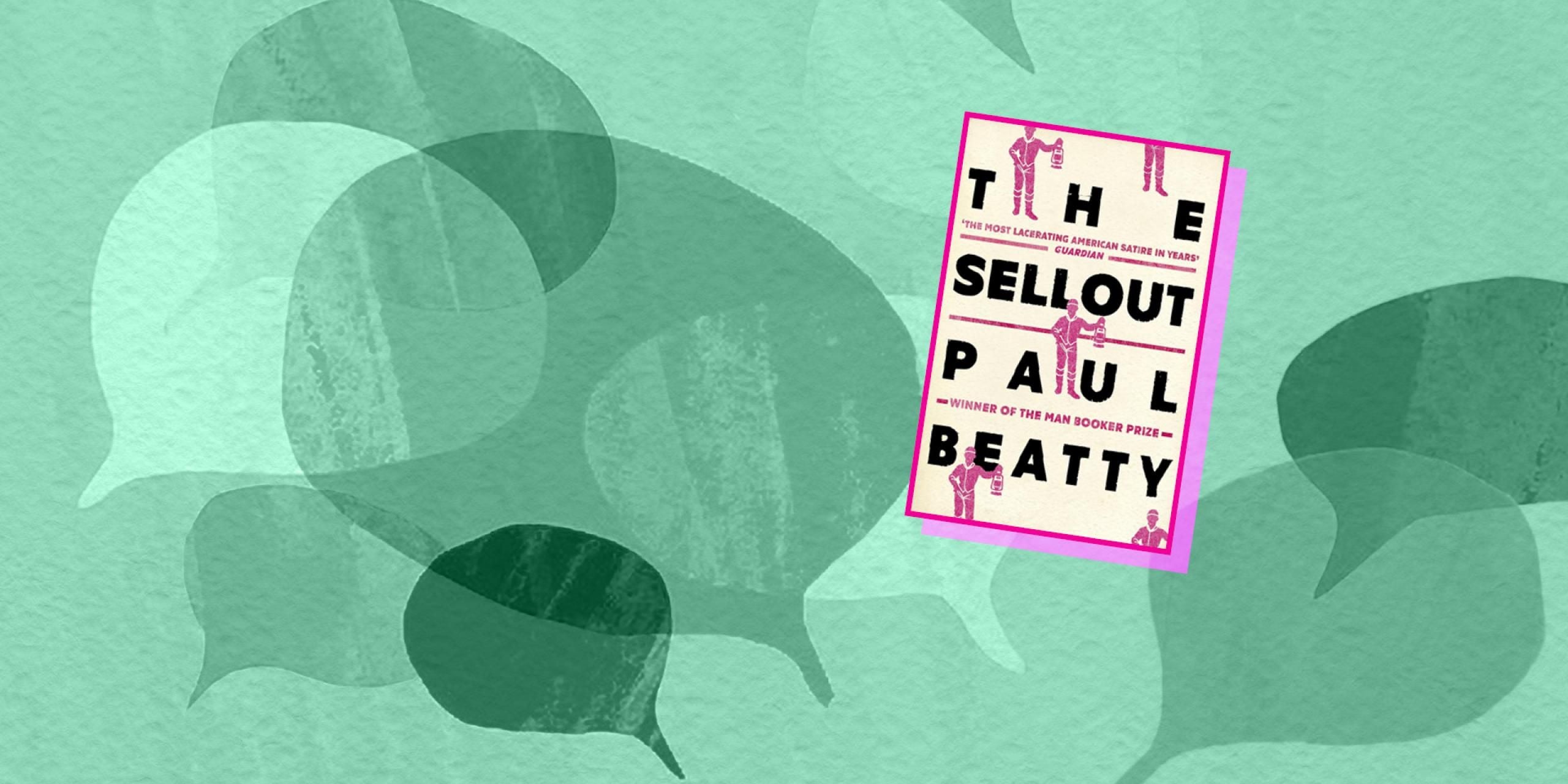
2015 in the United States of America: racial tensions were taking centre stage, among politicians and pundits, from campuses to courtrooms. As Barack Obama’s second term was drawing to a close, the political pendulum was swinging to the right; that summer, Donald Trump announced his candidacy for President. At the same time, the Black Lives Matter protests had coalesced into a fully-fledged political movement. It seems, then, that Paul Beatty’s The Sellout, a biting satire about race relations in the US, arrived at the perfect moment. It was as if he had planned it that way – but had he?
Paul Beatty: ‘I don’t know if people know this, but I finished that book in 2013, although it didn’t get published until two years later in the States. My editor [in the US] had moved publishing houses, and took the book with him. So the book had been done for a long, long time before it came out in the States. I would always say it took me five years to write, but part of that process was that delay.’
The Sellout was released in the US in March 2015, at a time when race inequality and divisions were reaching their worst levels for a decade.
Paul Beatty: ‘The atmosphere… I’m definitely not thinking about it when I’m writing. I guess I was nervous about the initial reception [to the book]. And I remember saying something to the publicist, and they just said, “Yeah, don’t worry about it”. And I kind of just stopped worrying about it.’
Beatty’s publicist was right; he had little to be anxious about. Reviewing the book in the New Yorker, Hua Hsu called The Sellout ‘superb’, while Dwight Garner in the New York Times said the first 100 pages were ‘the most caustic and the most badass first 100 pages of an American novel I’ve read in at least a decade’. By March 2016, the book had gone on to become the fiction category winner in the prestigious National Book Critics Circle Awards in America. Momentum was building fast.

Paul Beatty. © Hannah Assouline
The most caustic and the most badass first 100 pages of an American novel I’ve read in at least a decade
Paul Beatty: ‘The National Book Critics Circle Award was very important to me. It’s not something I pay a ton of attention to, but when I do I really for the most part respect their choices, whether I agree with them or not. And so that was, for me, very comforting and something I felt very, very good about.’
Yet despite its glowing American reviews, no one in the UK had picked up the book for publication.
Paul Beatty: ‘It’s not like my books sell a ton, but usually I get some international interest and it just was so slow. And I remember having a conversation with my agent – I guess I’m a nervous person – which was like, “what’s going on?” It was really odd that nothing was happening.’
It was a fateful conversation at an awards ceremony in late 2015 that brought The Sellout across the pond. Juliet Mabey, founder of independent publishers Oneworld, was attending the Sunday Times Young Writer of the Year awards, just a few weeks after one of her authors, Marlon James, had won the Booker with A Brief History of Seven Killings.

© Janie Airey
Nothing since has come close to the wacky, extraordinary flights of imagination and humour and perception and emotion that The Sellout has
Amanda Foreman, Chair of the Booker Prize 2016 judges
Juliet Mabey: ‘The person who was doing the publicity for the event introduced me to Andrew Holgate [then literary editor of the Sunday Times]. In our conversation, he happened to mention, off the cuff, that he couldn’t believe no British publisher had picked up the rights to Paul Beatty’s The Sellout. My ears pricked up. So I immediately went home, ordered a copy and read it, and then got hold of his agent, Sarah Chalfont.
‘It’s not that common for British publishers to buy rights to a book eight months after publication, unless it’s already been a massive original success. At that point, over here, The Sellout hadn’t really made waves. Without Andrew having mentioned it and being so enthusiastic about it, it would’ve passed me by as well.
‘I really liked the idea of using satire to explore racism. I thought that was clever because you enjoy the novel, you enjoy the story, but at the same time, it’s hard-hitting. I thought it took the reader to places they wouldn’t naturally go. And that to me was exciting. Paul’s writing, which I hadn’t read before, is brilliant; he’s quite astonishing.’
Once Oneworld acquired the book in early 2016, it was a quick turnaround to publication. With the US paperback release imminent, Oneworld decided to forgo a hardback and release straight into paperback. The UK edition quickly attracted attention, even before it was officially released.
Juliet Mabey: ‘Before it was published, it was shortlisted for the Bollinger Everyman Woodhouse Prize for Comic Fiction, which was brilliant because that immediately put it on people’s radar and meant that anybody who hadn’t picked it up to review would hear about it. It’s not the biggest prize out there, but it has its own fans, of course, and any prize is great.’

Paul Beatty with his UK editor and publisher Juliet Mabey, 2016
© Janie Airey/Booker Prize Foundation
Paul’s writing, which I hadn’t read before, is brilliant; he’s quite astonishing
Juliet Mabey, editor and publisher at One World
Margot Weale, Oneworld’s publicity director: ‘I was trying to really reach out to people and get them to read it. So I went through lots of freelancers and fed through all those US recommendations that we’d had. We also had a great quote from [comedian and actor] Sarah Silverman, which we used very early on. I think later there was one in the FT from Simon Schama, which just said, “this is an amazing, incredible book, you’ve got to read it”. So it was a very, very slow build, and each time you got a quote, you went back and tried to persuade more people to read it. I mean, there wasn’t a bad review of it anywhere. It started off maybe with the Guardian and then it built into the FT and then the Times, and people just started coming on board.’
As the Booker Prize longlist announcement approached, the prize itself was still in the midst of a period of huge change. Prior to 2014, the prize was only open to writers from the British Commonwealth. In 2014, American authors – and those from all other nationalities – had become eligible, a decision which caused controversy in some quarters, with several critics fearing that the prize would be dominated by writers from the States.
Amanda Foreman, Chair of the Booker Prize judges in 2016: ‘We were very aware [of the discussion around the prize]. And that was a burden, not a blessing, because American writers and novels, they often have a different sensibility and the shininess of the new can blind us to what is good in our own backyard. And so that was a worry.’
Juliet Mabey: ‘We’d submitted The Sellout to the prize just before publication. They’d only just allowed Americans to be submitted. A lot of people say Marlon [James] was the first American to win [he has lived in the US for many years], but of course he’s Jamaican – he was eligible already.’
Ironically, Beatty himself hadn’t paid a huge amount of attention to the prize previously.

Paul Beatty
© Leonardo Cendamo/Getty Images
Paul Beatty: ‘I think maybe it was when I was shortlisted, the Booker sent out some questionnaire and I was like, “Oh, this is a thing”. It’s an institution. I had never read any Booker-winning book, ever; I had to go do some research. I thought, there’s got to be something that’s been nominated that I’ve read, and there were a couple. But it was the first time I realised how seriously the Booker took itself. I’m not saying that’s a bad thing, necessarily. I just really had no clue.’
In July 2016, the Booker Prize judging panel announced their longlist, which also featured American writers Ottessa Moshfegh and Elizabeth Strout, as well as David Szalay, J.M. Coetzee and Deborah Levy.
Amanda Foreman: ‘I’d heard of The Sellout, but I hadn’t read it [before the judging]. So I read it for the first time as a judge, and it immediately stood out as an important book. It was very, very clear that it was totally going to make the second round, at the very least.’
When The Sellout was longlisted, Mabey flew out to America to impress upon Beatty the significance of the prize – and, based on her experiences the year before, how important it was for him to participate in events promoting it.
Juliet Mabey: ‘I think I was hoping it would get on the longlist. I wasn’t necessarily expecting it to get further, though I thought it had a chance. But we had obviously been through this quite recently, so I immediately flew to New York as soon as we’d had the briefing from the Booker team and had dinner with Paul and said: “Look, you need to ring fence that week in October for the shortlist events, just in case.”’

Ottessa Moshfegh at a screening of Eileen, London
© Vianney Le Caer/Invision/AP/Alamy
The book was shortlisted in September 2016. Alongside The Sellout were Hot Milk by Deborah Levy, His Bloody Project by Graeme Macrae Burnet, Eileen by Otessa Moshfegh, All That Man Is by David Szalay, and Do Not Say We Have Nothing by Madeleine Thien. As part of the run-up to the prize, the authors took part in events together, including at Southbank Centre in London.
Juliet Mabey: ‘We were absolutely stunned because apart from anything else, we’re a small indie with a relatively small list. I was so excited for Paul. I was in Waterstones Islington and one of the staff there said that Paul was one of his favourite authors and he said, “If you don’t reissue his backlist, then I’m just going to import them myself because I love his work.” So Paul had fans, but he wasn’t huge [here].’
Paul Beatty: ‘Meeting Deborah Levy and Graeme Macrae Burnet was a highlight. I’d never read Graeme before, but it was just two people who I really respected, and with whom, at least for my part, I can say there was this real affinity. I don’t have a lot of writer friends, and it was just nice to get to know them.
‘Then there were the booksellers – it was just nice to know that there are still people out there to whom literature and words are so important. That’s something that I don’t think about very often, but it’s such a good reminder.’
The Booker Prize 2016 ceremony took place on 25 October at London’s Guildhall. The favourites were Madeleine Thien and Elizabeth Strout; Oneworld wasn’t expected to win for the second consecutive year.

Graeme Macrae Burnet, Eleanor Catton, Ted Hodgkinson (chair), Paul Beatty and Deborah Levy speaking as part of Sunday’s line up at the Man Booker 50 Festival in the Southbank Centre.
Juliet Mabey: ‘I always tell my authors they’re not going to win because I think that’s a much better way to go into the dinner, because it’s terrifying otherwise. Not that it’s part of their [the judges’] rationale, but we thought a small independent was unlikely to win two years in a row. And to be the first American seemed a bit of a hurdle. So we were feeling really relaxed.’
Amanda Foreman: ‘There’s a sort of funny alchemy sometimes that goes on in that final deliberation. You know you’ve got a time limit, that you’ve got to come to a decision, and those decisions come out for different reasons. Even on that very day, a book will speak to you for a different reason than it did the day before. I think that one of the reasons why The Sellout resonated and continues to resonate is because its originality has stood the test of time. There were really terrific books that year, but nothing since has come close to the wacky, extraordinary flights of imagination and humour and perception and emotion that The Sellout has.’
Paul Beatty: ‘I had no expectations, which was great. I think I had gone to the bathroom [just before the announcement]; I guess people who are involved in the process, they know who’s won. But I remember because I wasn’t where I was supposed to be, and somebody had to come fetch me, and he was just so panicked. But, I mean, I was still completely surprised. I didn’t know people took bets on it, and I think I remember asking somebody my odds once [on the day of the ceremony The Sellout had odds of 5/1]. I think somebody had asked me something and I was like, “I think I’ve written a decent book and I’m pretty satisfied with that.” I was super grateful for winning, absolutely. I’d put a lot of work in and that kind of recognition. I really appreciated it.’

Amanda Foreman.
© Charlie Hopkinson
Margot Weale: ‘I think we all just sat at the table completely stunned, and then it was just the most amazing feeling. We had faith in the book, we really did, from all the wonderful things people had said about it, but you just never know.’
The days following the win were a whirlwind of interviews and events for Beatty and the team at Oneworld. Soon after, the publisher acquired all of Beatty’s backlist, and published those titles.
In the 10 years since The Sellout’s win, it has cemented its place in the public consciousness, and has only seemed to become more relevant given the US’s shifting politics and its increasingly vocal discussions around race.
Paul Beatty: ‘The award affected the sales, there’s no doubt about that. Time will tell I guess, but even within the 10 years since it’s obviously made an impact. I think [winning the Booker] gives the thing some ballast, so the book floats for at least a little bit longer.’
Amanda Foreman: ‘The Sellout is in a league of its own. It’s so timeless. And that is actually the mark of a really superlative and outstanding novel.’

2016 Man Booker prize winner Paul Beatty © Janie Airey
© Janie Airey
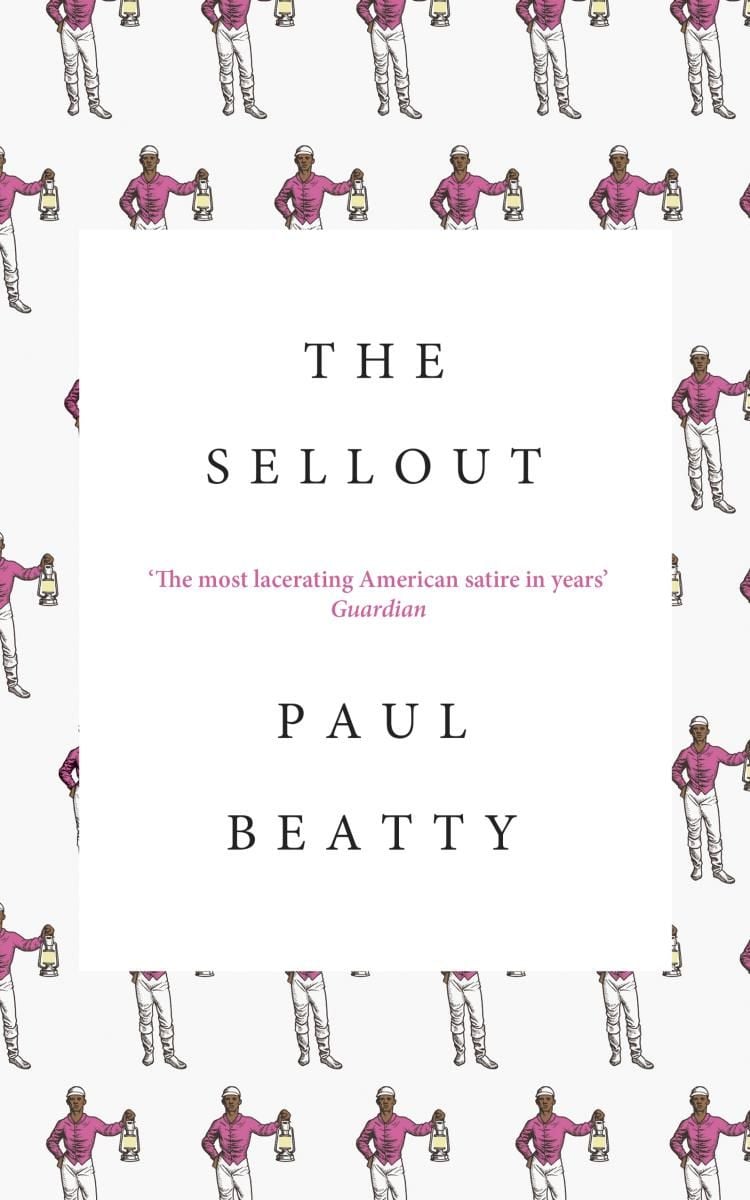
The Sellout
Winner of The Booker Prize 2016
- By
- Paul Beatty
- Published by
- Oneworld Publications
Paul Beatty’s biting satire about a young man’s isolated upbringing and the race trial that sends him to the Supreme Court
Features

- Book recommendations
Eight of the best Booker-nominated books written by poets

- Book recommendations
11 of the best anti-heroes in Booker Prize-nominated novels, for fans of the Joker

- Book recommendations
70 classic Booker Prize-nominated novels, recommended by our readers


- Book recommendations
A Booker Prize reading list for Black History Month

- Information
- Long read