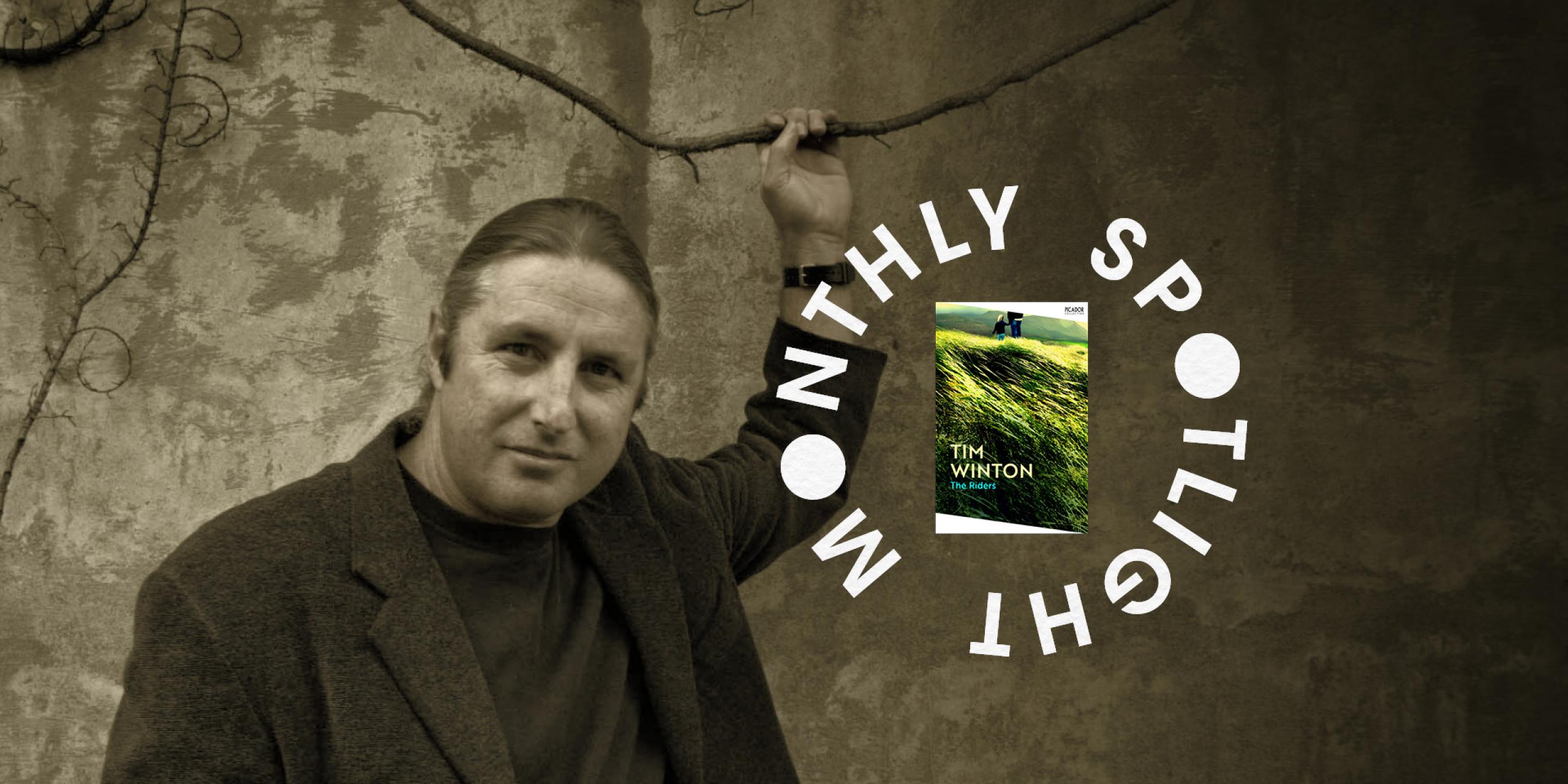

Tim Winton depicts a man’s desperate quest across Europe, as he tries to track down his missing wife
- Published
The author of The Riders on creating characters who feel like family, the force of weather and geography in fiction, and how being a parent has shaped him as a writer
Buy the book
It’s 30 years since The Riders was published in the UK and shortlisted for the Booker Prize. How did that nomination feel back then, and what impact do you think it’s had on your writing career?
Well, the book had already been a bestseller in Australia, so it didn’t have a huge impact here at home, but it was certainly useful in the UK. The name recognition of the Booker is second to none in the literary world. So, it definitely helped the book get a little more prominence and it helped sales for a few weeks, that’s for sure.
Do you feel distant from the characters now or do they still feel familiar or close? How have your feelings about Scully, Billie and Jennifer changed over the intervening three decades?
Yes, they still feel very familiar, like family. I guess my feelings about them have remained pretty constant. They’re family – what are you gonna do?
It’s recently been reported that Edward Berger is going to direct a film adaptation of the novel, starring Brad Pitt. How do you feel about this and are you involved in any way?
The book has had a long screen life without ever making it to the screen, so this news is exciting. Adaptations are a bit of a punt – there’s no telling how they’ll work out – but I’m pretty confident in the team. I’m not slated to write the screenplay, but I will be an executive producer. I didn’t see the Brad Pitt casting coming, but I am intrigued by the possibilities it throws up.
‘Nothing so weird as a man in love’ – Scully’s observation in the first chapter sets the scene, in a way, for everything to come, but if you had to sum up The Riders in a single sentence, what would it be?
The world isn’t always what you think it is, and that includes the world of your family.
What most inspired you to write – and the writing of – The Riders? And how did you choose the title?
I lived in Europe for a couple of years and did a bit of travelling. I was interested in the way humans have domesticated time and space to the point of expecting certainty and predictability at every point. One day I was sitting at an airport watching people reunite rapturously, and I realised that these lovely meetings had been arranged in advance and scheduled, across vast distances and multiple time zones, down to the minute. One interruption to the schedule can cause real disruption, a couple more can pull the world down around your ears. We’ve come to expect certainty, and when we don’t get it, we want an explanation. If an explanation is not forthcoming it seems as if our whole existence is under threat. So, what happens if someone doesn’t get off the plane? And what if there’s no explanation? The title came from a story someone told me waking in the night to see lights on a beach. She thought of people riding with pitch torches – why, I don’t know, but it was the west of Ireland, so maybe these notions go deep.
Most of your novels are set in Australia but The Riders isn’t – although Scully yearns for its blue water, white sand and ‘acetylene heat’. How and why did you choose the novel’s locations?
Yes, some English and American readers seemed relieved that I was finally giving a story a proper setting! No more weird animals and place names to get in the way (bless). In the 1980s I had lived in the gate lodge of Leap Castle in County Offaly, and before that, Paris. And I had lived on the Greek island of Hydra. Very happily, I should add. I had a fat time. So knowledge of those places was something I could draw on. I’d had the singular experience of travelling with a small child – with my wife and on my own – so that was also in the bank already, so to speak. I knew what it was like to try to hold a small family unit together in an alien environment. Also how every adverse human situation can be attenuated by being alone and away from home. And let’s face it, to an antipodean, everything in that other hemisphere feels upside down on a good day.
You’re well known as an environmentalist as well as a writer. The Riders isn’t an environmental novel, but the natural world and natural forces are very present – the (terrible!) weather and landscapes of rural Ireland and mostly urban Europe are more than just background, they seem to feed Scully’s unravelling. Could you tell us how you use weather and landscapes to create specific feelings and atmospheres?
I’m one of those simple folks whose mood is determined by weather – one of the few character traits I share with Scully. Yes, I’ve written a lot about the force of geography on people and the way it shapes human culture. Like every migrant, Scully struggles to read the places he’s in. He may be even worse at reading the people who are in them, which is also an experience migrants have to contend with. But he’s doing all this in extremis emotionally, and you soon get the sense he’s running on empty.
We all believe we know people, even those closest to us, but we’re usually kidding ourselves. People claim to love mysteries, but they want them solved!
The pace gets faster, as Scully’s hunt for Jennifer becomes increasingly unhinged. Time becomes blurred, ‘dreamy’, feverish. What was your process for writing The Riders? Was that fast paced too?
Yes, it was important for the pace to match the feverish state Scully gets into. But, no, the pace was workmanlike and careful. Moving fast and breaking things is not a sustainable way to operate.
Your novels have often been seen as explorations of masculinity and the effects of sexism and misogyny. What does Scully’s story tell us about men and women, and how and why are those things still important to explore, 30 years on?
Scully’s not a bad person. He’s a doting, nurturing father. And he clearly loves his wife. But while he thinks he’s understood Jennifer’s needs, he probably hasn’t – in fact it’s possible Jennifer hasn’t yet either. They’ve made this plan and she’s not sure anymore. And while he thinks he’s given her space to work things out, he probably hasn’t. His chief compulsion is not to wait but to act. So he’s verbing away as a bloke often will. Which is not at all productive, and obviously not good for his traumatised daughter, Billie. In a moment that requires reflection, he chooses precipitous action. While this is not unique to blokes, we’re pretty reliable when it comes to making this mistake. Not just in the domestic realm, either. The enigma of Jennifer’s needs and motivations are something he simply cannot accept. We all believe we know people, even those closest to us, but we’re usually kidding ourselves. People claim to love mysteries, but they want them solved!
What kinds of responses have you had from readers to The Riders? Have any reactions been especially pleasing or surprising?
Most readers are women, so most responses have been from women. I’m surprised at the degree to which they identify with Scully, as if they understand the dangers of unbounded love, passion as a form of derangement. They seem to respond to his tenderness for Billie. But I’m also interested – and pleased by – the number of readers who see Billie as the hero of the story, the way she parents her father, holds him back from the brink. I think at one point she asks him, ‘Aren’t I enough?’ and that feels like a kind of moral fulcrum.
One reviewer, a bloke who didn’t like the book much, wrote me a letter essentially declaring that the book was a clunker because in real life, the man never ends up with the kids. Which would be comical if it weren’t so bitter and sad. Also, in discussing the open ending, a TV interviewer chucked the book across the studio. He wanted closure. I figure that’s an eloquent expression of gender expectations right there.
Your most recent novel, Juice, is about the climate crisis. Like The Riders, it’s also a story about a man and a child who are exhausted, traumatised and desperate in a hostile landscape. What draws you to explore father and child relationships?
I guess I’ve been a parent almost as long as I’ve been a writer. Having kids was the schooling I got that formal education couldn’t provide. The presence of a child changes every situation, raises the stakes somehow. And in extremis, this is intensified. A child will often be experiencing the same events differently. Their vision is set at a different level, for one thing. And because they don’t yet believe they know everything, they can offset the narcissism of adults. So kids have nearly always featured in my work.
You’ve written several books for children. What compels you to write for kids as well as adults? And what was the book you loved most as a child?
I guess I enjoy telling stories to and for kids. Kids are not yet sniffy about the ‘legitimacy’ of narrative. Kids are not suckholes, either. If you’re boring them, they’ll let you know in very direct terms. It’s nice to be relieved of the passive-aggressive bullshit grown-ups mistake for civility. I loved Treasure Island as a kid. Stevenson never condescended to younger readers.
Where and when do you most like to read and write, and what tools do you need?
All I need is a chair and a table, paper and pencil. I’ve worked in caves, on boats, by campfires, but the easiest place to get stuff done is in a quiet room.
Do you have a favourite Booker-nominated book and what do you love about it?
I love Richard Powers’ The Overstory. I think it’s a huge feat of the imagination, and it’s a genuinely important book, one that connects multiple threads of knowledge and conjecture to help us see where we are as a species.


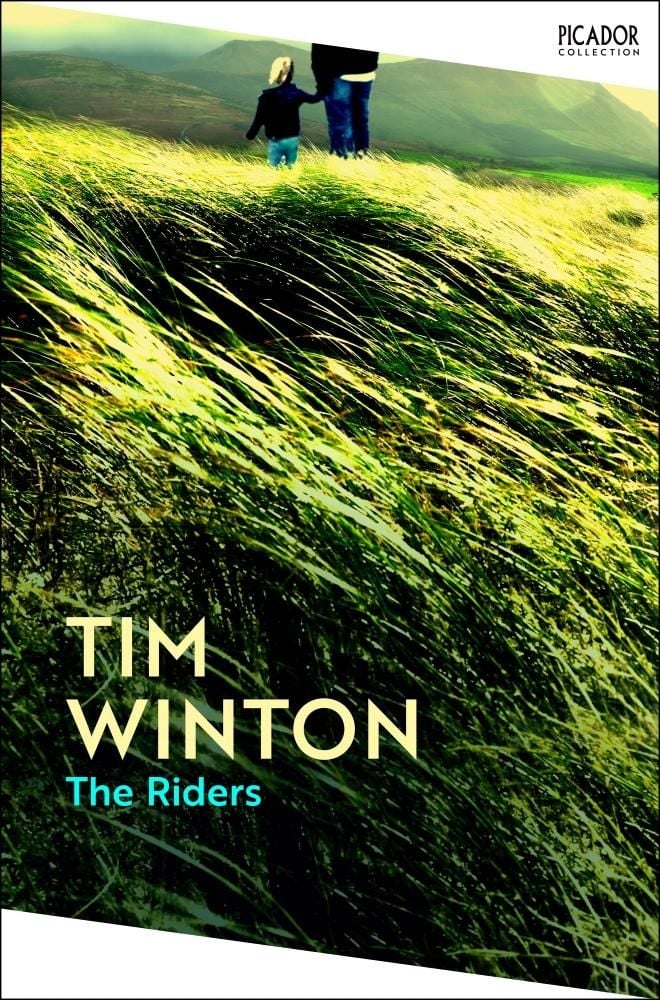
The Riders
- By
- Tim Winton
- Published by
- Picador
Tim Winton depicts a man’s desperate quest across Europe, as he tries to track down his missing wife
Features


- Book recommendations
The best children’s books for Christmas written by Booker Prize authors

- Book recommendations
Booker Prize authors on the childhood books that made them fall in love with fiction
- Book extract
An extract from The Riders by Tim Winton
- Competition
Win a copy of The Riders by Tim Winton

- Information
Monthly Spotlight: The Riders by Tim Winton
- Reading guides
Reading guide: The Riders by Tim Winton

- Book recommendations
13 cosy reads from the Booker Library, chosen by our readers

- Book recommendations
