- Published
Sarah Jessica Parker, one of the Booker Prize 2025 judges, explains why she’s started to read with a different kind of energy and describes being part of the best book club imaginable
Sarah Jessica Parker is an award-winning actor, producer, publisher and businesswoman. Read her full bio.
You will read over a hundred books in seven months as a Booker Prize judge. How are you approaching this unique challenge, and what are your tips for people who want to find more time for reading but may struggle to fit it around their busy schedules?
My approach has changed. With the first batch, I read at my more typical ‘civilian-reading-for-pleasure’ pace. What’s happened over time is that I have started to read with a different kind of energy, frankly. I’ve also discovered that my finger being a guide on the page has moved me more quickly. I’m maintaining story and plot and specificity about the book, but I kind of let my hand keep me moving. Also, as we have accumulated books that are contenders, I’ve simply changed my standards.
What I would say, as a tip for people who are wanting to find more time for reading, is that you probably have more time in the day than you think. In between appointments or calls or waiting for a bus or a train or at the laundromat; the kind of perfunctory tasks we do every day always present windows and that’s what I’ve always done as a reader but now, in this coveted position, those little windows of time are much more valuable. I take full advantage of them and, as always, I just never leave home without a book.
Reading is a mostly solitary experience, but judging is a shared one. How does discussing a book with other people change the reading experience?
Yes, reading is a mostly solitary experience. This endeavour as a Booker judge has created a far more concentrated solitary experience, and that’s because it has to be done. In the past, when I’ve been alone, reading, there can be kind of peripheral action going on around me that I integrated and didn’t mind. This kind of solitary reading, I think, on behalf of all the authors, deserves true isolation. It’s been very different. It takes more effort in a way, simply because I’m taking the task so seriously.
Judging has been hugely helpful. When we gather for deliberations, I’m able to tackle the next batch with, not the influence so much of my fellow judges, but more the ways in which they’re experiencing books. Our differences in opinions are really important. They definitely move people and change people. Their approach to the books, in terms of the ways in which they’re reading, and also the way they’re thinking about the books and the way we’re holding books as contenders. It’s hard to describe, but it’s been helpful.
It’s been valuable because I’m approaching it as the way I read. All the other judges are writers, a lot of them are professors, so they have simply a different way, as we all do, of looking. It’s just been something that I’ve been able to fold into my experience as a juror.

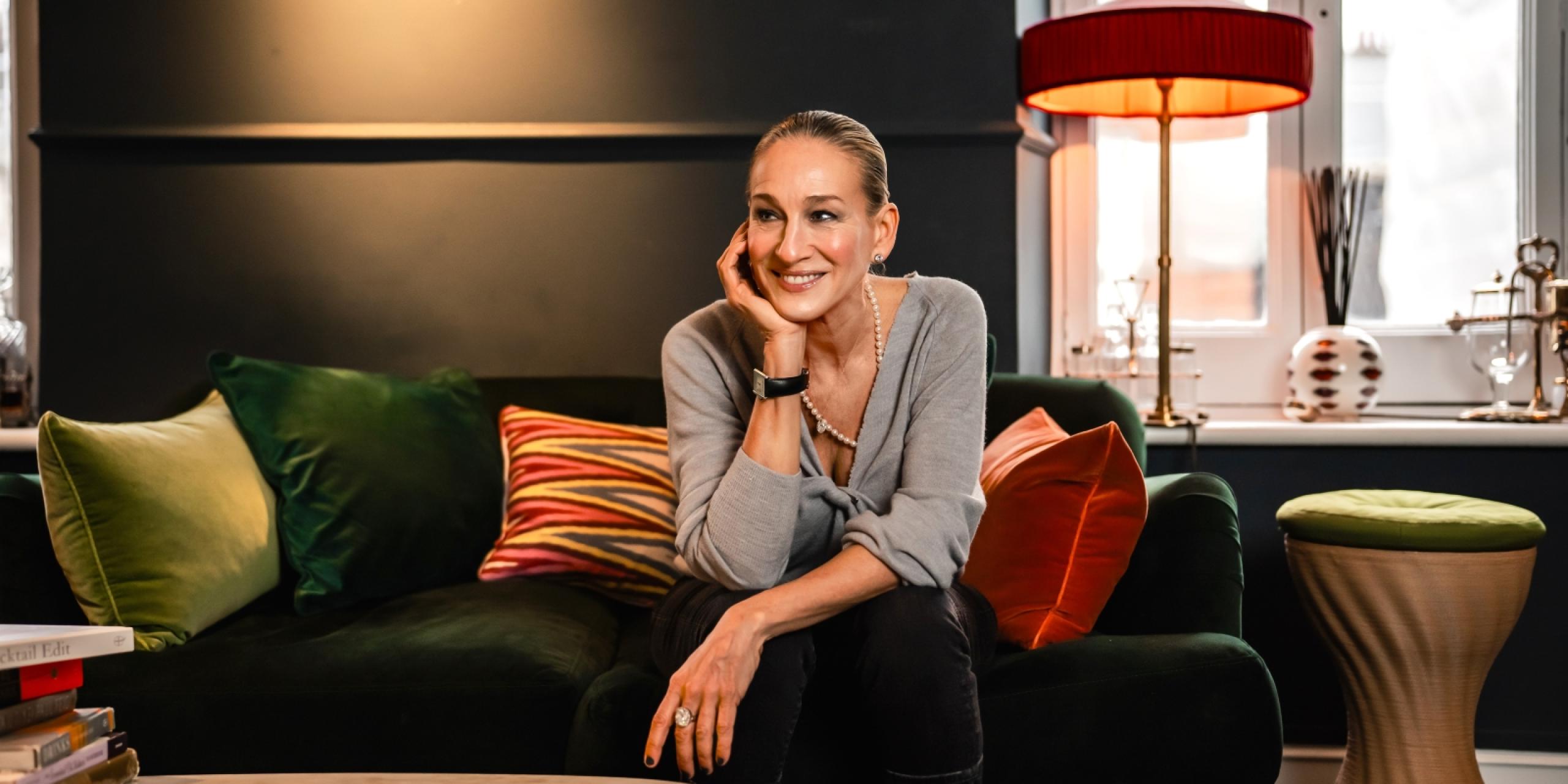
Booker Prize 2025 judge Sarah Jessica Parker at a judging meeting at Fortnum & Mason in London
© Neo Gilder for the Booker Prize Foundation
All the other judges are writers, a lot of them are professors, so they have simply a different way, as we all do, of looking
Who, living or dead, would be in your dream book club and why? What would you read and where would you meet?
I want to preface this by saying that I think I have almost finished being a part of probably the best book club a reader could ever imagine. After reading this many books with this quality of people, thinking about creating another group is hard. We’ve had such an extraordinarily intense and fulfilling reader experience as a club.
Having said that, I am going to put together this list: Jonathan Franzen, James McBride, Wallace Stegner, Megha Majumdar and Tayari Jones. They’ve written some of my most favourite books and they all have such a gift for the hardest problems. Helping readers get inside lives that are very different from our own and giving every character such humanity, often humour, in extraordinarily difficult, challenging and painful times.
What book? Oh my gosh, I would leave it up to the group and I would probably defer to majority. How’s that for deflection?
What book made you fall in love with reading as a child? How and why did it capture your imagination?
There are two books that I recall from my childhood (but I don’t know how old I was). The first one is a book called Corduroy. It’s a children’s book about a little girl who goes to a department store with her mother and sees a teddy bear on a shelf. He’s wearing overalls and he’s missing a button. She really wants it and I don’t believe she has the money. I think the teddy bear overhears the mother saying, ‘you can’t buy that, it’s missing a button’.
The little girl goes home to see how much money she has saved. Meanwhile, Corduroy, the teddy bear, spends the night trying to find the lost button. It’s very simple. I love the illustrations and I love the story. She comes back and gets the bear the next day. It’s the adventures of both while they wait to be together.
The second book is called Rain Makes Applesauce. It’s this kind of wildly fantastic sort of book. It almost looks as if it was written and illustrated by someone who was having a kind of 1960s LSD experience. It’s riddles and illustrations, and it’s wildly untethered to earth. It’s an incredible book.
I think both captured my imagination because I probably related to the little girl who wanted that teddy bear and felt like there was perhaps an insurmountable obstacle to getting the teddy bear. As well as Corduroy’s challenge and obstacle which was to try to be complete, in order to be loved. Not that I felt that, but just that I understood the desire to connect.
What’s your all-time favourite Booker-nominated book and what’s so special about it? Who would you recommend it to?
I have been thinking really hard about this question. What occurred to me when I went over the list since 1969 is how much reading I have to do and how much exciting reading is in front of me.
I can’t pick a favourite, it’s really hard. The books are not in competition with one another. I can’t make one better or a favourite because I’ve been moved by all of them in many different ways. They’ve all stayed with me.
I’m going to list some books (and you’ll see these are very contemporary): Small Things Like These, The Remains of the Day, Shuggie Bain, Mother’s Milk, To Rise Again at a Decent Hour, Exit West, The Bee Sting and The Underground Railroad.
If I am forced to pick a favourite (and I don’t like that word because it doesn’t seem fair or just) I guess I would say Underground Railroad because it’s wildly painful to read. Just absolutely, beautifully told and created characters that you’re desperate for. It’s an exquisite way of describing a chapter in history that is so worthy of examination even when it is very hard to be in. It’s a masterpiece of agony and a kind of unforgettable storytelling. But that’s my group.

The Underground Railroad by Colson Whitehead