In this guest post, singer-songwriter Dua Lipa explains why Hanya Yanagihara’s A Little Life does exactly what great literature is supposed to do
Opinion
An oral history of A Little Life, 10 years on
Opinion
An oral history of A Little Life, 10 years on
- Written by
- Sarah Shaffi
- Published
Hanya Yanagihara’s A Little Life turns 10 this year. Here, the author’s agent, editor, publicist and others look back at how the novel about the loves, lives and tragedies of four friends in New York came to be published – and became a cultural phenomenon
Buy the book
In 2013, Hanya Yanagihara’s debut novel The People in the Trees, set in the 1950s and about a doctor searching for a lost tribe, was published by Atlantic Books in the UK and Doubleday in the US, sold to them by her literary agent Anna Stein. Yanagihara’s UK editor at the time, Ravi Mirchandani, recalls that the book ‘got some very good reviews both sides of the Atlantic, but didn’t sell particularly well’.
By this time, Yanagihara was already working on a new book – A Little Life – which she wrote in 18 months, a period during which she has said that she ‘didn’t go anywhere with friends, didn’t go out at night, didn’t read the newspapers, watch TV, go to the movies or the theatre’. ‘I just sat and worked on this book,’ she said. Not even Stein knew what she was working on, until she received the manuscript in the summer of 2013.
Anna Stein, Yanagihara’s literary agent: ‘We have a very “don’t ask, don’t tell” relationship. She knows I’m always there and interested, but the unspoken agreement is that I don’t ask her any questions, I wait for her to say, “I’ve got something”. I feel like she might’ve given A Little Life to me as a physical manuscript, and I would sit on the subway reading and crying and reading and crying.’
Ravi Mirchandani, Yanagihara’s UK editor: ‘At the beginning of the book there were these four recent graduates who’d moved to New York and I found myself thinking of Mary McCarthy’s The Group. I found it very readable. There was no question when Anna said, “Do you want to publish it?” “Absolutely I want to publish it.” I don’t think any of us were thinking that I was making an offer for a future bestseller.’
Mirchandani was ready to offer on A Little Life in January 2014, but there was an unseen spanner in the works; Atlantic’s finances led to a restructure and a number of redundancies, including Mirchandani. It would be almost nine months before he started a new job, at Pan Macmillan’s Picador imprint.
Ravi Mirchandani: ‘I got a call from Anna saying, “What do you want to do? Do you want to publish the book?” I said, “Well, I very much want to publish the book, but I don’t have a publishing company at the moment.” And Anna and Hanya waited. I mean, it was quite some time before I had a new job.’
Anna Stein: ‘We knew that Ravi was an individual thinker. We knew that he was passionate about [Hanya’s] work, and I knew that he would find his way. There was a little bit of “Where is he going to land? Is he going to land somewhere good that will be able to support his books?” But as it happened, not only did he land, but he landed somewhere amazing at an amazing time.’
Ravi Mirchandani: ‘Jeremy Trevathan, then the adult publisher at Macmillan, said to me, “Look, I know you’ll be breaking the rules once you start but it would be really great if you could avoid breaking them before you begin. Could you wait until the first week of September to buy this book?” So on my first Wednesday, which is when we had our acquisition meetings, I raised the book, was authorised to make an offer, made it to Anna on Wednesday afternoon, it was accepted on Thursday.’
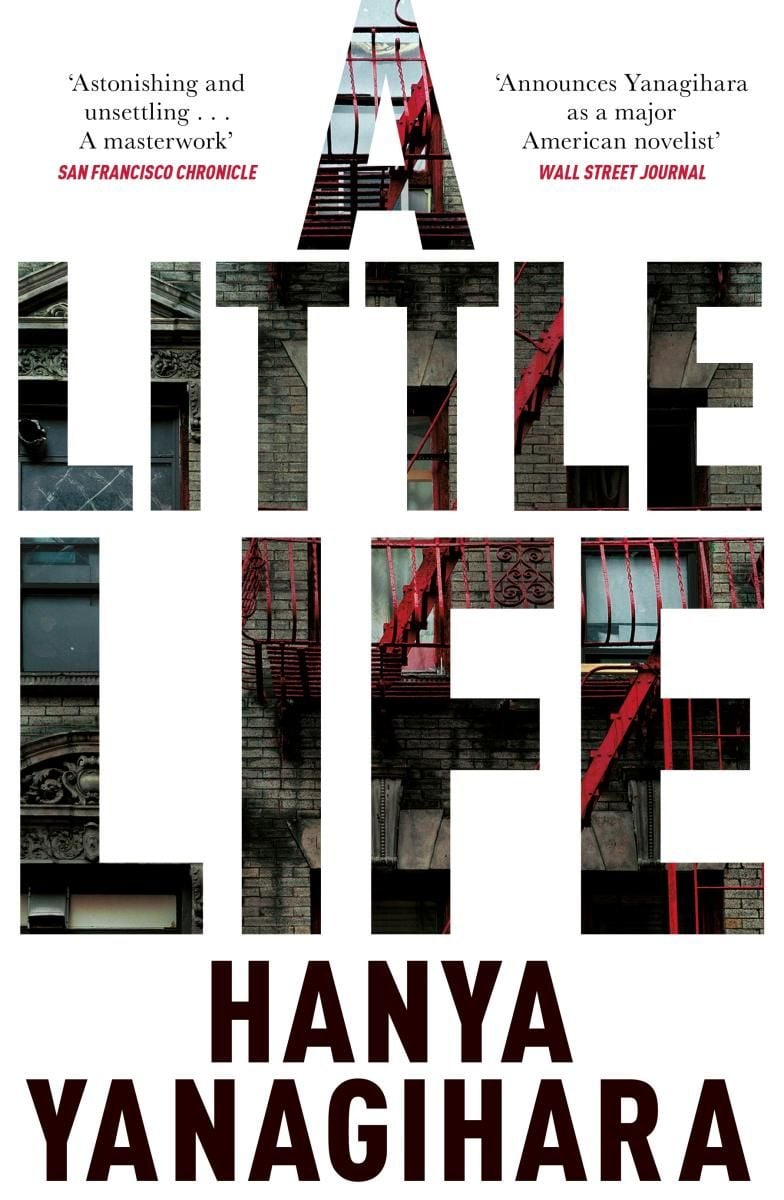
Famously, the published version of A Little Life has changed very little from the manuscript that Yanagihara first submitted (she was just as firm about the editing process as she was in her views about the book’s UK cover).
Anna Stein: ‘When she gave A Little Life to me, Hanya said ‘It’s perfect. Don’t touch a word,’ or something like that. And about 100 pages in, I started to see little things. And I spoke to her and I said, “Can I pick up a pen?” So when I finished, she came to my office and sat on my couch, and we went through every single edit, and there were few that she accepted.’
Ravi Mirchandani: ‘I was pretty much secondary editor to Gerry Howard, Hanya’s original publisher in Doubleday. So he did a very detailed edit and I wrote her a letter. I remember her saying that her view was if Gerry and I didn’t want it, she’d have perfectly happily sort of self-published it on Amazon. With some authors that would be a sort of manipulative line, but I thought that it was the God’s honest truth. I think that’s what she would’ve done.
‘My memory is that the one piece of my edit that she did make changes in response to was that I found it unconvincing that Willem had been entirely heterosexual until the point that his love for Jude turned physical. It wasn’t a major editorial comment, but my memory is that she did respond to that.
‘But there were other things – the Dr Traylor episode, and Jude being run over by Dr Traylor’s car – where I think I accused Hanya of being sadistic towards Jude. I am not one of those editors who is inclined to fight with authors. So she wasn’t offended – as far as I’m aware – at some of the things I said about the book, and I wasn’t offended that she chose to respect her own creativity among my suggestions. So we proceeded on from there.’

Hanya Yanagihara
© Jenny Westerhoff
When she gave A Little Life to me, Hanya said “It’s perfect. Don’t touch a word,” or something like that
Anna Stein, Hanya Yanagihara's literary agent
Kate Green, publicist: ‘I joined Picador in December 2014; I think we started talking about A Little Life literally as soon as I started. Ravi pitched it with the four characters, and he just didn’t give me any kind of intro to it at all, only that he’d worked with and known Hanya for a long time and they were good friends.
‘I don’t think I quite realised, because I read it on a Kindle, how big it was, and I just flew through it. At first I was reading it from a work point of view, of trying to pull out themes, rather than just surrendering myself to it. But the more I read it, I was drawn to it in a kind of unstoppable way. I think that’s the thing that really bonded Ravi and I when we first started working together: we were the only ones who’d properly read A Little Life. I was just like, “Ravi, can I talk to you about this?”’
A Little Life was released in the US on 10 March, 2015 – and reactions were mixed. Steph Cha, in the Los Angeles Times, said she ‘became so invested in the characters and their lives that I almost felt unqualified to review this book objectively’, while Janet Maslin in the New York Times called it ‘a big, emotional, trauma-packed read with a voluptuous prose style that wavers between the exquisite and the overdone’.
Ravi Mirchandani: ‘Basically, nothing very much happened until the Americans published and the book got some tremendous reviews in the States. Not all of them were tremendous, as it’s always been a book that divided people.’
Anna Stein: ‘There are two things that I remember really changing course, thinking, “Oh, this might work out”. One was that Twitter became a place where people were talking about books, and all of a sudden there were conversations about books that were pushing sales and changing sales.
[The second thing is] I remember going to the London Book Fair, and [literary agent] Peter Straus coming up to me and saying, “Congratulations, you’ve got the Booker winner.”’

Hanya Yanagihara book signing at the Southbank Centre, London, 2015
© Booker Prize Foundation
Ravi Mirchandani: ‘When the American edition was published [in March 2015], suddenly there was this kind of rights frenzy going on at the book fair for a book that had been around in manuscript form for the best part of 18 months.’
Word of mouth was building on both sides of the Atlantic, and Peter Straus wasn’t the only person who felt the book had Booker Prize potential.
Ravi Mirchandani: ‘The decision [to submit the novel for the Booker Prize] was, in the end, made by Paul Baggaley, the then-publisher of Picador, when we met to discuss our submissions in spring 2015, and following discussions among all the editorial staff at Picador at the time, including the assistants. More or less at the beginning of that meeting, one colleague proposed that the book was a clear candidate to be one of Picador’s entries. No-one disagreed.’
Picador did two runs of proofs, one covered in quotes from US booksellers, to send out to UK reviewers, booksellers and more.
Kate Green: ‘I saw a tweet from [bestselling memoirist] Cathy Rentzenbrink, saying, “This is the best book I’ve ever read”. And I emailed her straight away, saying, “Cathy, can I put your quote on the press release, please?”
Cathy Rentzenbrink, then The Bookseller’s books editor: ‘I’d gone into The Bookseller offices and was opening all my post. I remember opening that proof and I was just really struck by the bookseller endorsements. What I used to do was read the first page of almost every physical proof I was sent. And then I’d read the beginning of a lot more and then I’d finish [some]. So I opened A Little Life to just read the first page and then I just couldn’t stop. I had this little red suitcase, in which I used to take as many books as I could get in it home with me. So I trundled off with my little red suitcase, but with that book, I read it on the Tube all the way home. I then just basically read it all night. I don’t think I slept.’
Rentzenbrink interviewed Yanagihara for a profile that ran in The Bookseller on 1 June, 2015. While Kate Green was working on the publicity campaign, Picador’s sales team were talking to retailers about the book.

A Little Life by Hanya Yanagihara
One of the things I remember about it was that it whipped by, you read it at extraordinary pace and it was massively absorbing
Sam Leith, Booker Prize judge, 2015
Bea Carvalho (then on the Waterstones buying team, now the retailer’s Head of Books): ‘We remember the team at Pan Mac presenting it to us and there just seemed to be a real buzz about it. It was one of those books that slowly absolutely everyone in the team – whether they were working directly on it or not – were reading. Everyone had to have an opinion and everyone had to be part of that conversation.’
Ravi Mirchandani: ‘Waterstones ordered 200 copies for the entire chain, which, given the days in which Waterstones might order 18 copies for the entire chain, was not a disastrous figure. But a couple of northern branches, I think the main one in Manchester and possibly Doncaster, ordered between them 120 copies. So suddenly Waterstones were paying more attention to it on the basis of reads by two individual booksellers at those particular branches.’
Anna Stein: ‘I’m sorry to sound so cynical, but I don’t trust the industry to necessarily recognise when something is really extraordinary. I thought A Little Life was extraordinary. I thought it was unlike anything I’d read before, unlike anything that was out, unlike any of her contemporaries. But I didn’t trust the world to necessarily see that, celebrate it, elevate it. I thought it was entirely possible that she would have her fans, but in some ways that it would just be too dark to break out further than that.’
Kate Green: ‘The big break that I got was Lisa O’Kelly at the Observer New Review went for a profile interview. It was just perfectly timed because Hanya was in London in June, and Tim Adams interviewed her.’
Ravi Mirchandani: ‘Hanya came into [Pan Macmillan’s] old offices near King’s Cross to do a little proof signing party for fans of the book within the company. It was absolutely remarkable quite how many people were there for a book that hadn’t been published yet by an author who had not made that much of a mark in the UK for her first book.’
A few weeks before the book’s UK release, A Little Life was included on the longlist of the Booker Prize.
Sam Leith, Booker Prize judge, 2015: ‘I think I came to it pretty fresh without many expectations, but I do, out of all very many books I read, remember it very well. When you’re reading 150 books in 150 days or thereabouts, you slightly groan when you get something that’s the size of a breeze block. And yet one of the things I remember about it was that it whipped by, you read it at extraordinary pace and it was just a massively absorbing, massively involving reading experience. When it came to the judging, I think most of us actually were very impressed by it.’
The book was released in the UK on August 13, 2015. Much like in the US, the book sparked intense debates, online, in reviews and in person.
Kate Green: ‘Obviously we had a mix of reviews. It wasn’t all positive. We had some horrors in there because it had already come with a lot of fanfare.’
Anna Stein: ‘If you’re really attached to a book, it’s hard to read a bad review. But in this case, when the book makes you feel so protective, so emotionally invested, it’s very difficult to detach and be dismissive of it. I think it was very painful for all of us who were closely involved with it.’
Ravi Mirchandani: ‘Hanya was very sensibly, in so far as she could, protecting herself by not reading reviews. But as a publisher, you can’t take that position. I had to read the reviews. I get very personally involved with what I’m doing. I was hurt by some of the negativity.’
But A Little Life sold steadily, and as the summer turned into autumn, it became clear it was gathering a momentum that was unstoppable.
Bea Carvalho: ‘Our shop on Oxford Street were absolutely obsessed with it and were selling 100 copies a week from a low opening order. That kind of success has a real rippling effect. I know the team at Piccadilly had really got behind it as well. It’s one of those books that had those real champions from the beginning; it was really nice to see that actually pay off and that real word of mouth delivering, which is what book-selling is all about.’
A Little Life was one of six novels shortlisted for the Man Booker Prize 2015, alongside A Brief History of Seven Killings by Marlon James, Satin Island by Tom McCarthy, The Fishermen by Chigozie Obioma, The Year of the Runaways by Sunjeev Sahota and A Spool of Blue Thread by Anne Tyler. Yanagihara’s novel was the bookies’ favourite to win, but ultimately, the prize went to James.
Sam Leith: ‘I think I can probably say A Little Life wasn’t ever quite in contention to win, partly because we had at least one judge who was like, “If this wins, I’m off”. But also because I think everybody agreed that Marlon James’ book that year was head and shoulders above all the rest.’

Man Booker Prize 2015: shortlisted authors Sunjeev Sahota, Chigozie Obioma, Hanya Yanagihara, Anne Tyler, Tom McCarthy and Marlon James
© David Levenson/Getty Images
There seemed to be a real buzz about it. It was one of those books that slowly absolutely everyone in the team. Everyone had to have an opinion
Bea Carvalho, Waterstones
Kate Green: ‘I think going with the shortlist in the autumn, that really, really helped to keep A Little Life going. There was also the National Book Awards in the States, which was at exactly the same time. So it was quite a busy autumn.’
Into the following year, A Little Life would continue to be read, debated and celebrated. It was shortlisted for the Women’s Prize 2016, and won the fiction book of the year award at the British Book Awards.
Over subsequent years, it’s never faded, and has in fact become a cultural phenomenon, with tote bags and t-shirts sporting the four characters’ names still spotted on book fans. There’s been no shortage of celebrity endorsement; Queer Eye’s Antoni Porowski spoke about the book in a major Vulture interview in 2018, while Dua Lipa wrote for the Booker Prize in 2023 on why it’s one of her favourite books.
The book found a new fanbase via TikTok during the Covid-19 pandemic, with readers posting tear-filled videos, and in 2023, an English-language version of the play was staged in London, starring James Norton. This year marks the book’s 10th anniversary.
Kate Green: ‘One of the reasons why it’s just kept on going is because it is a simple sell, word-of-mouth wise. I never wanted to tell someone how they were going to feel when they read it, but it feels like it’s just got more amped up, with TikTok and people crying, whereas when we first published it, it was more like, “this is just going to be an experience that you won’t forget”.’
Sam Leith: ‘It was quite unusual for a Booker book. Not to say that other Booker novels don’t get you emotionally, but this is talked about so often in terms of “it made me cry here”. I think it has got this great emotional clout, whether we decide that’s meretricious or earned.’
Bea Carvalho: ‘It’s not just about the literary merit or the sentence by sentence, beautiful language or the plot or anything. It is about the reader’s reaction to it.’
Kate Green: ‘I think there are timeless themes in there about friendship and found family and how you understand yourself and you make sense of the world.’
Cathy Rentzenbrink: ‘Of course, it’s a difficult book in lots of ways. I’m not sure I had this theory then, but I do now, I think that almost the better the quality of the literature, the more I am able as a reader to consume difficult truths about humanity.’
Ravi Mirchandani: ‘It has become, I believe, a rite of passage into adulthood novel.’
Anna Stein: ‘I think it’s part of the canon. I think its status is established.’


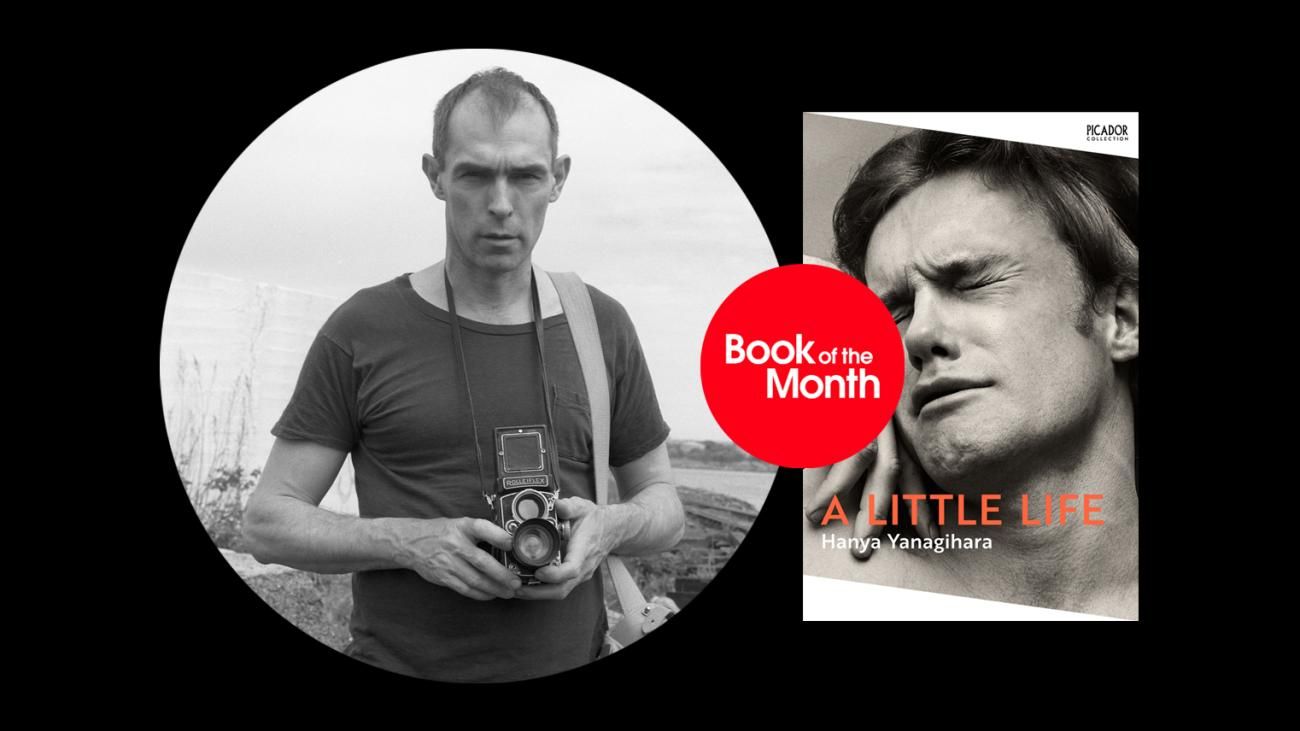
A Little Life
- Published by
- Picador
Hanya Yanagihara’s deft depiction of heartbreak becomes a dark examination of the tyranny of memory and the limits of human endurance